Photographer
Albert Watson
Albert Watson (born 1942 in Edinburgh, Scotland) is one of the most influential photographers of the past fifty years, renowned for blending art, fashion, portraiture, and commercial photography into a signature visual language defined by precision, drama, and cinematic clarity. Though blind in one eye from birth, Watson developed exceptional technical abilities and studied graphic design in Dundee and film at the Royal College of Art in London before beginning his photographic career. In 1970 he moved to Los Angeles, where his first assignments for Max Factor led to rapid recognition. By 1976, after relocating to New York, he began shooting for Vogue, launching a prolific international career.
Watson has created some of the most iconic images in contemporary culture, including Alfred Hitchcock holding a goose, the legendary portrait of Steve Jobs, and the early portrait of Kate Moss taken on her 19th birthday. His work spans more than 100 Vogue covers and over 40 Rolling Stone covers, along with extensive assignments for brands such as Prada, Chanel, Levi’s, Revlon, and countless others. He has photographed movie stars, musicians, fashion designers, royalty, and political leaders, and has produced campaign imagery for major Hollywood films while directing more than a hundred television commercials.
Alongside his commercial work, Watson has maintained a significant artistic practice, producing long‑term personal projects in locations including Morocco, Las Vegas, the Isle of Skye, and the Orkney Islands. His prints are held in major museum collections worldwide, and his exhibitions have appeared at institutions such as MoMA Milan, KunstHausWien, the City Art Centre Edinburgh, the FotoMuseum Antwerp, the NRW Forum in Düsseldorf, Fotografiska, and the Multimedia Art Museum Moscow. His books include *Cyclops*, *Maroc*, *Strip Search*, *UFO: Unified Fashion Objectives*, and *Kaos*. His archive encompasses decades of portraits, landscapes, still lifes, and reportage work.
Watson has received numerous honors, including a Lucie Award, the Hasselblad Masters Award, multiple ANDY Awards, a Grammy Award, and the Royal Photographic Society’s Centenary Medal. In 2015 he was appointed an Officer of the Order of the British Empire (OBE) for his services to photography. Today he remains active in both commercial and fine‑art projects, widely regarded as one of the defining photographers of his generation.


Selected Works & Key Projects
A source-backed introduction to individual photographs and significant bodies of work.
Key projects
Project · 1994
独眼巨人
Published in 1994, Cyclops is a book-length consolidation of Albert Watson’s work across portraiture, fashion, still life, landscape, and more constructed images. Its title also alludes to Watson’s having been blind in one eye since birth. Rather than treating those categories as separate careers, the project makes their shared visual logic visible: deliberate lighting, precise framing, and an interest in the graphic force of a subject or object. It merits selection because this early major monograph established a durable public frame for the range of Watson’s practice and for the handmade-print sensibility underlying it.
View source ↗Selected photographs

1973 · Los Angeles, California, United States
Alfred Hitchcock, Los Angeles
Watson photographed Alfred Hitchcock holding an uncooked, plucked goose for Harper’s Bazaar’s 1973 holiday issue. The picture transforms a magazine assignment into a compact piece of staged suspense: Hitchcock’s formal dress and grave presence meet an absurd, macabre prop. It is especially consequential in Watson’s career because Hitchcock was his first celebrity subject, and the image was published with the headline “Alfred Hitchcock Cooks His Goose.” The photograph merits individual selection not simply for its famous sitter, but for showing Watson’s early ability to make a collaborative portrait carry narrative, theatricality, and sharply controlled visual wit.
Work source ↗
1991 · New York City, New York, United States
Tupac Shakur, New York City
Watson’s 1991 portrait of Tupac Shakur places the rapper in a hooded jacket against a dark, spare background. The picture’s force comes from economy: hard light models the face while the clothing creates a graphic frame that makes Shakur’s direct presence central. Made before the release of his debut album, it has become a frequently reproduced image from the period just before his ascent to broad public recognition. It merits individual selection because it demonstrates Watson’s capacity to make a promotional or editorial portrait feel psychologically concentrated, while preserving a formative moment in Shakur’s visual history.
Work source ↗
1992 · New York City, New York, United States
Monkey with Gun, New York City
Monkey with Gun, New York City is a 1992 gelatin silver photograph in which Watson uses an animal and a prop to create an unnerving, deliberately artificial portrait. The image matters within his larger work because it shows that his command of pose, lighting, and tonal contrast was not limited to celebrities or fashion models. Its shock depends on the tension between the monkey’s apparent vulnerability and the symbolic violence of the gun, rather than on a documentary claim. It merits selection as a concise example of Watson’s ability to turn a studio setup into an ambiguous narrative image that resists easy categorization.
Work source ↗
1993 · Marrakech, Morocco
Kate Moss, Marrakech, January 1993
Made in Marrakech in January 1993, this photograph is among Watson’s defining images of Kate Moss. Its importance lies in the way it joins fashion photography to the status of an autonomous fine-art print: the work has been exhibited, editioned, and documented in auction catalogues, while the artist’s materials identify related 1993 Moss images as major works. The image also records an early moment in Moss’s public career, but Watson’s contribution is formal as much as biographical—he uses pose, setting, and tonal control to give the fashion subject a poised, sculptural presence. It merits selection as a key meeting of his fashion and portrait practices.
Work source ↗
2006
Steve Jobs
This 2006 portrait reduces Steve Jobs to a close, frontal black-and-white encounter: a plain pale field, a dark turtleneck, glasses, and an intent gaze. Watson’s decision to remove contextual clues concentrates attention on Jobs’s face and hand, producing an image that functions equally as editorial portrait and public image. The artist’s own press materials identify it as the photograph Apple placed on its homepage after Jobs’s death, while it later appeared on the cover of his authorized biography. It merits selection because its restrained construction became inseparable from the widely circulated visual memory of Jobs.
Work source ↗-
1970
Career milestone
Moves to the United States and begins professional photography work
Watson moved to the United States in 1970 and made his first commercial test session for Max Factor later that year; the company purchased two photographs.
Source: Albert Watson Photography Inc. Verified Sep 4, 2026
-
1973
Series
Photographs Alfred Hitchcock for Harper’s Bazaar
Watson photographed Alfred Hitchcock holding a plucked goose for Harper’s Bazaar’s 1973 Christmas issue; it was his first celebrity portrait.
Source: Albert Watson Photography Inc. Verified Sep 4, 2026
-
1994
Photobook
Publishes Cyclops
Watson published Cyclops, an early monograph of his photographic work, through Bulfinch Press and Callaway Editions.
Source: Albert Watson Photography Inc. Verified Sep 4, 2026
-
2006
Exhibition
Albert Watson exhibition at Edinburgh’s City Art Centre
Edinburgh’s City Art Centre presented an Albert Watson exhibition as part of its photography program in 2006.
Source: City of Edinburgh Council Verified Sep 4, 2026
-
2010
Award
Receives the Royal Photographic Society Centenary Medal
The Royal Photographic Society awarded Watson its Centenary Medal in recognition of a sustained and significant contribution to photography; the honor also carried an Honorary Fellowship.
Source: Royal Photographic Society Verified Sep 4, 2026
-
24 March–11 June 2011
Exhibition
Albert Watson retrospective at Fotografiska Stockholm
Fotografiska Stockholm presented a retrospective of Watson’s work from March 24 to June 11, 2011, featuring 120 photographs across portraiture, landscapes, and fashion.
Source: Fotografiska Stockholm Verified Sep 4, 2026
-
2012–2013
Series
Albert Watson: Visions feat. Cotton Made in Africa
Deichtorhallen Hamburg presented Watson’s Benin photographs, made in December 2011, alongside selected earlier works from September 14, 2012, to January 6, 2013.
Source: Deichtorhallen Hamburg Verified Sep 4, 2026
-
June 2015
Award
Appointed Officer of the Order of the British Empire
Watson was appointed an Officer of the Order of the British Empire in June 2015 for his contribution to photography.
Source: Albert Watson Photography Inc. Verified Sep 4, 2026
-
2021
Collection acquisition
The Getty Museum acquires seven prints
The Getty Museum acquired seven of Watson’s modern, platinum, and vintage gelatin-silver prints for its permanent collection.
Source: Albert Watson Photography Inc. Verified Sep 4, 2026
Albert Watson: “You never get that day back” (opens a new site)
In this interview with The Talks, photographer Albert Watson reflects on his lifelong passion for photography, from the thrill of his first Vogue cover to his disciplined approach to portraiture. He discusses how his background in film and graphic design shapes his imagery, his philosophy of creating comfort for subjects, and memorable sessions with figures like Steve Jobs and Joaquin Phoenix.
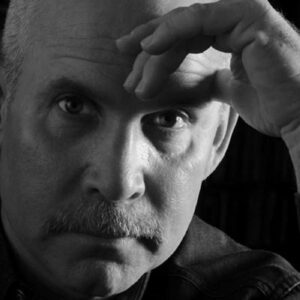
Steve McCurry
Shared publisher: Laurence King Publishing, Taschen
18 photobook(s) in the library
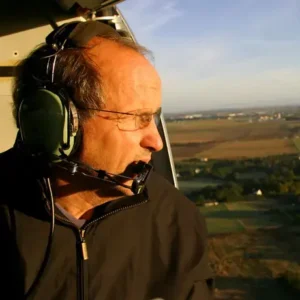
Alex MacLean
Shared publisher: Abrams, Rizzoli International Publications
12 photobook(s) in the library
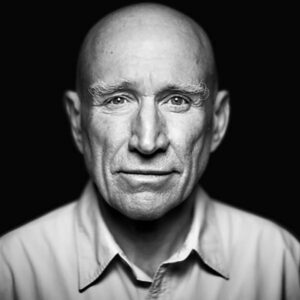
Sebastiao Salgado
Shared publisher: Taschen
21 photobook(s) in the library
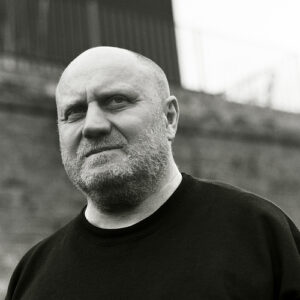
Nick Waplington
Shared publisher: Phaidon Press
18 photobook(s) in the library
COMMUNITY DISCUSSION
Discuss this entry
Share interpretations, reading notes, and source-aware questions. For catalog corrections, use the feedback form below.
No discussion yet. Start the first focused conversation.
Sign in to join the discussion.
Optionally receive a digest when related photobooks are added to the catalog.
See something incorrect? Sign in to suggest a correction or report an issue.