Photographer
Raymond Depardon
Raymond Depardon, born in France in 1942, is a French photographer, photojournalist, and filmmaker whose career connects postwar press photography with more personal forms of documentary practice. He began photographing on his family’s farm at Garet when he was twelve and entered professional photography in the early 1960s. A member of Magnum Photos, he has worked across still images and cinema on an unusually sustained scale; Magnum records eighteen feature-length films and forty-seven books. His movement between these media is central to his identity rather than a parallel activity.
Depardon emerged from the demands of reportage, including assignments in politically unstable and conflict-affected regions such as Chad. Yet his mature language is often quieter than conventional event-driven photojournalism. He allows geography, waiting, peripheral details, and the photographer’s own uncertainty to shape a picture. People may appear small within a landscape, while roads, farms, institutional spaces, and apparently ordinary buildings become carriers of social history. This tension between immediate evidence and contemplative distance distinguishes his work from reportage organized around a single dramatic instant. It can also make the photographs seem deliberately unresolved: their meaning accumulates through context and sequence rather than visual shock.
The book Voyages offers a useful route into this mobile, internationally oriented practice. Its importance lies less in presenting travel as spectacle than in showing how Depardon repeatedly negotiates distance from unfamiliar places and events. The work associated with northern Chad demonstrates the ethical and psychological pressure behind that position: the reporter is present, but never wholly outside the situation he records. Across such photographs, open terrain and human vulnerability frequently occupy the same frame, complicating the heroic conventions of foreign correspondence.
La France de Raymond Depardon represents a different but complementary landmark. Developed through years of travel around France, the project assembled 241 photographs and was presented in book form as well as in an exhibition at the Bibliothèque nationale de France in 2010–11. Rather than concentrating on Parisian monuments or picturesque heritage, Depardon attended to the country’s everyday built environment and regional spaces. The resulting survey treats contemporary France as something fragmented and continually changing. His return from distant assignments to his own national territory also marks an important career development: familiar places become as strange, layered, and politically legible as foreign ones.
For photobook readers, Depardon’s extensive publishing practice matters because the individual image is only one unit of his documentary argument. Voyages is an accessible introduction to the dialogue between movement, solitude, and reportage, while La France de Raymond Depardon demonstrates how a large sequence can function as a geographic and social inventory. Collectors should pay attention to pacing, recurrence, and shifts of scale—the way landscapes, roadside structures, and human incidents qualify one another across pages. His books show that documentary photography need not choose between factual record and subjective experience, although their restraint asks for patient reading rather than immediate resolution.
〔PBL-BIO/2〕

Desert

Rural

Depardon USA

Coffret Raymond Depardon

Glasgow

Manicomio: Secluded Madness

Berlin: Fragments of a German History

Around the World in 14 Days: 7 Stops, 1 Visa

Donner la parole

PPP: Photographies de personnalités politiques

Raymond Depardon: Photographer and Filmmaker

Errance

The Desert

Depardon Voyages

En Afrique

Aperture #89
Selected Works & Key Projects
A source-backed introduction to individual photographs and significant bodies of work.
Key projects

Project · 2001–2008
Profils paysans
This is a documentary film and photography project that Raymond Depardon carried out over nearly eight years. He visited small farms and interviewed farmers who speak openly about their work, their ties to the land, and the changes they face. The project is important because it records a way of life that is disappearing and gives a respectful voice to people often ignored by mainstream media. It shows Depardon's concern for social reality and his long-term, patient approach to storytelling, connecting his photographic eye with cinematic observation.
View source ↗Selected photographs
1976 · United States
Untitled (Prisoner's Portait)
A portrait from the Prison series, taken with a large-format camera, shows an inmate directly facing the lens. The plain background and frontal pose recall the tradition of formal portraiture, yet the subject is a person stripped of exterior identity. This photograph matters because it avoids sensationalism and presents a person, not a stereotype. The viewer is forced to consider the human being behind the crime. It stands as an emblem of Depardon's dignified approach to those on the margins.
Work source ↗-
1957
Education
Enrolls in Correspondence Photography Courses
After training with a photo-optician, Depardon enrolled in correspondence courses leading to a photographic-operator qualification and began receiving small local assignments.
Source: Official Raymond Depardon / Claudine Nougaret site Verified Aug 31, 2026
-
1966
Career milestone
Co-founds the Gamma Photo Agency
Depardon co-founded Gamma with other photographers. The agency’s model gave photographers greater autonomy and responsibility for their work.
Source: Official Raymond Depardon / Claudine Nougaret site Verified Aug 31, 2026
-
1973
Award
Robert Capa Gold Medal for Chili
Depardon shared the Robert Capa Gold Medal with David Burnett and Chas Gerretsen for their book Chili.
Source: Fondation Henri Cartier-Bresson Verified Aug 31, 2026
-
1978
Representation
Joins Magnum Photos
Depardon joined the Magnum cooperative in 1978 and continued his international reportage work while developing publications combining photographs and writing.
Source: Magnum Photos Verified Aug 31, 2026
-
1981
Photobook
Correspondance new-yorkaise
A partial version of Depardon’s Correspondance new-yorkaise was published in 1981 by Éditions de l’Étoile and Libération, pairing his New York photographs with personal writing.
Source: Bibliothèque nationale de France Verified Aug 31, 2026
-
1984
Series
La ferme du Garet for the DATAR Photographic Mission
For the DATAR Photographic Mission, Depardon used a view camera to photograph Le Garet, his childhood farm, developing a personal study of rural landscape and memory.
Source: Mission photographique de la DATAR / Agence nationale de la cohésion des territoires Verified Aug 31, 2026
-
1991
Award
Grand Prix National de la Photographie
Depardon received France’s Grand Prix National de la Photographie in 1991.
Source: Official Raymond Depardon / Claudine Nougaret site Verified Aug 31, 2026
-
2000
Exhibition
Depardon – Détours
Presented at the Maison Européenne de la Photographie, Détours organized the exhibition around Depardon’s books and the dialogue among his photographs, writing, life, and films.
Source: Maison Européenne de la Photographie Verified Aug 31, 2026
-
2010–2011
Exhibition
La France de Raymond Depardon
The BnF presented the exhibition from September 30, 2010, to January 9, 2011. It featured Depardon’s large-format color photographs from journeys across France begun in 2004.
Source: Bibliothèque nationale de France Éditions Verified Aug 31, 2026
-
2019
Archive
Film and Sound Archives Enter the BnF
The BnF’s report of notable 2019 acquisitions lists the film and sound archives of Raymond Depardon and Claudine Nougaret among its donations and deposits.
Source: Bibliothèque nationale de France Verified Aug 31, 2026
-
2024
Award
2024 BnF Prize
The Bibliothèque nationale de France awarded its annual prize to Depardon for his body of work. The prize was presented on September 30, 2024, at the Richelieu site.
Source: Bibliothèque nationale de France Verified Aug 31, 2026
Collection
Fondation Cartier pour l’art contemporain
The Fondation Cartier holds more than 500 photographs by Depardon, reflecting a relationship spanning over three decades of exhibitions, books, and films.
Verified 2026-08-31Raymond Depardon | Collection of the Fondation Cartier pour l’art contemporain
Collection
Centre Pompidou
The Centre Pompidou collection database lists 53 photographs by Raymond Depardon.
Verified 2026-08-31Centre Pompidou collection search: Raymond Depardon
Collection
Pinault Collection
The Pinault Collection’s catalogue documents Depardon’s 1981 photograph Manhattan, New York among a group of eight New York prints.
Verified 2026-08-31Manhattan, New York | Pinault Collection
Collection
Musée Fabre
Depardon donated more than 200 prints from Rural, Son œil dans ma main, and Communes to Musée Fabre’s collection.
Verified 2026-08-31Donation historique : les photos de Depardon entrent au musée Fabre
Collection
The Nelson-Atkins Museum of Art
The museum holds Depardon’s signed 1995 gelatin-silver print Alexandria, Egypt, received as a 2020 gift from the Hall Family Foundation.
Verified 2026-08-31Alexandria, Egypt – Works – Nelson-Atkins Museum of Art
Representation
Magnum Photos
Depardon joined Magnum Photos in 1978, and the agency’s store presents editions and prints of his work.
Verified 2026-08-31Raymond Depardon | Magnum Photos Store
Representation
Galerie RX / RX&SLAG
Galerie RX identifies Depardon as a represented artist and presents his works, exhibitions, and publications.
Verified 2026-08-31Raymond Depardon | artiste représenté par la Galerie RX
Other institution
LE BAL
Raymond Depardon and Diane Dufour founded the nonprofit LE BAL in 2010, with Depardon identified as its founding president.
Verified 2026-08-31The project | LE BAL
Publishing relationship
Atelier EXB
Atelier EXB published seven books with Depardon between 2007 and 2023.
Verified 2026-08-31Raymond Depardon | Atelier EXB
Collaboration
Gilles Caron
Raymond Depardon and Gilles Caron co-founded the Gamma photographic agency in 1966.
Verified 2026-08-31Raymond Depardon | Collection of the Fondation Cartier pour l’art contemporain
Influence & affinity
Walker Evans
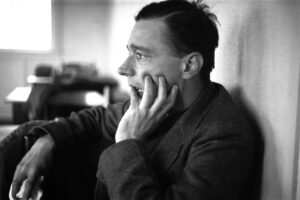
Depardon acknowledged an aesthetic and ethical debt to Walker Evans in relation to his photographic approach.
Verified 2026-08-31La France de Raymond Depardon | Éditions de la Bibliothèque nationale de France
Influence & affinity
Paul Strand
Depardon acknowledged an aesthetic and ethical debt to Paul Strand in relation to his photographic approach.
Verified 2026-08-31La France de Raymond Depardon | Éditions de la Bibliothèque nationale de France
Raymond Depardon—La vita moderna (opens a new site)
Conceived for Triennale Milano, this large solo exhibition surveys Depardon’s practice through eight photographic series, two films and his published books. It emphasizes recurring questions of distance, landscape, modernity and belonging while bringing familiar projects together with previously unseen material.
Auschwitz-Birkenau Seen by Raymond Depardon (opens a new site)
The exhibition presents black-and-white photographs Depardon made at Auschwitz-Birkenau during a two-week assignment in the winter of 1979. Snow, architectural geometry and sparse traces of human presence shape a restrained study of the former camp, and the complete series has been entrusted to the Mémorial de la Shoah.
Raymond Depardon / Kamel Daoud: His Eye in My Hand—Algeria 1961–2019 (opens a new site)
This exhibition page introduces a dialogue between Depardon’s photographs of Algeria from 1961 and 2019 and newly written texts by Kamel Daoud. It frames the project as two independent yet complementary perspectives on colonial history, memory and contemporary Algeria.
Raymond Depardon’s “Les Années déclic”: “These Photos That Seemed Like Nothing Became Magnificent” (opens a new site)
Claire Guillot revisits Depardon’s formative years as a young Paris photojournalist and his early photographs of emerging film stars such as Brigitte Bardot, Catherine Deneuve and Jean-Paul Belmondo. The profile examines his long-standing ambivalence toward these pictures and their reassessment in the book Les Années déclic.
Raymond Depardon: “People Always Imagine the Photographer Shooting Constantly, but I Take Very Few Pictures” (opens a new site)
In this France Culture interview, Depardon traces his development from photographing his family farm to photojournalism and documentary filmmaking. The conversation accompanies Les Années déclic and explores his preference for restraint, his role as a witness to history and his resistance to nostalgic readings of his early work.
Picturing Glasgow: Raymond Depardon in Conversation (opens a new site)
In this transcript of a 2020 online conversation, Depardon discusses the photographs he made in Glasgow while working on a 1980 Sunday Times commission about wealth and poverty. He explains why the unpublished assignment evolved into a direct, personal record of deindustrialization, street life and photographic encounter.
Raymond Depardon (opens a new site)
This episode from the Contacts collection considers Depardon’s subjective and ethically complex approach to documentary photography. Using contact sheets from his work at the San Clemente psychiatric hospital, Depardon reflects on observation, voyeurism and the photographer’s responsibility toward a subject.
Raymond Depardon in a Video Interview: “These Photographs Should Belong to Algeria and Algerians” (opens a new site)
Depardon reflects on photographing Algeria across several decades, from his first trip in 1960 to his return in 2019. Presented alongside the exhibition created with Kamel Daoud, the interview considers how photographs participate in Algeria’s history, memory and ownership of its visual record.
Photographer Raymond Depardon Tells the Story of His Exhibition in a Documentary Video (opens a new site)
Made for the La vita moderna exhibition in Milan, this short portrait follows Depardon as he reflects on his career and introduces photographs, films and archival materials included in the show. Simon Depardon’s film presents the exhibition through the artist’s own memories and commentary.
Interview with Raymond Depardon About His Film “Faits divers” (opens a new site)
Depardon discusses Faits divers, his documentary about everyday life inside a police station, and explains how he tried to make the camera unobtrusive. Police union representatives respond to the film and its depiction of police work, with excerpts from the documentary accompanying the discussion.
COMMUNITY DISCUSSION
Discuss this entry
Share interpretations, reading notes, and source-aware questions. For catalog corrections, use the feedback form below.
No discussion yet. Start the first focused conversation.
Sign in to join the discussion.
Optionally receive a digest when related photobooks are added to the catalog.
See something incorrect? Sign in to suggest a correction or report an issue.