Photographer
Sebastiao Salgado
Sebastião Salgado was a Brazilian photographer whose career joined humanist documentary practice, international photojournalism, and the large-scale exhibition and photobook. Trained as an economist and initially employed by the World Bank, he began working professionally as a photographer in Paris in 1973. Assignments for the Sygma, Gamma, and Magnum agencies gave him access to global events, but his lasting contribution came through extended, self-directed projects on labor, displacement, inequality, and the natural world.
Salgado worked predominantly in black and white, using strong tonal contrasts, sculptural light, elevated viewpoints, and carefully organized crowds. His photographs could move between landscape, portraiture, still life, broad establishing views, and rapidly unfolding moments. Rather than the fragmentary immediacy associated with much press photography, he often sought an epic visual structure: miners, refugees, workers, animals, and geological formations become parts of a larger historical or ecological drama. This visual grandeur made difficult subjects widely legible, although it also prompted a persistent critical question—whether formal beauty can aestheticize suffering or turn specific lives into universal symbols. The tension is central to understanding his work rather than incidental to it.
Workers examines forms of manual labor under pressure from industrial and economic change, presenting work as both collective ordeal and a source of identity. The photographs of a Brazilian gold mine, later revisited in Gold, are among his best-known images: immense human formations transform extraction into a spectacle of physical risk and unequal reward. Migrations follows populations uprooted by poverty, conflict, and political instability, shifting attention from isolated news events to the structural forces behind mass movement. Genesis, produced through more than thirty journeys, marked a later turn toward landscapes, wildlife, and communities living at some distance from industrial modernity, including Antarctic ice formations and the Zo’é people. It broadened his social concerns into an ecological argument about planetary vulnerability.
Historically, Salgado extended the humanist documentary tradition into a period dominated by globalized labor, migration, and environmental crisis. His development from agency photographer to author of long-form projects helped demonstrate how documentary work could circulate simultaneously through magazines, museums, galleries, exhibitions, and substantial books. The worldwide exhibition of his photographs and the recognizability of his high-contrast style gave his approach considerable reach, while debates around its theatricality have remained influential in discussions of documentary ethics.
Photobook collectors should pay attention to how Salgado’s meaning accumulates through sequence rather than through a single celebrated image. Repeated gestures, faces, landscapes, and crowd formations create rhythms that connect individual experience to economic or ecological systems. Workers and Migrations provide the clearest entry to his socially engaged period; Gold offers a concentrated study of one subject using portrait, panorama, detail, and decisive moment; Genesis reveals the later expansion of his visual language. Across these books, tonal reproduction, image scale, pacing, and the alternation of intimate and monumental views are essential to how the projects are read.
〔PBL-BIO/2〕
Born in Aimorés, Brazil, Sebastião Salgado studied economics before turning to photography in the early 1970s. He received an MA from São Paulo University in 1968 and a PhD from the University of Paris in 1971. Travel to Africa through his work with the International Coffee Organization encouraged him to document what he encountered. By 1974, he was freelancing for the Sygma agency in Paris; he worked with Gamma from 1975 to 1979 and then joined Magnum Photos.
Salgado developed long-form documentary projects focused on social and economic conditions, generally presenting photographs as interconnected series. His publications include Sahel: L’homme en détresse (1986), Other Americas (1986), An Uncertain Grace (1990), and Workers (1993), which examined manual labor amid changing forms of production.
His honors include the Eugene Smith Award for Humanitarian Photography, two ICP Infinity Awards for Journalism, the Erna and Victor Hasselblad Award, and the Arles International Festival’s best photography book prize for Workers.

Sebastião Salgado: Glaciers

Sebastião Salgado

Sebastião Salgado. Workers. An Archaeology of the Industrial Age

Sebastião Salgado. Genesis

Sebastião Salgado. Amazônia

Sebastião Salgado. Gold

Sebastião Salgado. Kuwait. A Desert on Fire

Exodus

Sebastião Salgado. Kuwait. A Desert on Fire

Other Americas

Scent of a Dream

From My Land to the Planet

Genesis

Sebastião Salgado: Workers: An Archaeology of the Industrial Age

Sahel: The End of the Road

Terra: Struggle of the Landless

Migrations

The Children

Workers

Workers: An Archaeology of the Industrial Age

An Uncertain Grace
Selected Works & Key Projects
A source-backed introduction to individual photographs and significant bodies of work.
Key projects

Project
Workers: An Archaeology of the Industrial Age
First published in 1993, Workers is Salgado’s book-length examination of manual labour at a moment when machines and computers were replacing workers worldwide. Its 350 duotone photographs connect labor practices from the Stone Age and Industrial Revolution to the present, while moving among subjects such as Indonesian sulfur mining, Sicilian tuna fishing, and Brazilian gold mining. It merits selection as a defining project because it turns dispersed occupations into a sustained global account of human work, presenting manual workers’ endurance and dignity as the subject rather than as incidental background.
View source ↗
Project
Exodus
Exodus is a six-year project made in more than 35 countries about migration, exile, and forced displacement. Salgado photographed people on the road, in camps, and in overcrowded urban areas, including Rwandan Hutu refugees, Kosovars entering Albania, Latin Americans entering the United States, people leaving the former Soviet Union, and early Mediterranean crossings by Arabs and sub-Saharan Africans. Its importance lies in its double scale: crowds, vehicles, boats, and camps make migration legible as a global phenomenon, while portraits and close details retain individual identities and bodily vulnerability within those numbers.
View source ↗
Project
Genesis
Genesis is Salgado’s third long-term project: an eight-year, more than 30-trip photographic journey through landscapes, wildlife, and Indigenous communities described by its publisher as having escaped modern society’s imprint. Made in monochrome, it ranges from the Galápagos and South Atlantic to Antarctica, Alaska, Central Africa, West Papua, Sudan, Siberia, and islands west of Sumatra. The project merits selection because it deliberately shifts Salgado’s long-form practice from labor and displacement toward ecological attention. Its sweeping panoramas and closely observed textures construct an immersive, globe-spanning argument for recognizing beauty, fragility, preservation, and environmental repair.
View source ↗Selected photographs

1990 · Serra Pelada, Brazil
Untitled, Serra Pelada, Brazil
This gelatin silver print shows a miner carrying a heavy load of soil up a precarious ladder from Serra Pelada’s immense man-made crater; behind him, ladders cut a jagged route through mud-covered workers continuing the same task. SFMOMA identifies the Serra Pelada group as one of Salgado’s best-known series and notes that the mine employed 50,000 men when this photograph was made. It merits selection because one figure’s upward climb concentrates the series’ larger subject: punishing labor conditions are made visible without losing sight of the determination required of the individual worker.
Work source ↗1986 · Serra Pelada, Brazil
A Moment of Rest, Serra Pelada Mine
RISD Museum catalogues this gelatin silver print as A Moment of Rest, Serra Pelada Mine, made in 1986. Its collection text places it among Salgado’s photographs of workers hauling earth from the Brazilian gold mine and explains that crowd imagery can register the gravity of dire circumstances. The museum further characterizes the operation as appalling and chaotic, with more than 100,000 workers at its peak. This photograph merits selection as a distinct view from the Serra Pelada body of work because its title introduces rest into a project otherwise defined by collective extraction, danger, and physical strain.
Work source ↗
1991 · Kuwait
Kuwait
LACMA catalogues Kuwait as a 1991 gelatin silver print. Its collection record describes three oil-covered workers at a gushing wellhead on a muddy plain, framed by a heavy column of oil and a smoke-filled sky. The work merits selection because its sharply specified industrial scene makes human bodies, petroleum infrastructure, mud, oil, and smoke inseparable within one image. It is therefore a useful individual photograph for representing Salgado’s sustained attention to labor under extreme conditions, while remaining distinct from the massed figures and open pit of the Serra Pelada pictures.
Work source ↗1995 · Bombay, India
Church Gate Station, Bombay, India
Church Gate Station, Bombay, India, 1995, is identified by the University of California, Berkeley in materials for an exhibition centered on Salgado’s Migrations project. That exhibition framed Migrations around refugees, exiles, homeless families, orphaned children, and boat people forced from home by economic pressure, natural disasters, and population growth. This photograph merits selection as an individual work because a named metropolitan transit site anchors that broad subject in a specific urban location. It also represents the project’s extension beyond camps and borders to the urban movement and arrival that accompany migration.
Work source ↗2004 · Galápagos, Ecuador
Marine iguana (Amblyrhynchus cristatus)
The International Center of Photography identifies this 2004 photograph as Marine iguana (Amblyrhynchus cristatus), made in the Galápagos, Ecuador, and presented it in its Genesis exhibition. ICP’s exhibition materials describe Genesis as an effort to show a pristine planet and include nature, animals, and Indigenous peoples among its subjects. This photograph merits selection because it is a precise animal portrait within that wider environmental project: it represents the Galápagos component named in Genesis while making a single species—not a generalized landscape—the vehicle for Salgado’s ecological attention.
Work source ↗-
1971
Education
Completes a Doctorate in Economics at the University of Paris
Salgado completed his doctorate in economics at the University of Paris before working for the International Coffee Organization in London.
Source: University of São Paulo Verified Aug 30, 2026
-
1973
Career milestone
Begins His Professional Photography Career in Paris
After training and working as an economist, Salgado began working professionally as a photographer in Paris.
Source: Académie des beaux-arts, Institut de France Verified Aug 30, 2026
-
1989
Award
Receives the 1989 Hasselblad Award
The Hasselblad Foundation presented Salgado with its international photography award on September 30, recognizing his socially engaged photojournalism and photographic practice.
Source: Hasselblad Foundation Verified Aug 30, 2026
-
1991
Collection acquisition
MASP Acquires Brasil, 1986
The Museu de Arte de São Paulo added Salgado’s photograph Brasil, made in 1986, to its collection through a Pirelli donation. Its inventory number is MASP.01746.
Source: Museu de Arte de São Paulo Assis Chateaubriand (MASP) Verified Aug 30, 2026
-
1993
Exhibition
Workers, An Archaeology of the Industrial Age Opens in Philadelphia
The Philadelphia Museum of Art presented approximately 250 photographs from Salgado’s international study of manual labor from April 18 through July 11, followed by a multi-museum itinerary.
Source: Philadelphia Museum of Art Verified Aug 30, 2026
-
1994
Representation
Founds Amazonas Images with Lélia Wanick Salgado
Sebastião and Lélia Wanick Salgado established Amazonas Images as an agency devoted exclusively to representing his photographic work.
Source: Académie des beaux-arts, Institut de France Verified Aug 30, 2026
-
2000
Photobook
Aperture Publishes Migrations: Humanity in Transition
Aperture published Salgado’s study of global migration and displacement and organized a related traveling exhibition that opened during the United Nations Millennium Summit.
Source: Aperture Verified Aug 30, 2026
-
2014–2015
Exhibition
Sebastião Salgado: Genesis at the International Center of Photography
ICP presented the first United States venue of Genesis from September 19, 2014, through January 11, 2015. Curated by Lélia Wanick Salgado, it included more than 200 photographs from an eight-year global project.
Source: International Center of Photography Verified Aug 30, 2026
-
2018
Archive
Sebastião and Lélia Wanick Salgado Donate Genesis Prints to the MEP
The Salgados made a major donation to the Maison Européenne de la Photographie that included 75 prints from the Genesis series.
Source: Les Franciscaines / Maison Européenne de la Photographie Verified Aug 30, 2026
-
2019
Award
Receives the Peace Prize of the German Book Trade
Salgado received the 2019 Peace Prize of the German Book Trade for a photographic oeuvre addressing peace, social justice, conservation, and environmental protection. The ceremony took place in Frankfurt on October 20.
Source: Peace Prize of the German Book Trade Verified Aug 30, 2026
-
2021
Photobook
TASCHEN Publishes Sebastião Salgado. Amazônia
The book brought together photographs made during six years of travel in the Brazilian Amazon, covering its landscapes, forests, rivers, and Indigenous communities.
Source: TASCHEN Verified Aug 30, 2026
Representation
Amazonas Images
Salgado and Lélia Wanick Salgado created Amazonas Images in 1994 to handle his work exclusively.
Verified 2026-08-30TASCHEN
Foundation
Instituto Terra
Salgado and Lélia Deluiz Wanick Salgado founded Instituto Terra in Aimorés in 1998 to restore their family's degraded former ranch.
Verified 2026-08-30Instituto Terra
Publishing relationship
TASCHEN
TASCHEN’s dedicated Salgado collection presents numerous books and editions, including Amazônia, Genesis, Workers, Gold, Kuwait, Exodus, and Africa.
Verified 2026-08-30TASCHEN
Gallery relationship
Galerie Bene Taschen
The gallery maintains a Salgado artist page with selected works and records dedicated exhibitions in 2020 and 2025–26.
Verified 2026-08-30Galerie Bene Taschen
Collection
The Museum of Modern Art
MoMA’s artist record lists Untitled (Serra Pelada, Brazil) among Salgado’s works in its online collection.
Verified 2026-08-30The Museum of Modern Art
Collection
J. Paul Getty Museum
The Getty Museum’s collection record catalogs 17 objects for which Salgado is credited as photographer.
Verified 2026-08-30J. Paul Getty Museum
Collection
San Francisco Museum of Modern Art
SFMOMA’s artist page lists four Salgado photographs under “Works in the Collection.”
Verified 2026-08-30San Francisco Museum of Modern Art
Collection
National Gallery of Art
The National Gallery of Art’s artist page records 55 works by Salgado in its collection.
Verified 2026-08-30National Gallery of Art
Collection
Museo Nacional Centro de Arte Reina Sofía
The museum’s collection page catalogs Salgado’s Two Women Making Offerings to the Statue of a Goddess, Brazil.
Verified 2026-08-30Museo Nacional Centro de Arte Reina Sofía
Collection
Centre Pompidou
Centre Pompidou’s collection search records 20 photographs by Salgado, acquired through purchases, inventory registration, and donations.
Verified 2026-08-30Centre Pompidou
Collection
Los Angeles County Museum of Art
LACMA’s collection page lists 14 records for Salgado, including photographs made in Kuwait, Mali, Bombay, Mexico, Jakarta, and Serra Pelada.
Verified 2026-08-30Los Angeles County Museum of Art
Collection
Maison Européenne de la Photographie
The dossier identifies multiple Salgado photographs as part of “Collection MEP, Paris” and records works donated by Salgado alone or with Lélia Wanick Salgado.
Verified 2026-08-30Maison Européenne de la Photographie
Sebastião Salgado: GENESIS (opens a new site)
This Royal Ontario Museum exhibition page includes a curator-led conversation in which Salgado discusses the environmental restoration that inspired Genesis, his eight years of fieldwork, and his transition from film to digital photography. He also addresses the relationship between beauty, dignity, and ecological responsibility in his images.
‘If We Lived for Thousands of Years, We Would Understand Mountains’: Sebastião Salgado’s Final Reflections (opens a new site)
Based on an interview conducted in Mexico in February 2025, Juan Villoro’s posthumous profile presents Salgado’s reflections on memory, mortality, nature, and the physical commitment demanded by photography. It revisits his movement from social documentation toward Genesis and Amazônia while considering the criticism and legacy surrounding his work.
Sebastião Salgado’s View of Humanity (opens a new site)
Published shortly after Salgado’s death, this critical essay assesses the visual grandeur, humanist ambitions, and ethical controversies that shaped his documentary photography. It places his images of labor, displacement, famine, and conflict within the history of socially engaged photography.
Sebastião Salgado, Photographer of the Planet’s Margins, Dies at 81 (opens a new site)
This obituary surveys Salgado’s progression from economist to internationally prominent documentarian, highlighting Workers, Exodus, Genesis, Amazônia, and his Serra Pelada photographs. It also recognizes the environmental work he pursued with Lélia Wanick Salgado through Instituto Terra.
Sebastião Salgado’s Vision of the Human Condition (opens a new site)
This posthumously republished 2014 conversation considers Genesis, Salgado’s environmental turn, and the collaborative role of Lélia Wanick Salgado in shaping his books and exhibitions. It also explores his ideas about visual beauty, political engagement, and photography’s capacity to communicate across cultures.
Photographer Sebastião Salgado at 80: ‘They Say I Was an Aesthete of Misery’ (opens a new site)
In this late-career interview, Salgado reflects on retirement from fieldwork, the editing of his vast archive, and his creative partnership with Lélia Wanick Salgado. He responds to accusations that he aestheticized suffering and explains how ecological restoration redirected his photography toward nature.
A Cold Light (opens a new site)
Ian Parker’s extensive profile follows Salgado at work in Paris and during an Antarctic expedition near the beginning of Genesis. It examines his production methods, long-form documentary practice, environmental commitments, and the recurring debate over the monumental beauty of his photographs.
The Salt of the Earth (opens a new site)
Directed by Wim Wenders and Juliano Ribeiro Salgado, this feature documentary traces Sebastião Salgado’s photographic journeys through conflict, famine, displacement, and remote natural environments. It combines his testimony and images with a family perspective and the story of the Salgados’ forest-restoration project in Brazil.
The Silent Drama of Photography (opens a new site)
Salgado recounts his path from economics to photography and the psychological toll of documenting violence and mass displacement. He connects his recovery to the restoration of Brazil’s Atlantic Forest and presents Genesis as a renewed encounter with the planet and its surviving ecosystems.
Transcript (opens a new site)Genesis, a Call to Arms with Sebastião Salgado (opens a new site)
In conversation with Fred Ritchin, Salgado discusses the eight-year global undertaking behind Genesis and its portrayal of landscapes, wildlife, and communities beyond the dominant reach of industrial modernity. The program frames the project as an environmental warning and an appeal for preservation.

Steve McCurry
Shared publisher: Phaidon, Phaidon Press Limited
18 photobook(s) in the library
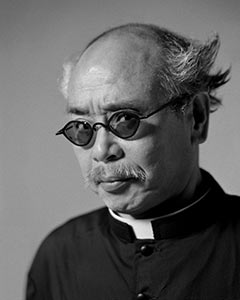
Nobuyoshi Araki
Shared publisher: Phaidon Press Limited, Silvana Editoriale
14 photobook(s) in the library
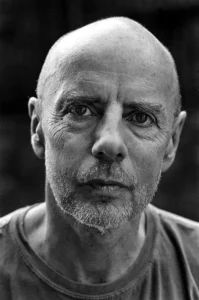
Eugene Richards
Shared publisher: Aperture, Phaidon
10 photobook(s) in the library

Joel Meyerowitz
Shared publisher: Aperture, Phaidon
9 photobook(s) in the library
COMMUNITY DISCUSSION
Discuss this entry
Share interpretations, reading notes, and source-aware questions. For catalog corrections, use the feedback form below.
No discussion yet. Start the first focused conversation.
Sign in to join the discussion.
Optionally receive a digest when related photobooks are added to the catalog.
See something incorrect? Sign in to suggest a correction or report an issue.