← Back to Home

I Will Keep You in Good Company

Hardcover English 192 pages 31.0 x 25.0 cm 1.30 kg

Description

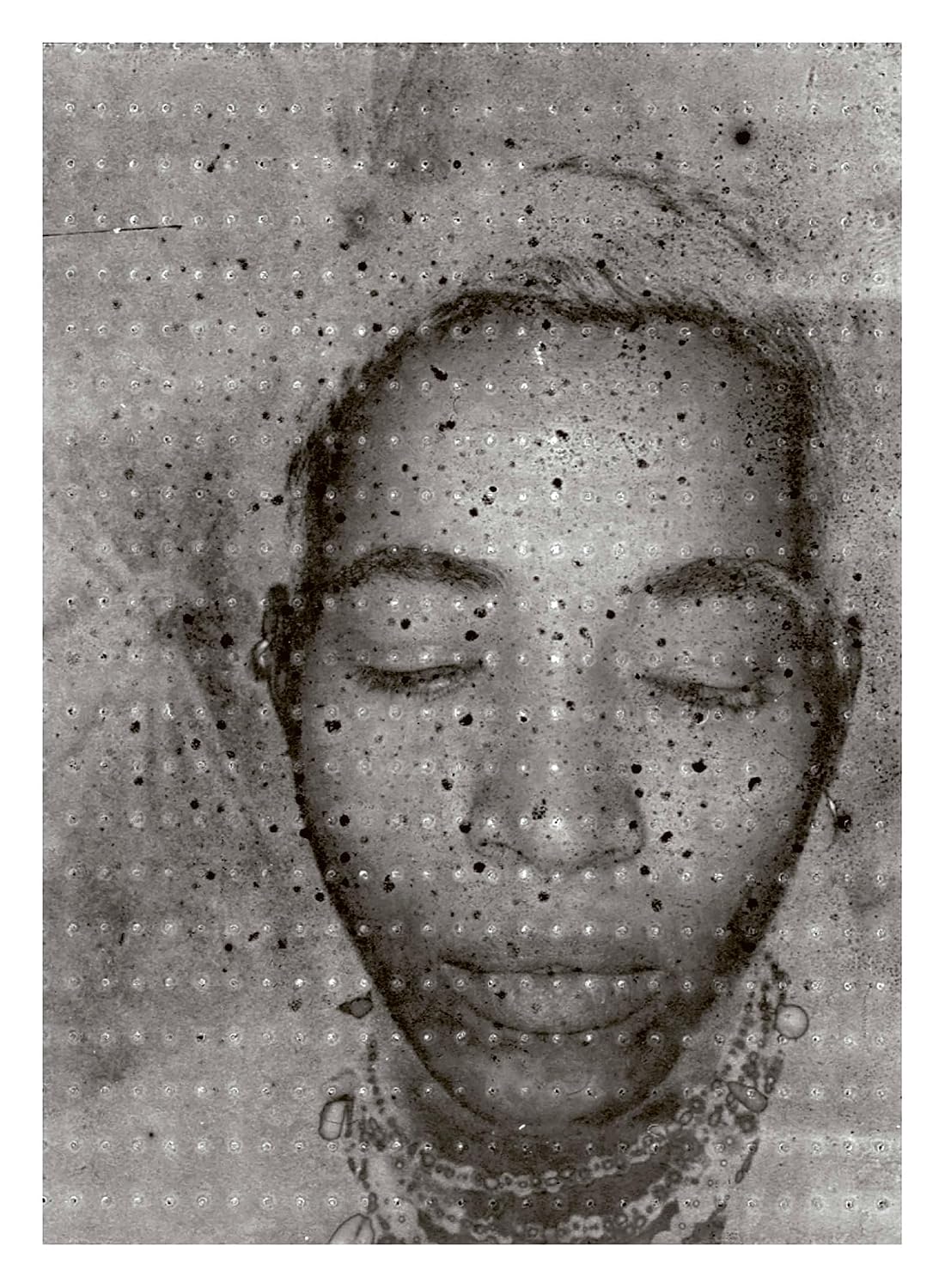
Liz Johnson Artur’s I Will Keep You in Good Company gathers pages and fragments from more than twenty personal workbooks made since the early 1990s. Friends, relatives, lovers and strangers appear within an archive that is at once private and outward-looking. Rather than presenting photographs as isolated, resolved images, the book shows how encounters were retained, reconsidered and placed in relation to the artist’s daily life.

The workbooks served partly as diaries and partly as sites of experiment. Johnson Artur layered, cut, annotated and assembled her material, combining photographic prints on canvas, tracing paper, fax paper and photographic stock with screenprints, handwriting and clipped text. These surfaces make process visible: an image can be interrupted by language, carried across materials or returned to in another context. The resulting sequence concerns not only what the camera records, but how photographs acquire meaning through handling, proximity and repetition.

This long-running practice also forms a foundation for Johnson Artur’s Black Balloon Archive, her continuing photographic engagement with communities across the African diaspora. The workbook format brings that larger project to an intimate scale. Its subjects are not treated as specimens within a typology; they remain embedded in relationships, occasions and acts of attention. The book accordingly connects personal memory with a broader social record while preserving the provisional character of the artist’s thinking.

Published in 2025 by MACK under the Self Publish, Be Happy imprint, the 192-page hardcover offers collectors a concentrated view of Johnson Artur’s working method rather than a conventional career survey. Its significance lies in the sustained span of the source material and in the translation of handmade, mixed-media volumes into a single sequence. For a collection concerned with photographic archives, artist’s books or the representation of diasporic communities, it provides a substantive example of editing and material assembly as integral parts of photographic authorship.