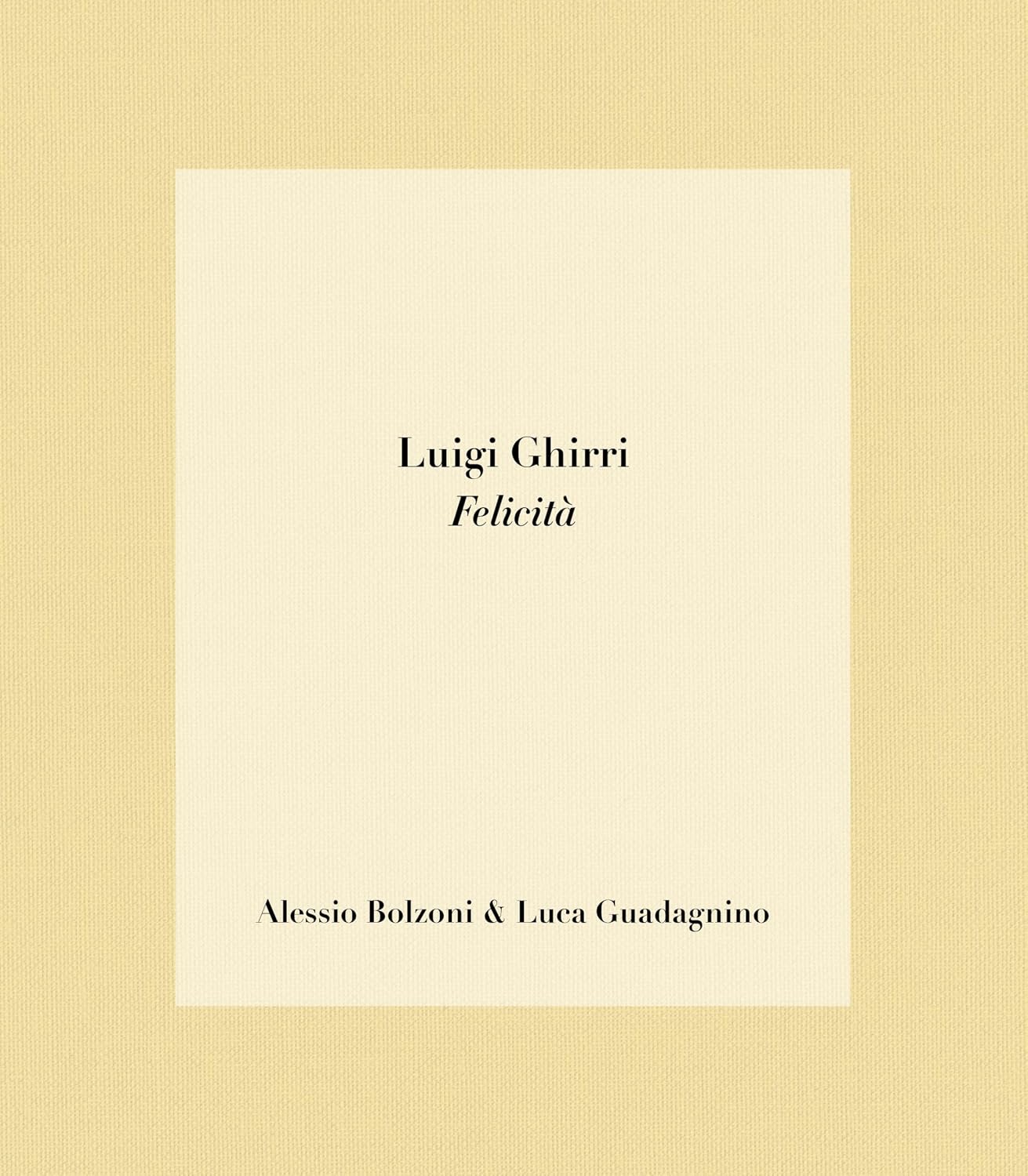
In Luigi Ghirri: Felicità, happiness is approached not as spectacle but as a condition discovered among images, objects and places. Published by MACK in 2026 to accompany the exhibition co-curated by artist Alessio Bolzoni and filmmaker Luca Guadagnino, the book brings previously unseen photographs into conversation with familiar works by Ghirri. Its premise is precise: to trace a personal route through a practice in which the everyday repeatedly becomes strange, provisional and open to interpretation.
The sequence moves from dryly humorous photographs of discarded magazine cuttings and close observations of materials to domestic interiors and pictures made during Ghirri’s travels in Italy and elsewhere. Colour and sunlight connect these otherwise disparate subjects without forcing them into a single narrative. Fragments of printed imagery, architectural thresholds and inhabited rooms become parts of the same inquiry into how photographs organize perception—and how ordinary surroundings can carry associations beyond what they literally depict.
Three texts by Ghirri—“The Open Work,” “The Impossible Landscape” and “House, Bridge, Gate”—interrupt and extend the photographic sequence. Their placement gives the volume an essayistic rhythm rather than the structure of a conventional retrospective. Image and writing remain distinct, yet each changes the terms through which the other is read: landscapes become questions about representation, while modest objects and spaces acquire conceptual weight.
At 120 pages, this hardcover is a concentrated exhibition publication rather than an attempt at comprehensive survey. Its significance for a serious collection lies in the specificity of the collaboration: Bolzoni and Guadagnino construct an idiosyncratic selection, while Ghirri’s own writings keep the artist’s thinking present within it. Felicità therefore offers both a focused encounter with his use of colour, travel, domestic space and reproduced imagery, and a clear example of how curatorial sequencing can generate fresh relations across an established body of work.