← Back to Home

Drug Wars: Supply and Demand
Lowest Total Cost
From US$40.42
Limited data
Avg US$40.42 · 1 listings · Updated Aug 1, 2026 · shipping included, normalized to USD
Price insight click to expand
Amazon US · Amazon US$40.42
Drug Wars: Supply and Demand
Item 40.42 USD · Shipping not listed
Amazon Canada · Amazon US$53.64
Drug Wars: Supply and Demand
Item 73.48 CAD · Shipping not listed
Amazon markets: Amazon Canada

Experimental legacy market signal, not an appraisal; current exact-edition evidence may be insufficient. · market-score-v1 · Aug 2026

Drug Wars: Supply and Demand

Collector Grade · C- Rarity · Common Deal · Weak Confidence · Low
Hardcover English 272 pages 25.4 x 19.0 cm 703 g

Experimental Legacy Market Signal

Rarity 18.4/100 · Collector 0/100 · Deal 2/100 · Listings: 1 · Avg price: $40.42 · Min price: $40.42

These scores use the legacy monthly asking-price aggregate. They do not use the new exact-edition, condition, completeness, and destination-shipping rules.

Description

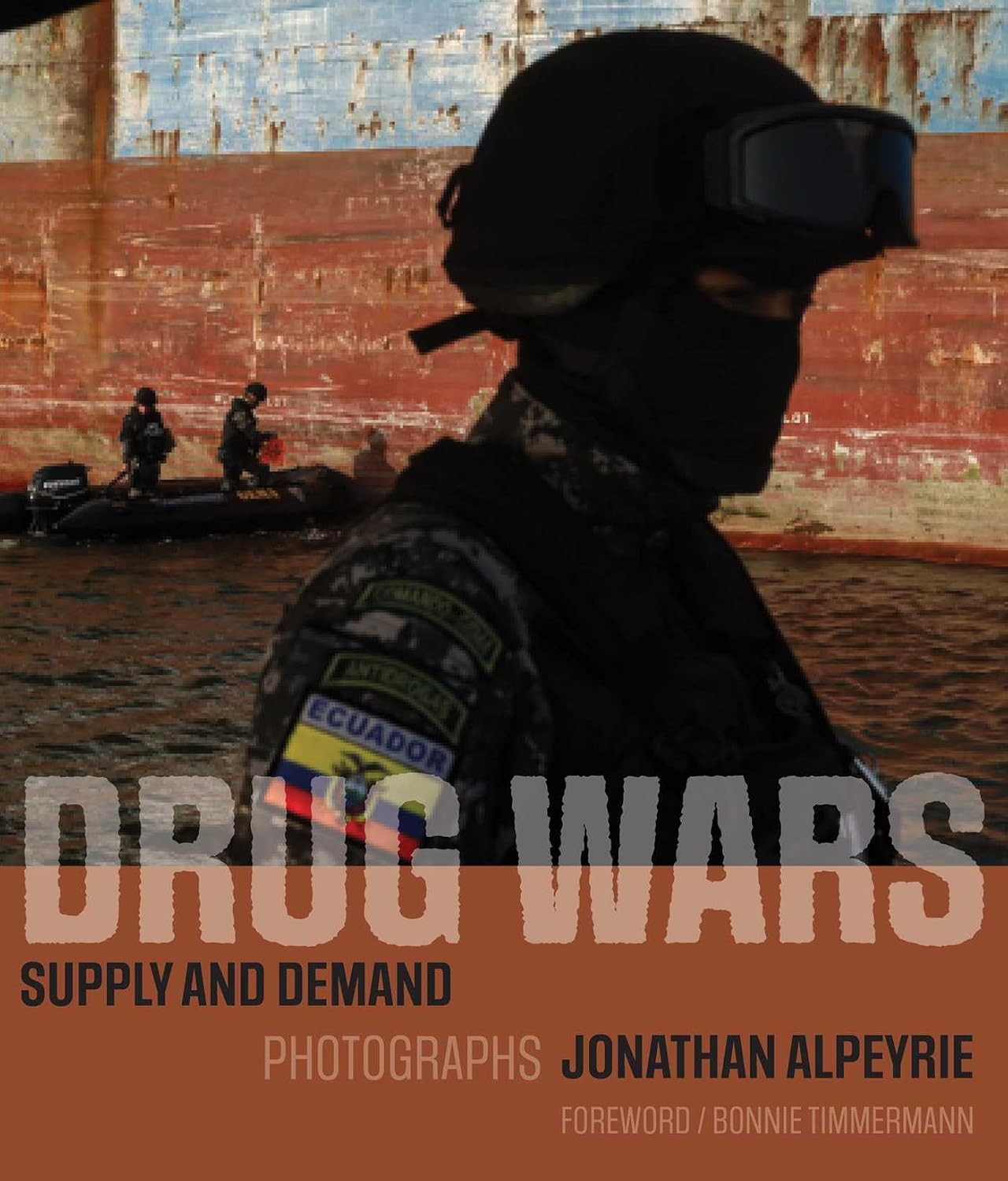
Jonathan Alpeyrie’s Drug Wars: Supply and Demand examines the drug economy as a connected system rather than a sequence of isolated crimes. Published by G Editions in 2025, the book follows illicit drugs from sites of production in Latin America, through the conditions of trafficking, toward markets and consumption in North America. Its governing terms—supply and demand—shift attention from individual incidents to the relationships that sustain the trade across borders.

Alpeyrie approaches the subject through more than 150 photographs accompanied by written commentary. The breadth of the project allows production, transit, enforcement, consumption, and human consequence to occupy the same documentary field. Direct access gives the work immediacy, but the book’s larger purpose is explanatory: images and text are brought together to clarify causes, repercussions, and the unequal pressures exerted along the route. A foreword by Bonnie Timmermann introduces the volume.

The book is significant for the scale at which it frames a subject often represented through raids, seizures, or moments of spectacular violence. By extending its view across Latin and North America, Drug Wars asks readers to consider the drug trade as an interdependent structure shaped by geography, appetite, risk, and power. The photographs address the people and environments caught within that structure without reducing the subject to a single location or constituency.

For collectors of documentary photography and contemporary photojournalism, the book’s relevance rests on this sustained, cross-border treatment and on the integration of pictures with contextual writing. The 272-page hardcover provides room for a substantial photographic argument rather than a compressed news report. As a record of a continuing crisis viewed through both its producing and receiving territories, Drug Wars deserves attention for the coherence of its premise and the seriousness of its documentary scope.