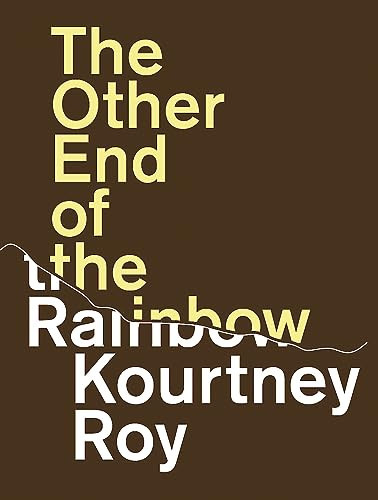
The Other End of the Rainbow fixes its attention on Highway 16 in British Columbia, Canada. Over many years, women and girls—predominantly Indigenous—have disappeared along the route or been found dead, giving it the name “Highway of Tears.” Kourtney Roy returned to the region over more than two years, approaching these events not as an isolated set of cases but as an enduring history of lives exposed to violence and pushed from public view.
Roy does not reconstruct crimes or pursue dramatic revelation. She photographs places that appear empty: landscapes and roads rendered uncertain by darkness, fog, and the haze of forest fires. The images proceed quietly and at a measured pace, resisting both lyricism and spectacle. Because the absent are rarely represented directly, the terrain itself becomes a structure through which absence is registered. The viewer is asked to recognize human consequence in scenes that initially seem to disclose very little.
Testimonies from victims’ families and those close to them occupy a substantial place in the book. Their words reconnect the photographed sites to particular lives while identifying the misogyny, racism, exclusion, and social denial surrounding the cases. The conjunction of restrained images and direct testimony gives the work its ethical force: photography acknowledges its inability to explain such disorder fully, yet remains capable of sharing grief, sustaining attention, and refusing erasure.
Published by André Frère Éditions in 2022, this 432-page French-English volume includes photographs and text by Roy, with contributions from François Cheval and Gladys Radek; its first edition comprises 700 numbered copies. For a serious photobook collector, its importance lies chiefly in the close relationship between subject and form. Scale, sequencing, testimony, and slow observation make the book more than a portfolio of individual images. It is a sustained photographic narrative about absence, trauma, and the limits—and responsibilities—of representation.