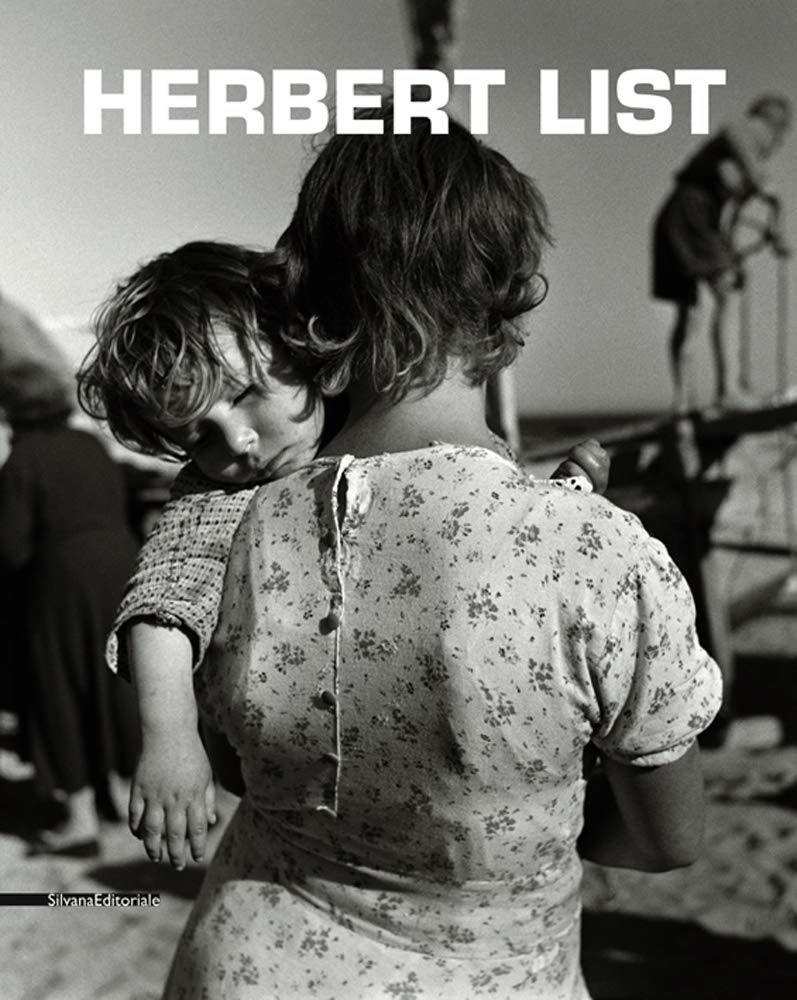
Herbert List gathers the work of the German photographer Herbert List (1903–1975), whose practice moved freely among architecture, still life, street photography, portraiture and documentary observation. Rather than presenting these categories as separate accomplishments, the book emphasizes the exchanges between them: a building may be treated with the concentration of a still life, while a recorded object can acquire the psychological presence of a portrait.
That instability of genre is central to List’s distinctive vision. His photographs of Greek sculpture and African objects resist the neutrality associated with cataloguing, just as his studies of the male body complicate any easy distinction between classical composition and private encounter. Formal control and spontaneous observation remain in productive tension. Surrealist inflections emerge not as spectacle, but through shifts of scale, unexpected correspondences and the transformation of ordinary subjects by framing.
The selection places established images alongside lesser-known work, allowing recurring ideas to become visible across different assignments and subjects. This comparative structure matters: List is represented neither by a single celebrated motif nor by a strictly chronological summary, but through the breadth of a practice that repeatedly crossed photographic conventions. The result is a compact account of an artist whose coherence lies precisely in his refusal to remain within one genre.
Published by Silvana Editoriale as a trilingual Italian, English and French exhibition catalogue connected with the 2014 presentation in Reggio Emilia, the volume extends to 160 pages. For a serious photography collection, its interest rests not on claims of scarcity but on the focused editorial framework it brings to List’s varied production. It offers a useful point of study for readers concerned with twentieth-century exchanges among documentary description, classical form and surrealist composition—and with the photobook’s capacity to reveal affinities that individual prints may leave dispersed.