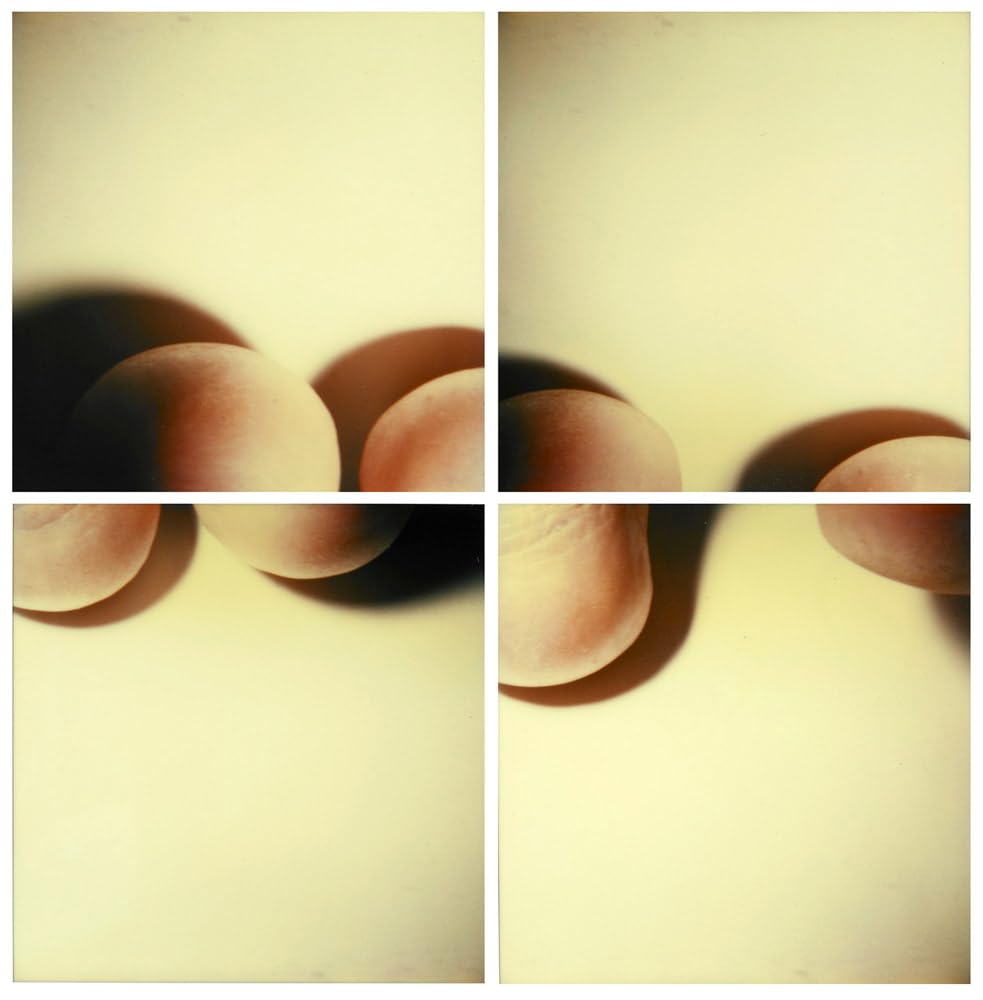
Published by Skira in 2023, Hannah Villiger surveys the work of the Swiss artist from her sculptures of the 1970s and lesser-known drawings to the photographic practice for which she became best known. Villiger’s subject was the body—above all her own—but her close views resist the conventions of either portraiture or documentary description. Cropped and isolated, the body becomes an unstable field of volume, surface and spatial relation.
The book follows Villiger’s turn in the 1980s toward black-and-white photography and the Polaroid camera. She enlarged fragmentary images through an internegative, mounted them on aluminium and presented them singly or in blocks responsive to architectural space. This movement between bodily intimacy and sculptural scale is central to her work: skin may register as a psychological boundary, while a limb or torso can approach abstraction without losing its human reference.
Edited by Yasmin Afschar and Madeleine Schuppli, the monograph brings Villiger’s images into dialogue with essays addressing the female body, self-image, the perceptions of others, fluid identity, physical fragmentation and the aesthetics of skin. Contributions by artists and contemporaries add personal perspectives to the scholarly account, allowing the volume to consider both the formal logic of the work and the circumstances in which it was made.
For collectors, the book’s importance lies in this breadth and structure rather than in any claim of rarity. It connects Villiger’s early sculptural thinking to her mature photo-based works and situates a distinctive investigation of self-representation within late twentieth-century art. As part of a series initiated by Muzeum Susch and Skira to reconsider women artists insufficiently represented in established art-historical narratives, it also offers a substantive framework for studying how photography, sculpture and the body converged in Villiger’s practice.