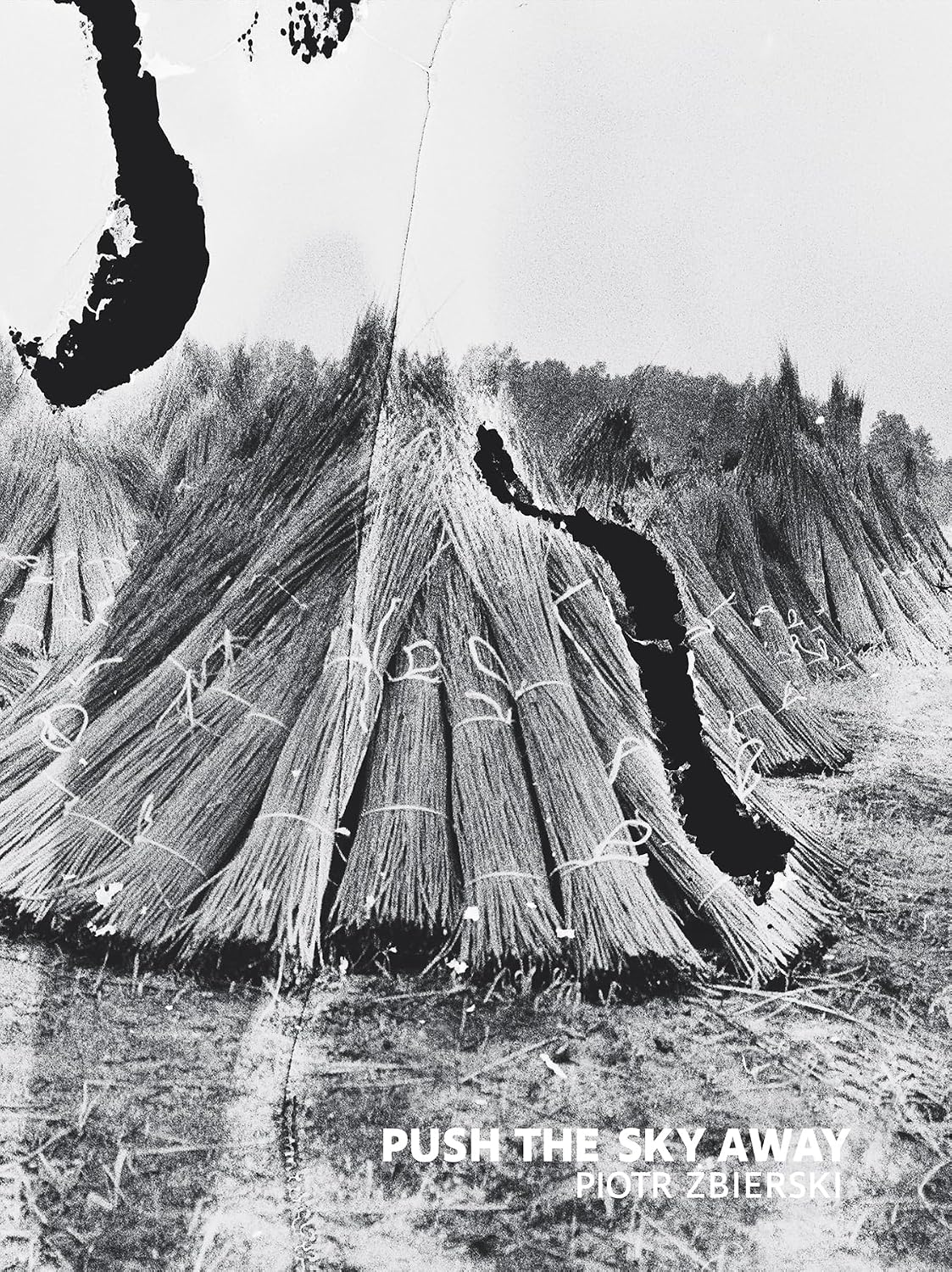
Piotr Zbierski’s *Push The Sky Away*, published by Dewi Lewis Publishing in 2017, is an extended inquiry into what may persist beneath the differences between lives and cultures. The photographer looks toward emotions, inherited forms of conduct, and ritual as elements of a durable human structure. Rather than treating these subjects as separate themes, he gathers them into a single proposition about continuity: that certain patterns of feeling and behavior remain recognizable across time and place.
The book is organized as a triptych of closely connected series. Each section develops from what precedes it and prepares the terms of the next, giving the work a cumulative logic rather than the character of three independent portfolios. This construction is central to Zbierski’s approach. Meaning emerges not only from individual photographs but from their placement within a sustained sequence, where transition and recurrence provide the underlying framework.
That architecture distinguishes *Push The Sky Away* from a conventional retrospective or thematic compilation. Its premise is deliberately broad, yet the tripartite form gives the inquiry discipline: the book proposes that emotion, behavior, and ritual can be read in relation to one another as shared dimensions of human existence. The result is less an inventory of cultural difference than an attempt to identify the connective structures beneath it.
For collectors, the publication deserves attention as Zbierski’s first major book and as a substantial early monographic statement. The 238-page hardcover, issued in a first edition by Dewi Lewis Publishing, gives ample space to the interdependence of its three series. Its significance lies not in a claim of rarity, but in the degree to which the photobook form carries the argument: sequence, division, and continuity are not incidental packaging but the means by which the work establishes its intellectual and emotional scope.