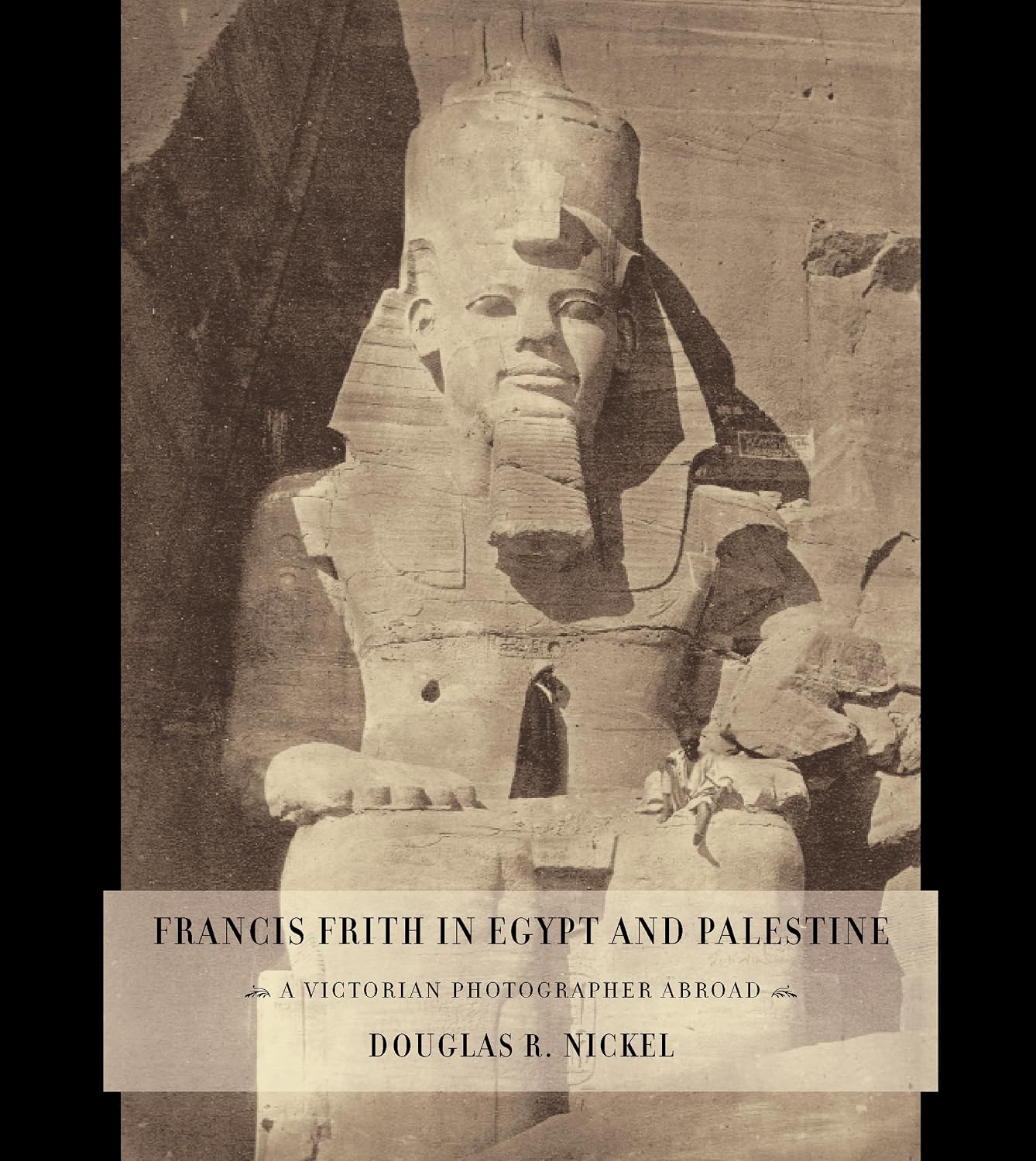
Francis Frith in Egypt and Palestine: A Victorian Photographer Abroad
-
Photographer
-
Publisher
-
ISBN
-
Publication Year2004
Description
In 1856, Francis Frith began the first of three photographic expeditions through Egypt and the Holy Lands. Moving up the Nile and onward through Sinai, Palestine, Syria, and Lebanon, the English photographer worked methodically, making views of ruins, landscapes, and sites already freighted with biblical and historical associations. *Francis Frith in Egypt and Palestine: A Victorian Photographer Abroad* returns these images to the conditions in which they were made and first understood.
Frith’s photographs can appear rigorously topographic: architecture is described with precision, terrain is organized for scrutiny, and celebrated places are presented as material facts. Douglas R. Nickel’s account complicates that apparent neutrality. It considers how Frith—a Quaker by upbringing and an entrepreneur by disposition—used photography both to affirm biblical narratives and to supply distant audiences with an imagined, continuous Orient shaped by Romantic expectation. The pictures emerge not as transparent records but as constructions addressed to a particular Victorian public.
The book therefore treats photographic meaning as inseparable from nineteenth-century religious argument, imperial thought, Romantic philosophy, and Pre-Raphaelite aesthetics. It also follows the public life of the work: Frith issued his views in England and America in several formats and became a recognized figure in photographic circles. Nickel’s interdisciplinary approach connects the photographs’ formal authority to the intellectual and commercial systems through which they circulated.
Published by Princeton University Press in 2004, this 239-page study is significant for collectors interested in early travel photography, the representation of Egypt and Palestine, and the cultural uses of the photographic archive. Its value lies less in presenting historical views as isolated monuments than in showing how systematic description, religious purpose, commerce, and fantasy could coexist within a single body of work. Frith’s images remain compelling precisely because the book asks readers to examine both what they record and the Victorian structures of belief through which that record was produced.