Photographer
Masahisa Fukase
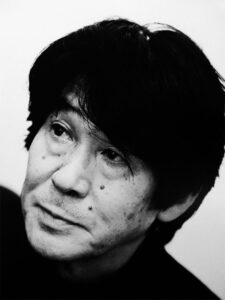
Masahisa Fukase (1934–2012) was one of Japan’s most radical and influential postwar photographers, best known for his deeply personal, psychologically charged, and visually experimental work. Born in Hokkaido into a family of studio photographers, he developed a lifelong fascination with image‑making. After graduating from the Photography Department at Nihon University in 1956, he worked in commercial settings before becoming a freelance photographer in 1968. His early assignments revealed a talent for blending intimacy, performance, and an often dark sense of humor with sharp social observation.
Fukase worked primarily through long‑term series, many of which unfolded alongside major events in his personal life. His wives, parents, and even his beloved cat Sasuke appeared repeatedly across his work, forming a kind of photographic autobiography. His innovative approach produced a wide range of imagery: surreal color abstractions, staged self‑portraits, family tableaux, and raw depictions of slaughterhouses and urban nightlife. His performative self‑portraits from the late 1980s and early 1990s anticipate today’s selfie culture with their expressive, humorous, and sometimes unsettling explorations of the self.
His most celebrated work, *Karasu* (*Ravens*, 1975–1985), is considered one of the greatest photobooks ever made. Produced in the emotional aftermath of his divorce, the series transforms the raven into a metaphor for loss, longing, and psychological turbulence. The stark black‑and‑white images, often shot in Hokkaido and Tokyo, combine documentary observation with lyrical abstraction. The book’s mood of solitude and existential angst has made it a landmark in photographic history, influencing generations of artists worldwide.
Throughout his career, Fukase exhibited widely at institutions including MoMA, the Victoria & Albert Museum, the Oxford Museum of Modern Art, the Fondation Cartier, and numerous Japanese museums. His extensive archive—much of which was unseen for decades—was only made public after his death, revealing vast bodies of work that further highlight his creativity and range. His life took a tragic turn in 1992 when he suffered a severe brain injury from a fall, leaving him incapacitated until his death in 2012. Despite this, his legacy has continued to grow, positioning him as one of the most innovative, emotionally resonant, and influential photographers of the 20th century.
Masahisa Fukase (1934–2012) was a Japanese photographer born in Hokkaido. He studied photography at Nihon University and began his career in commercial photography, later gaining international fame for his intimate and often unsettlingly personal work. His most celebrated series, ‘Karasu’ (Ravens), published as a book in 1986, grew out of grief after his divorce, using dark, grainy images of ravens and himself to reflect solitude and emotional turmoil. He also produced everyday diaries and family portraits. His influence spread to generations of contemporary photographers, yet a severe brain injury in 1992 ended his creative life. He died on June 9, 2012.


Selected Works & Key Projects
A source-backed introduction to individual photographs and significant bodies of work.
Key projects
Project · 1975–1986
Karasu (Ravens)
Karasu (Ravens) is Fukase's masterwork, a movingly raw photobook assembled between 1975 and 1986, that documents his obsessive engagement with ravens after the collapse of his marriage. The blurred, high-contrast, grainy images capture birds in flight or amid snowy landscapes, intensifying into a hallucinatory mirror of the photographer’s own sorrow. The sequence radically departs from clean Japanese printing traditions, influencing a generation of photobook makers and establishing Fukase as a central figure in postwar Japanese photography.
View source ↗Selected photographs
Untitled (Raven in Flight, from Karasu)
A signature image from the Karasu sequence, showing a solitary raven cutting across a dramatically blurred sky. The photograph condenses Fukase's obsession with ravens as an embodiment of emptiness, using extreme grain and motion blur to transform a bird into a mental projection. Reproduced in countless anthologies, it is often cited when discussing the fusion of psycho‑biographical intent with the medium's grain and focus as expressive devices. It exemplifies how Fukase pushed documentary precision into a personal, self‑reflexive poetry.
Work source ↗-
February 25, 1934
Career milestone
Birth in Bifuka, Hokkaido
Masahisa Fukase was born in Bifuka, Nakagawa District, Hokkaido, on February 25, 1934. He was the eldest of three children of Mitsue and Sukezō Fukase. His father operated the Fukase Photographic Studio, then already in its second generation.
Source: Masahisa Fukase Archives, “Lifetime of Fukase” Verified Sep 4, 2026
-
1952–1956
Education
Photography studies at Nihon University
After high school, Fukase entered the Photography Department of Nihon University College of Arts in Tokyo in 1952. He graduated in 1956, establishing the academic training that preceded his work in advertising, publishing, and independent photography.
Source: Masahisa Fukase Archives, “Lifetime of Fukase” Verified Sep 4, 2026
-
1960
Exhibition
First exhibition: Sky Above an Oil Refinery
Photographs Fukase made while working for the Dai-Ichi advertising agency led to his first exhibition, Sky Above an Oil Refinery, at Konishiroku Gallery in Tokyo. The exhibition marks his first recorded public presentation as a photographer.
Source: Masahisa Fukase Archives, “Lifetime of Fukase” Verified Sep 4, 2026
-
1964
Career milestone
Joins Nippon Design Center
Fukase began working at the Nippon Design Center in 1964. In the same year he married Yoko Wanibe, whom he had met in the previous year. Yoko would later become a principal subject in several of his photographic projects.
Source: Masahisa Fukase Archives, “Lifetime of Fukase” Verified Sep 4, 2026
-
1967
Career milestone
Photography director at Kawade Shobo Shinsha
In 1967, Fukase was appointed photography director of the publisher Kawade Shobo Shinsha and contributed regularly to Asahi Journal. This appointment placed his photographic work within a major Japanese publishing context.
Source: Masahisa Fukase Archives, “Lifetime of Fukase” Verified Sep 4, 2026
-
1968
Career milestone
Begins freelance practice
Following earlier positions at the Nippon Design Center and Kawade Shobo Shinsha Publishers, Fukase became a freelance photographer in 1968. The Archives identifies this transition as the beginning of the independent practice through which he developed his sustained photographic series.
Source: Masahisa Fukase Archives, “Biography” Verified Sep 4, 2026
-
1971
Photobook
Publication of Homo Ludence
Fukase returned to Hokkaido in 1971 and photographed his family in the Fukase studio. That year, Chūōkōron-sha in Tokyo published Homo Ludence, a book that recorded an early major publication in his career.
Source: Masahisa Fukase Archives, “Lifetime of Fukase” Verified Sep 4, 2026
-
1974
Exhibition
Selected for MoMA’s New Japanese Photography
Fukase traveled to New York in 1974 for New Japanese Photography at the Museum of Modern Art, an exhibition curated by Shōji Yamagishi and John Szarkowski, after his work was selected. He also co-founded the Workshop Photography School that year.
Source: Masahisa Fukase Archives, “Lifetime of Fukase” Verified Sep 4, 2026
-
1976–1982
Series
Ravens serialized in Camera Mainichi
Just before his divorce from Yoko, Fukase traveled to Hokkaido in 1976 and made photographs later published in eight installments as “Ravens” in Camera Mainichi, from October 1976 through November 1982. The series also received exhibitions at Nikon Salons, beginning in 1976.
Source: Masahisa Fukase Archives, “Lifetime of Fukase” Verified Sep 4, 2026
-
1977
Award
Nobuo Ina Award for Ravens
Fukase received the Nobuo Ina Award in 1977 for his Ravens exhibition. The Masahisa Fukase Archives lists the prize among the awards he received, while its chronology specifically connects the 1977 award to Ravens.
Source: Masahisa Fukase Archives, “Lifetime of Fukase” Verified Sep 4, 2026
-
1986
Photobook
Publication of Ravens
Sōkyūsha in Tokyo published Fukase’s book Ravens in 1986. The Archives describes Karasu (Ravens), made from 1975 to 1985, as the series and subsequent publication for which he became internationally known, and as a photographic masterpiece widely celebrated in the field.
Source: Masahisa Fukase Archives, “Biography” Verified Sep 4, 2026
-
1992
Award
Higashikawa Special Prize and life-changing injury
In 1992, Fukase received the Higashikawa Special Prize. On June 20 of the same year, he fell down the stairs at his regular bar and sustained serious brain damage, leaving him unable to care for himself; he subsequently spent the next 20 years in a care home.
Source: Masahisa Fukase Archives, “Lifetime of Fukase” Verified Sep 4, 2026
Collection
Museum of Modern Art
The Museum of Modern Art in New York holds a selection of Masahisa Fukase's photographs in its permanent collection, reflecting his importance in postwar Japanese photography. Works such as those from his 'Ravens' (Karasu) series are included, marking his contribution to the medium.
Verified 2026-09-04Wikipedia English
Collection
San Francisco Museum of Modern Art
The San Francisco Museum of Modern Art (SFMOMA) counts Masahisa Fukase's photographs in its permanent collection, demonstrating his global reach. SFMOMA has exhibited and preserved his work, underscoring his place among significant international photographers.
Verified 2026-09-04Wikipedia English
Collection
Tokyo Metropolitan Museum of Photography
The Tokyo Metropolitan Museum of Photography holds Masahisa Fukase's works in its permanent collection, honoring his impact on Japanese photography. The museum's archive and exhibitions provide institutional validation of his legacy within his home country.
Verified 2026-09-04Wikipedia English
Representation
Bruce Silverstein Gallery
Bruce Silverstein Gallery in New York represents the estate of Masahisa Fukase, curating and selling his prints to museums and collectors. This gallery acts as a key intermediary for his works, ensuring continued access and preservation of his photographic oeuvre.
Verified 2026-09-04Bruce Silverstein Gallery official website
Fukase Masahisa (opens a new site)
The Smithsonian’s National Museum of Asian Art introduces Fukase through the museum’s Japan Modern presentation and lists four Ravens gelatin-silver prints: Seikan Ferryboat (1976), Nayoro (1977), an untitled work (1978), and Koen Dori, Shibuya (1982). The concise overview links his 1974 participation in New Japanese Photography at MoMA, his cofounding of the Workshop, and the 1986 publication of Karasu (Ravens). It is a reliable starting point that connects biography, institutional display, and specific works in a public collection.
Masahisa Fukase 1961–1991 Retrospective (opens a new site)
Tokyo Photographic Art Museum’s exhibition resource surveys Fukase through major bodies of work including Yōko, Family, Ravens, Sasuke, Walking Eye, Private Scenes, and Bukubuku. It is especially useful for its project-by-project curatorial accounts: it documents how Fukase made private life, family history, travel, animals, and self-portraiture into sustained photographic investigations. The page also identifies collection holdings and gives an institutional account of Ravens’ development and its 1977 Ina Nobuo Award.
From Magazines to Gallery Walls: Rethinking Fukase Masahisa’s “Ravens” and the Workshop School of Photography in 1976 Japan (opens a new site)
Elise Voyau’s peer-reviewed article examines Ravens alongside the Workshop School of Photography in the context of 1970s Japanese photography. Its stated focus is the changing status of the original photographic print and the movement from magazine publication to exhibition display in post-1968 Japan. This is a focused research resource for readers who want to place Fukase’s Ravens within debates about photographic media, exhibitions, and the developing contemporary-art field rather than treating the series only as autobiography.
COMMUNITY DISCUSSION
Discuss this entry
Share interpretations, reading notes, and source-aware questions. For catalog corrections, use the feedback form below.
No discussion yet. Start the first focused conversation.
Sign in to join the discussion.
Optionally receive a digest when related photobooks are added to the catalog.
See something incorrect? Sign in to suggest a correction or report an issue.