Photographer
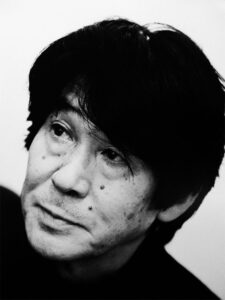
Takashi Homma
Takashi Homma (b. 1962, Japan) is a Japanese photographer known for his subtle, observational approach to contemporary life, often focusing on urban environments, architecture, and everyday scenes. His work reflects a quiet, detached perspective shaped by influences from both Japanese and Western photography.
Homma gained international recognition with his series Tokyo Suburbia, which examines the banality and beauty of suburban landscapes in Japan. His photographs are characterized by a neutral tone, soft color palette, and an emphasis on surface and atmosphere rather than dramatic narrative.
In addition to urban studies, his work also explores themes such as nature, childhood, and environmental change. For collectors, Homma’s work is valued for its understated aesthetic, conceptual clarity, and its important position in contemporary Japanese photobook culture.
Takashi Homma is a Japanese photographer born in Tokyo in 1962. He studied photography at Nihon University and worked for the advertising agency Earth before relocating to London in 1989, where he shot for The Face magazine. After returning to Japan in 1991, Homma developed a distinctive style that merges commercial work with personal projects. His series Tokyo Suburbia, published as a book in 1996, examines the new suburban landscapes around Tokyo and earned him the 27th Ina Nobuo Award. Homma is noted for his cool, detached color photographs that capture contemporary Japanese life, from urban scenes to portraits. He has exhibited worldwide and published many books, including Baby and New Documentary.


Selected Works & Key Projects
A source-backed introduction to individual photographs and significant bodies of work.
Key projects
Project · 1995–1998
TOKYO SUBURBIA
TOKYO SUBURBIA brings together photographs of Tokyo’s suburban scenery and of people living there. Made between 1995 and 1998 and published by Korin Shuppan in 1998, the project uses a measured distance from its subjects; the museum description also notes occasional theatrical staging, which emphasizes the built, artificial character of suburban streets. The 1999 Kimura Ihei Award recognized the photobook, while later museum interpretation identifies its detached, non-lyrical viewpoint as a principal reason for its acclaim. It merits selection as Homma’s award-winning statement on developing metropolitan peripheries.
View source ↗Project · 1999–2010
Tokyo and My Daughter
Tokyo and My Daughter is a long-running color-photographic project, dated 1999–2010 in the Tokyo Photographic Art Museum collection. A 2021 expanded edition presents 32 color photographs that place images of a young girl alongside close views of Tokyo’s cars, houses, and trees. The museum characterizes the work as concentrating on Tokyo scenes and a young girl growing up in a changing city. Its importance within Homma’s work is therefore project-level: rather than isolating a single portrait or city view, it links family-scale observation to the urban environment through sustained sequencing.
View source ↗
Project · 2013
Pinhole Series
Pinhole Series marks Homma’s documented turn toward camera-obscura practice. Aperture describes this method as a departure from his earlier work: an inverted image is projected when light passes through a small opening in a wall. Museum collection records identify 2013 Lambda prints including Black Sun 2 and Hiroshima Peace Site [Hiroshima Peace Memorial Museum]. The project deserves selection because it shifts attention from photographed subject matter alone to the apparatus and conditions of image formation, while retaining sites that are institutionally collected by the Museum of Contemporary Art Tokyo.
View source ↗Selected photographs

1995 · Makuhari Bay Town, Chiba, Japan
Makuhari Bay Town, Chiba
Makuhari Bay Town, Chiba is a 1995 chromogenic print from TOKYO SUBURBIA, held by the Tokyo Photographic Art Museum. Its catalogued place name makes it a precise example of the project’s attention to named suburban sites rather than an undifferentiated idea of “Tokyo.” The collection record explains that the series photographs suburban landscapes and residents, maintaining distance and sometimes using theatrical treatment to bring out an artificial atmosphere. This accessioned work merits selection as a museum-held, place-specific entry into Homma’s celebrated 1998 photobook project.
Work source ↗
1995 · Shonan International Village, Kanagawa, Japan
Girl 1, Shonan International Village, Kanagawa
Girl 1, Shonan International Village, Kanagawa is a 1995 chromogenic print in the TOKYO SUBURBIA series, accessioned by the Tokyo Photographic Art Museum. The work’s title joins a numbered child portrait to a specifically named planned-suburban location. It merits selection not as a separately documented award-winning image, but as a clear museum-held example of the project’s stated combination of suburban places and their inhabitants. In the broader series, Homma’s distanced, sometimes theatrical approach was used to emphasize the artificial atmosphere of the suburban environment.
Work source ↗
1998 · Keio Tama Center, Tokyo, Japan
Boy 1, Keio Tama Center, Tokyo
Boy 1, Keio Tama Center, Tokyo is a 1998 chromogenic print from TOKYO SUBURBIA in the Tokyo Photographic Art Museum collection. The title identifies both a child and Keio Tama Center, locating the image within the project’s survey of suburban landscapes and residents. Its value as a selection is evidentiary and representative: it is a dated, accessioned museum work from the same year that TOKYO SUBURBIA was published. It therefore provides a specific photographic instance through which to encounter Homma’s larger, award-recognized suburban project.
Work source ↗
1998 · Makuhari, Chiba, Japan
Love Hotel UFO, Makuhari, Chiba
Love Hotel UFO, Makuhari, Chiba is a 1998 chromogenic print from TOKYO SUBURBIA, held by the Tokyo Photographic Art Museum. The museum explicitly describes the series as photographs of Tokyo’s suburban scenes and inhabitants, made with a consistent distance and, at times, theatrical treatment that highlights the streets’ artificial atmosphere. This work merits selection because its unusually specific title records a named commercial building within that suburban field. It gives the project’s account of constructed, everyday peripheral space a focused architectural subject while remaining a museum-accessioned photograph.
Work source ↗
2013 · Hiroshima, Japan
Pinhole Series, Hiroshima Peace Site [Hiroshima Peace Memorial Museum]
Pinhole Series, Hiroshima Peace Site [Hiroshima Peace Memorial Museum] is a 2013 Lambda print in the Museum of Contemporary Art Tokyo collection. Its formal significance derives from its placement within Homma’s documented camera-obscura turn, in which light passing through a small wall opening produces an inverted image. The institutional title connects that photographic experiment to the Hiroshima Peace Memorial Museum. It merits selection as a specifically titled, accessioned museum work that joins a historically charged site with a method that foregrounds photography’s physical image-making process.
Work source ↗-
1962
Career milestone
Born in Tokyo, Japan
Takashi Homma was born in Tokyo, Japan. This documented origin locates the photographer’s subsequent sustained engagement with Tokyo’s suburbs, architecture, and changing urban environments in the city in which he was born.
Source: Nonaka-Hill, Takashi Homma Biography Verified Sep 4, 2026
-
Late 1980s
Career milestone
Began work in advertising and fashion magazines
Homma began his professional activity in advertising and fashion magazines in the late 1980s. The account establishes an editorial and commercial beginning before his later independent photographic practice, rather than presenting his art-photography career as separate from magazine culture.
Source: Les presses du réel, Tokyo and my Daughter Verified Sep 4, 2026
-
Early 1990s
Career milestone
Moved to London and worked with i-D
In the early 1990s, Homma moved to London and worked with cultural magazines including i-D. This international editorial period is specifically documented as preceding his return to Japan and the development of a more personal body of work.
Source: Les presses du réel, Tokyo and my Daughter Verified Sep 4, 2026
-
1995
Exhibition
Babyland at Parco Gallery, Tokyo
Homma presented the solo exhibition Babyland at Parco Gallery in Tokyo. It is among the earliest solo exhibitions listed in his biography and documents his public exhibition activity in Tokyo before the publication and recognition of Tokyo Suburbia.
Source: Nonaka-Hill, Takashi Homma Biography Verified Sep 4, 2026
-
1998
Photobook
Tokyo Suburbia published
Korinsha Press published Tokyo Suburbia in Kyoto. The book became a decisive early publication in Homma’s record: the Tokyo Photographic Art Museum later described its photographs of developing Tokyo suburbs as acclaimed for their distance from people and landscape and for a non-lyrical viewpoint.
Source: Nonaka-Hill, Takashi Homma Biography Verified Sep 4, 2026
-
1999
Award
24th Kimura Ihei Award for Photography
Homma received the 24th Kimura Ihei Award for Photography for Tokyo Suburbia. The award formally recognized the photobook whose detached treatment of Tokyo’s developing suburban settings was noted by the Tokyo Photographic Art Museum as highly acclaimed.
Source: Tokyo Photographic Art Museum, Revolution 9: Homma Takashi press release Verified Sep 4, 2026
-
2000
Exhibition
Tokyo Suburbia at Fotomuseum Winterthur
A solo exhibition titled Tokyo Suburbia was held at Fotomuseum Winterthur in Winterthur, Switzerland. This museum presentation documents the project’s circulation beyond Japan shortly after its publication and Kimura Ihei Award recognition.
Source: Nonaka-Hill, Takashi Homma Biography Verified Sep 4, 2026
-
2006
Photobook
Tokyo and My Daughter published
Nieves published Tokyo and My Daughter in Zurich. The book joins images of Tokyo with photographs of a young girl in everyday settings; the publisher’s account identifies it as the original edition later expanded in 2021. Its publication marks a documented shift in Homma’s books toward an intimate sequencing of urban and domestic imagery.
Source: Nonaka-Hill, Takashi Homma Biography Verified Sep 4, 2026
-
2011–2012
Exhibition
New Documentary presented at three Japanese museums
Homma’s large-scale solo exhibition New Documentary traveled to three museums in Japan: the 21st Century Museum of Contemporary Art, Kanazawa; Tokyo Opera City Art Gallery; and the Marugame Genichiro-Inokuma Museum of Contemporary Art. The exhibition combined older and newer photographs and videos, offering an expansive survey of his practice.
Source: Tokyo Photographic Art Museum, Revolution 9: Homma Takashi press release Verified Sep 4, 2026
-
2019
Photobook
Three major book projects published
In 2019, Homma published Trails with MACK Books, Symphony: mushrooms from the forest with Case Publishing, and Looking Through: Le Corbusier Windows with the Window Research Institute, the Canadian Centre for Architecture, and Walther König. The three publications document a concentrated year of book production spanning landscape, mushrooms, and architectural windows.
Source: Nonaka-Hill, Takashi Homma Biography Verified Sep 4, 2026
-
October 6, 2023–January 21, 2024
Exhibition
Revolution 9: Homma Takashi at Tokyo Photographic Art Museum
Tokyo Photographic Art Museum presented Revolution 9: Homma Takashi from October 6, 2023, to January 21, 2024. The museum described it as Homma’s first solo exhibition at a Japanese museum in about ten years. Focusing on work from the preceding decade, it traced his approaches to photographic and video expression, including The Narcissistic City camera-obscura studies.
Source: Tokyo Photographic Art Museum, Revolution 9: Homma Takashi press release Verified Sep 4, 2026
Representation
Taka Ishii Gallery
Taka Ishii Gallery in Tokyo and New York has represented Takashi Homma, presenting solo exhibitions of his work and publishing related catalogues. The gallery's artist page documents his ongoing professional relationship and exhibition history.
Verified 2026-09-04Taka Ishii Gallery artist page
Collection
Museum of Modern Art, New York
MoMA holds works by Takashi Homma, including from his Tokyo Suburbia series. The artist's presence in the museum's permanent collection demonstrates his significance in contemporary photography.
Verified 2026-09-04MoMA collection
Collection
San Francisco Museum of Modern Art
SFMOMA's collection includes photographs by Takashi Homma, reflecting his international recognition and the museum's acquisition of contemporary Japanese photography.
Verified 2026-09-04SFMOMA collection
Collection
Guggenheim Museum
The Guggenheim has acquired works by Takashi Homma, placing him within a major global art collection that emphasizes contemporary photography.
Verified 2026-09-04Guggenheim collection
Other institution
The Photographers' Gallery, London
The Photographers' Gallery has presented Takashi Homma's work in solo exhibitions, affirming his standing in the European photography scene and providing a public platform for his series.
Verified 2026-09-04The Photographers' Gallery exhibition archive
To See What The Architect Saw: Takashi Homma on photographing Chandigarh (opens a new site)
Published by the Canadian Centre for Architecture, this first-person article addresses Homma’s photographic and video work in Chandigarh. He explains his interest in architecture as an environment rather than an isolated building, and in views through windows or from within buildings. The page documents two 2013 digital videos—High Court Portico and Central Bus Station—commissioned by the CCA. It is a direct resource for his method of linking photography, architectural experience, movement, and the act of seeing.
In conversation: Takashi Homma & Kotaro Iizawa (opens a new site)
Case Publishing presents a conversation between Homma and photography critic Kotaro Iizawa, held in February 2020 in connection with Symphony – mushrooms from the forest. Homma explains that, after the Tohoku and Fukushima disaster, he chose not to photograph destruction but to photograph mushrooms he understood to be radiation-contaminated. The exchange is a valuable artist-and-critic resource on the project’s origins, its relation to the 2011 Mushrooms from the Forest book, and Homma’s broader associations around mushrooms.
Takashi Homma on His Ongoing Study of the Ocean (opens a new site)
This interview focuses on New Waves, Homma’s ongoing ocean series. It records his account of photographing mostly on Oahu’s north shore and frames the work as an investigation of photography’s “decisive moment” without seeking an exceptional wave or event. The article is a focused primary interview for readers studying how Homma transfers his observational concerns from Tokyo and its inhabitants to repeated encounters with sea and sky.
Takashi Homma on His Photobook Philosophy (opens a new site)
Aperture’s interview considers Homma’s practice through the photobook. He discusses a career spanning fashion, youth culture, suburbs, waves, and mushrooms, and describes how he directs the sequencing, title, cover, and presentation of his books. It is particularly useful for understanding the artist’s sustained interest in the book as a conceptual form rather than a mere container for photographs, with attention to his 2025 publication Portrait of J and his reflections on Tokyo.
Interdisciplinary Talk #7 “Art and Industry — Illuminating Invisible Systems” with Masahiro Ito and Takashi Homma (opens a new site)
International House of Japan hosts this YouTube-embedded public talk featuring photographer Takashi Homma and Masahiro Ito of PowerX, moderated by Yuko Hasegawa. Listed under the institution’s Arts & Design program and tagged as an intellectual dialogue, it offers a documented public discussion beyond Homma’s exhibition and photobook interviews. The page identifies Homma as a photographer and situates the conversation within a program on art, contemporary art, and symposium activity.
Eye Camera Window: Takashi Homma on Le Corbusier (opens a new site)
The Canadian Centre for Architecture’s exhibition page includes a video interview with Homma and a gallery walk-through for Eye Camera Window: Takashi Homma on Le Corbusier. The associated exhibition presents photographs made between 2002 and 2018 across Europe and Asia, examining windows in Le Corbusier’s architecture and in Homma’s own work. This is a museum-hosted audiovisual resource for studying his framing, cropping, architectural photography, and sustained inquiry into perception.


COMMUNITY DISCUSSION
Discuss this entry
Share interpretations, reading notes, and source-aware questions. For catalog corrections, use the feedback form below.
No discussion yet. Start the first focused conversation.
Sign in to join the discussion.
Optionally receive a digest when related photobooks are added to the catalog.
See something incorrect? Sign in to suggest a correction or report an issue.