Photographer
Shomei Tomatsu
Shomei Tomatsu (1930–2012) was one of the most influential photographers in postwar Japan, known for his searing, symbolic images documenting the aftermath of World War II, the American occupation, and Japan’s rapid postwar transformation. Born in Nagoya, he spent his adolescence supporting Japan’s war effort, an experience that deeply shaped his understanding of violence, nationalism, and cultural upheaval.
Tomatsu embraced photography while studying economics at Aichi University and quickly gained recognition in Camera magazine competitions. After graduating in 1954, he worked at Iwanami Shashin Bunko, contributing to documentary photobooks that chronicled everyday labor and rural life in postwar Japan. His early involvement in the Eyes of Ten exhibitions led him, in 1959, to co‑found the groundbreaking VIVO collective alongside Eikoh Hosoe, Kikuji Kawada, Ikko Narahara, and others.
Tomatsu’s work is distinguished by its visceral, often grainy aesthetic and its exploration of ambivalent feelings toward American military presence. His seminal projects include powerful images of American bases, portraits of survivors in Nagasaki, and the landmark publication “Hiroshima‑Nagasaki Document 1961.” His long-term engagement with Okinawa produced some of his most acclaimed photographs, revealing the island’s complex and fraught relationship with U.S. occupation.
A key influence on later generations—especially the artists of the Provoke movement, including Daido Moriyama and Takuma Nakahira—Tomatsu’s vision helped redefine Japanese photography as a medium of psychological and political expression. His work has been exhibited internationally and is held in major museum collections such as MoMA, the Getty Museum, and Centre Pompidou. Widely regarded as a central figure of modern Japanese photography, Tomatsu’s legacy continues to shape the global history of documentary and expressive image‑making.
Shomei Tomatsu (1930–2012) was a Japanese photographer widely regarded as a chronicler of post-war Japan and the transformative American occupation. His work ranges from the atomic devastation of Nagasaki to the daily life of Japanese citizens, often using raw, grainy black-and-white photography. Tomatsu was a founding member of the Vivo agency in 1959 and later became a central figure in the ‘Provoke’ era, influencing generations. The Wikipedia biography covers his early career, political engagement, and major series like ‘I Am a King’ and ‘Nippon’. This source provides a comprehensive overview of his life and contributions.


Selected Works & Key Projects
A source-backed introduction to individual photographs and significant bodies of work.
Key projects

Project · 1959
Chewing Gum and Chocolate
Begun in 1959, Chewing Gum and Chocolate documented American military bases around Tokyo at a moment when renewal of the U.S.–Japan Security Treaty drew intense domestic opposition. SFMOMA identifies the subject as the one Tomatsu pursued most persistently and inventively. The project is essential because it concentrates his sustained examination of postwar Japan and its complicated relationship with the United States, a subject SFMOMA describes him as having explored earlier, more thoroughly, and more intensely than any other photographer. It merits selection as a long-term framework for understanding his political and metaphorical approach to everyday postwar life.
View source ↗
Project · 1961–1966
11:02 Nagasaki
Published as a book in 1966, 11:02 Nagasaki brings together Tomatsu’s Nagasaki photographs around the atomic bomb’s detonation time—11:02 a.m. on August 9, 1945—and the suffering that continued afterward. The Met records victims bearing keloid scars, heat-distorted bottles, and views of postwar prosperity held in deliberate opposition; its cover uses Tomatsu’s stopped-wristwatch photograph. The project merits selection because it constructs an extended account of immediate and long-term aftermath rather than reducing nuclear catastrophe to a single event. Its book form makes the sequence, and the contrast between trauma and reconstruction, integral to its meaning.
View source ↗
Project · 1969–1975
The Pencil of the Sun
Tomatsu first encountered Okinawa in 1969; with the 1975 publication of The Pencil of the Sun, he shifted attention from American forces there toward the island’s ancient, pre-Japanese culture. The project addresses rituals and customs in Okinawa, the Yaeyama Islands, and Miyakojima during the transition from American occupation to return to Japan, while also photographing people living under historical pressures. J Art Foundation characterizes it as one of the most important bodies of work in his oeuvre and notes its wider Pacific-Rim perspective. It merits selection for expanding his postwar inquiry into island culture, spirituality, and historical endurance.
View source ↗Selected photographs

1959 · Toyokawa, Aichi, Japan
Memory of War Defeat, Ruins on Dockyard in Toyokawa, Aichi
This 1959 photograph, printed in 1990, turns the corroded wall of a bombed munitions factory into an image that initially resembles a star-filled sky. The Met identifies that perceptual reversal as a symbol of the collapse of Japanese martial ambition. It is a particularly strong selection from Tomatsu’s work because it joins a specific wartime ruin to a dense, indirect photographic language: the source describes the image as politically charged and concerned with how defeat entered the national psyche. The work demonstrates his ability to make a factual site carry metaphorical force without abandoning its historical subject.
Work source ↗
1959 · Nagoya, Japan
Aftermath of a Typhoon, Nagoya
Aftermath of a Typhoon, Nagoya is a 1959 gelatin silver print in MoMA’s collection, given by the artist in 1977. It merits selection as a concentrated early example of Tomatsu’s attention to the disrupted conditions of postwar Japan: SFMOMA identifies natural disasters among the subjects he photographed during an early career devoted to Japan’s economic and sociocultural recovery after World War II. The work is also documented in MoMA’s collection alongside his early photographs of local politicians and former war factories, placing it within a formative period in which varied local subjects became material for his broader account of national change.
Work source ↗
1961 · Nagasaki, Japan
Hibakusha Fukuda Sumako, Nagasaki
MoMA records this as a 1961 gelatin silver print and a gift from Tomatsu. Its title identifies Fukuda Sumako as a hibakusha in Nagasaki, making the photograph a named human encounter within the artist’s Nagasaki work. It merits selection because Tomatsu’s 1960 Nagasaki photographs of atomic-bomb victims were published in Hiroshima-Nagasaki Document 1961, and his later 11:02 Nagasaki sequence juxtaposed victims’ scars with altered objects and postwar prosperity. This individual portrait is therefore significant not as an isolated image, but as a human counterpart to his sustained photographic reckoning with nuclear violence and its continuing aftermath.
Work source ↗
1961 · Nagasaki, Japan
Atomic Bomb Damage: Wristwatch Stopped at 11:02, August 9, 1945
Made in 1961 and printed in 1969, this gelatin silver print photographs a wristwatch stopped at the moment named in its title. The Museum of Fine Arts, Houston explains that Tomatsu’s 11:02—Nagasaki series recorded damaged objects preserved in a Nagasaki museum archive; these relics convey the atomic bomb’s destructive effect and act as visceral surrogates for human trauma. The photograph merits selection because the stopped watch condenses the series’ method into one object: it fixes historical time while also indicating that the consequences continued. The Met further documents the image as the cover photograph for the 1966 book 11:02 Nagasaki.
Work source ↗
1969 · Shinjuku, Tokyo, Japan
Protest, Shinjuku, Tokyo
This 1969 photograph, printed about 2000, belongs to Tomatsu’s Protest, Tokyo series. Princeton University Art Museum situates it in the civil unrest surrounding opposition to the U.S.–Japan security agreement and identifies its Shinjuku crowd as students and onlookers protesting the government’s decision to preserve a visible U.S. military presence. The museum also characterizes the work’s high-contrast treatment as a hallmark of Tomatsu’s style that inspired later Japanese photographers. It merits selection as a specific, place-based image where his concern with U.S.–Japan relations meets youth culture, street protest, and an influential formal language.
Work source ↗-
1954
Education
Graduated from Aichi University and joined Iwanami Productions
Tomatsu graduated from Aichi University with a degree in economics and began working as an assistant photographer at Iwanami Productions, a documentary film company. This foundational period provided him with practical training in visual storytelling and a deep awareness of Japan's postwar social realities. His time at Iwanami, which lasted until 1959, marked his formal entry into professional photography and nurtured the critical perspective that would define his later independent career.
Source: Wikipedia Verified Sep 4, 2026
-
1959
Career milestone
Co-founded VIVO photography cooperative
Together with Eikoh Hosoe, Kikuji Kawada, Akira Sato, and other Japanese photographers, Tomatsu co-founded VIVO, an avant-garde cooperative that championed subjective, emotionally charged photography. The group rejected the neutrality of traditional reportage and encouraged individual vision, significantly influencing Japanese photography in the 1960s. Although VIVO dissolved after only a few years, its legacy is profound, and Tomatsu's involvement reflected his commitment to pushing the boundaries of the medium.
Source: Wikipedia Verified Sep 4, 2026
-
1966
Series
Published '11:02 Nagasaki' series
Tomatsu's landmark photographic series '11:02 Nagasaki' confronts the aftermath of the atomic bombing of Nagasaki. By focusing on remnants such as a wristwatch stopped at 11:02, melted bottles, and scarred surfaces, he conveyed the invisible wounds of nuclear violence in a hauntingly indirect manner. This work became central to his reputation as a chronicler of postwar Japan, earning praise for its poetic restraint and unflinching honesty. It remains a cornerstone of his oeuvre and of post-atomic photography globally.
Source: Wikipedia Verified Sep 4, 2026
-
1969
Photobook
Published 'Oh! Shinjuku'
This photobook captures the explosive energy of Tokyo's Shinjuku district during the late 1960s, a time of intense student protests and counterculture movements. Tomatsu's lens roams through street demonstrations, smoky bars, and everyday chaos, producing a vivid mosaic of urban life. 'Oh! Shinjuku' demonstrates his unique ability to merge street photography with political engagement, turning a city district into a stage of national crisis and creativity. The book is now seen as a crucial visual document of that pivotal era.
Source: Wikipedia Verified Sep 4, 2026
-
1975
Photobook
Published 'Pencil of the Sun' (Taiyo no Enpitsu)
'Pencil of the Sun' is Tomatsu's extensive study of Okinawa, where he settled for many years. The series juxtaposes the island's vibrant natural beauty and indigenous culture against the overwhelming presence of US military bases. Tomatsu weaves together lyricism and social critique, portraying the scars of American occupation while celebrating Okinawa's resilience. This project earned international acclaim and is considered a monumental achievement in postwar Japanese photography, influencing later generations' approaches to place and memory.
Source: Wikipedia Verified Sep 4, 2026
-
1999
Award
Received Hasselblad Award
In 1999, Tomatsu was honored with the Hasselblad Foundation International Award, one of the most prestigious distinctions in photography. The prize recognized his lifelong contributions to documenting postwar Japan, his experimental vision, and his deep influence on the evolution of photographic language. The award solidified his international status, bringing his work to a broader audience and reaffirming the importance of his social commentary and artistic innovation.
Source: Wikipedia Verified Sep 4, 2026
Collaboration
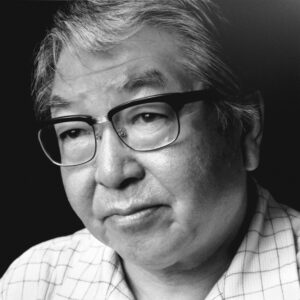
Eikoh Hosoe
Shomei Tomatsu and Eikoh Hosoe were both founding members of VIVO, a post‑war Japanese photography collective established in 1959. VIVO sought to expand the horizons of photojournalism and artistic expression, and its members' shared ethos helped reshape Japanese photography from mere documentation toward a more personal, experimental language.
Verified 2026-09-04Wikipedia – Shomei Tomatsu
Collaboration
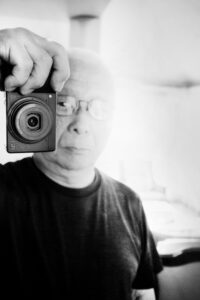
Kikuji Kawada
As another co‑founder of VIVO, Kikuji Kawada and Shomei Tomatsu shared a commitment to confronting the complexities of post‑war Japan. Their collaborative relationship within VIVO, alongside other members, fostered a cross‑pollination of ideas that made the collective a cornerstone of modern Japanese photography.
Verified 2026-09-04Wikipedia – Shomei Tomatsu
Influence & affinity
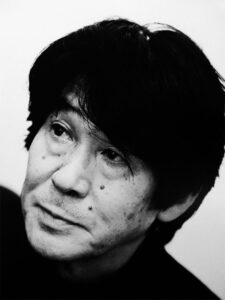
Daido Moriyama
Daido Moriyama has cited Japanese photographer Shomei Tomatsu as an important influence. Tomatsu's documentary work in postwar Japan, especially his images of American military bases and societal transformation, inspired Moriyama's own intense, subjective documentary style. Moriyama absorbed Tomatsu's use of high contrast and grainy film, but pushed it toward even more radical abstraction and personal expression, creating a distinct language that diverged from Tomatsu's more narrative approach.
Verified 2026-09-04Wikipedia: Shomei Tomatsu
Tomatsu Shomei (opens a new site)
The Smithsonian’s National Museum of Asian Art introduces Tomatsu through works in its Japan Modern presentation. It identifies his early series Chewing Gum and Chocolates as an examination of the continuing U.S. military presence in Japan, and lists collection photographs from Yokosuka, Nagasaki, and Nagoya. The page also records his role in founding the VIVO agency after his work for the Iwanami Photography Library.
Shomei Tomatsu (opens a new site)
SFMOMA’s artist profile situates Tomatsu’s photographs within postwar Japan, including the atomic bombing of Nagasaki, U.S. military and popular culture, economic growth, Shinjuku youth culture, and protest. It also documents his central place in the 1974 exhibition New Japanese Photography and describes Skin of the Nation as the first major American retrospective devoted to his work.
Remembering Shomei Tomatsu (1930–2012) (opens a new site)
Aperture republishes Lesley A. Martin’s essay on Tomatsu’s photographs of occupation-era and postwar Okinawa. The essay discusses VIVO’s subjective-documentary position, Tomatsu’s Nagasaki—11:02, and his long investigation of U.S. bases, Americanization, and Okinawa’s urban landscape. It is particularly valuable for its account of how his later color work related to Okinawa and altered the visual emphasis of his engagement with America.
Shomei Tomatsu Oral History, Session 3 (Second Half) (opens a new site)
This Japanese oral-history transcript records an interview conducted at Tomatsu’s studio in Naha on August 8, 2011, and published on January 12, 2013. The conversation addresses the 1974 MoMA exhibition New Japanese Photography, the selection of his work, the later Skin of the Nation exhibition, and the place of museum collecting and photographic sales in Japan at the time.
Shomei Tomatsu: The First Decade (opens a new site)
SFMOMA presents John Junkerman’s 2006 documentary interview with Tomatsu, recorded at the Aichi Prefectural Museum of Art. Tomatsu discusses his formative postwar experience, beginning photography in 1950, work for Iwanami, early books on flooding and Seto’s pottery industry, and the making of The Japanese. The accompanying transcript makes this a primary spoken source for his account of early subjects and photographic motivations.
COMMUNITY DISCUSSION
Discuss this entry
Share interpretations, reading notes, and source-aware questions. For catalog corrections, use the feedback form below.
No discussion yet. Start the first focused conversation.
Sign in to join the discussion.
Optionally receive a digest when related photobooks are added to the catalog.
See something incorrect? Sign in to suggest a correction or report an issue.