Photographer
Julius Shulman
Julius Shulman (1910–2009) was an American architectural photographer whose career spanned more than seven decades, from the 1930s to his final years. Born in Connecticut, he moved with his family to California at age ten, and he became the most celebrated visual chronicler of Southern California’s postwar modernist architecture. His best-known image, of Case Study House #22 in Los Angeles, has become an iconic representation of mid-century modern living and is widely reproduced in histories of architecture and photography.
Shulman’s photographic language went beyond straightforward documentation. He composed buildings with dramatic angles, carefully staged interiors and exteriors, and used natural light to create luminous, aspirational scenes. Unlike many architectural photographers who sought neutral, objective views, Shulman aimed to depict the buildings as ideal settings for a forward-looking lifestyle. His work helped shape public perception of modernism and contributed substantially to the reputations of architects such as Richard Neutra and Pierre Koenig, whose structures he photographed for magazines, journals, and architectural offices.
His output was immense and wide-ranging. The Julius Shulman Photography Archive, held at the Getty Research Institute, documents the modern movement in architecture from 1935 to 2009, covering not only landmark houses but also commercial structures, urban planning, and everyday built environments like gas stations. Among his most significant contributions are his photographs of the Case Study Houses, a program that experimentally redefined the American home. These images, especially the famous night-time shot of Case Study House #22, are considered both architectural documents and independent artistic statements.
Shulman’s historical significance rests on his ability to translate the ideas of modernist architects into compelling images that reached a broad public through print media. He was not merely a witness but an active participant in promoting the modernist aesthetic, particularly in Southern California. His long career continued into the 2000s, and his extensive archive has been the subject of exhibitions and scholarly studies. His death in 2009 was widely noted in major newspapers, confirming his status as a monumental figure in both architecture and photography.
For photobook collectors, Shulman’s work offers a rich field of study. While specific monographs are not detailed here, his photographs have appeared in numerous publications, and the Getty archive serves as an institutional reference for provenance and context. Collectors may seek vintage prints or limited editions, but should be aware of the importance of provenance and condition. His oeuvre provides a vital entry point into understanding the visual culture of postwar American architecture and the intersections of photography, art, and design.
〔PBL-BIO/2〕



Michael Kenna
Shared publisher: Nazraeli Press
22 photobook(s) in the library
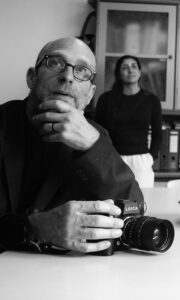
Todd Hido
Shared publisher: Nazraeli Press
21 photobook(s) in the library

Richard Misrach
Shared publisher: Nazraeli Press
18 photobook(s) in the library
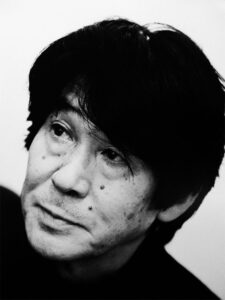
Daido Moriyama
Shared publisher: Nazraeli Press
15 photobook(s) in the library
COMMUNITY DISCUSSION
Discuss this entry
Share interpretations, reading notes, and source-aware questions. For catalog corrections, use the feedback form below.
No discussion yet. Start the first focused conversation.
Sign in to join the discussion.
Optionally receive a digest when related photobooks are added to the catalog.
See something incorrect? Sign in to suggest a correction or report an issue.