Photographer
Aaron Siskind
Aaron Siskind (1903–1991) was an American photographer whose career bridged social documentary, formal modernism, and abstraction. Born in New York City, he initially pursued literature and taught English in the public school system for more than two decades before turning to photography in the early 1930s. He joined the New York Photo League in 1932 and contributed to major documentary projects such as Harlem Document and Dead End: The Bowery, creating socially conscious work distinguished by strong graphic structure.
By the early 1940s, Siskind shifted away from photographing people and began focusing on the abstract qualities of everyday surfaces—weathered walls, torn posters, footprints, seaweed, and asphalt. His close-up photographs emphasized flatness, texture, and formal composition, aligning him with the Abstract Expressionist painters whose work he admired. His friendships with Franz Kline, Willem de Kooning, and Mark Rothko helped position his photography within the broader postwar avant-garde. Series such as Pleasures and Terrors of Levitation (1953) and his images of the Arch of Constantine (1967) demonstrate his commitment to abstraction and psychological expression.
Siskind held key teaching roles throughout his career. After teaching at Black Mountain College in 1950, he joined Harry Callahan at the Institute of Design at IIT Chicago, where he became a central figure in American photographic education. In 1963, he helped found the Society for Photographic Education. He later taught at the Rhode Island School of Design from 1971 until his retirement in 1976. In 1984, he established the Aaron Siskind Foundation to support contemporary photographers.
Siskind’s photographs are represented in the Museum of Modern Art, the International Center of Photography, the Art Institute of Chicago, the Museum of Fine Arts Houston, the National Gallery of Canada, and many other major collections. His work continues to be celebrated for transforming the language of modern photography and for bridging the gap between documentary seeing and abstract expression.


Influence & affinity
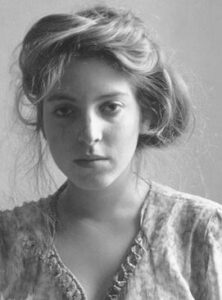
Francesca Woodman
Francesca Woodman studied under Aaron Siskind at the Rhode Island School of Design, where she completed her Bachelor of Fine Arts in 1979. Siskind, an influential Abstract Expressionist photographer, offered critiques that emphasized formal abstraction and the emotional resonance of surface textures—elements that appear in Woodman's own décors and fragmented bodies. While Woodman developed a distinct visual language, Siskind's mentorship is documented as a formative influence during her undergraduate years, providing a direct link to the postwar American photography scene.
Verified 2026-09-04Wikipedia
COMMUNITY DISCUSSION
Discuss this entry
Share interpretations, reading notes, and source-aware questions. For catalog corrections, use the feedback form below.
No discussion yet. Start the first focused conversation.
Sign in to join the discussion.
Optionally receive a digest when related photobooks are added to the catalog.
See something incorrect? Sign in to suggest a correction or report an issue.