Photographer
Melvin Sokolsky
Melvin Sokolsky (1933–2022) was an American photographer and film director celebrated for the surreal, technically audacious fashion imagery he created during the 1960s. Born in New York City and raised in a tenement on the Lower East Side, he received no formal photographic training. Instead, he learned the craft by experimenting with his father’s box camera, an informal apprenticeship that fostered a tactile, problem-solving approach to image-making. By his early twenties, he had begun contributing to Harper’s Bazaar, eventually becoming the youngest photographer on the magazine’s staff — an environment that encouraged both glamour and visual experimentation.
Sokolsky’s visual language combined the polish of commercial fashion with the subversive logic of Surrealist painting. He often placed his models in impossible scenarios, flouting the ordinary physics of the studio. His most famous body of work, the “Paris” series (1963–1965), shows fashion models floating weightlessly above the streets and monuments of Paris. The effect was achieved not by post-production tricks but by suspending the women with concealed pianos and other hidden rigging, then photographing them with a hand-held camera. The result reads as a seamless magic realism, distinguishing Sokolsky from the more straightforward, magazine-driven approaches of contemporaries such as Richard Avedon or Irving Penn. His images felt like dreams made tangible, capitalizing on the era’s fascination with spectacle and the mysterious.
Beyond the Paris series, Sokolsky produced a wider array of iconic fashion stories and celebrity portraits, many of which have been anthologized in later gallery presentations. He thrived on the tension between control and accident, often allowing natural movement and unexpected lighting to enter carefully constructed scenes. His photographs appeared in major American publications during a period when magazine photography was an influential popular art form. In the late 1960s and 1970s, Sokolsky extended his practice into directing films and television commercials, applying the same flair for staging and illusion to moving images. This second career demonstrated his versatility but also meant that, for a time, his still photography was less visible in the art world, even as its influence persisted.
Sokolsky’s work has since been revived through gallery representation and museum interest. The Holden Luntz Gallery, which has shown his pictures, has helped reintroduce his oeuvre to contemporary audiences. His estate maintains an online archive and a presence on social media, allowing collectors and students to study his contact sheets and final prints. The enduring appeal of his images lies in their seamless fusion of technical craft and dreamlike content; they capture a moment when fashion photography could be genuinely surprising and poetic.
For photobook and print collectors, Sokolsky’s work offers an instructive example of how technical daring shapes the final aesthetic. The prints from the Paris series, with their soft, luminous tones and precise compositions, reward close looking. Because his tenure as a still photographer was relatively short and his later career moved toward film and advertising, original vintage prints are not ubiquitous, and his modern editions remain sought after by collectors interested in 1960s glamour and conceptual photography. A practical entry point might be the prints and limited editions handled by his gallery representatives, as well as the retrospective attention he has received in publications and online features celebrating his singular contribution to the medium.
〔PBL-BIO/2〕


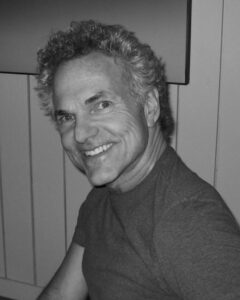
Richard Misrach
Shared publisher: Arena Editions
18 photobook(s) in the library
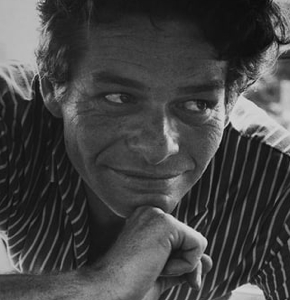
Garry Winogrand
Shared publisher: Arena Editions
11 photobook(s) in the library
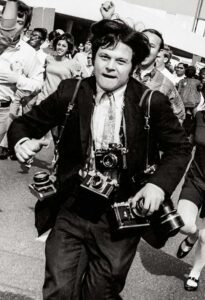
Steve Schapiro
Shared publisher: Arena Editions
8 photobook(s) in the library
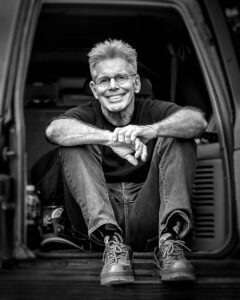
Keith Carter
Shared publisher: Arena Editions
7 photobook(s) in the library
COMMUNITY DISCUSSION
Discuss this entry
Share interpretations, reading notes, and source-aware questions. For catalog corrections, use the feedback form below.
No discussion yet. Start the first focused conversation.
Sign in to join the discussion.
Optionally receive a digest when related photobooks are added to the catalog.
See something incorrect? Sign in to suggest a correction or report an issue.