Photographer
Keiichi Tahara
Keiichi Tahara (田原桂一) was a Japanese photographer, born in Kyoto in 1951 and active until his death in 2017. He came from a family with a photographic background—his grandfather was a professional photographer—which gave him early technical training. In 1971, he moved to France, settling in Paris the following year, where he built an international career that bridged Japanese and European artistic currents. His work often explored themes of light, architecture, and the passage of time through a lens that was both precise and poetic.
Tahara’s visual language is distinguished by his treatment of light as a sculptural and almost tangible substance. He frequently photographed architectural details—windows, facades, interiors—but rather than documenting buildings topographically, he transformed them into investigations of luminosity and emptiness. His early series ‘Fenêtre’ (‘Window’, 1973–1981) exemplifies this approach: images of windows across different European cities capture not just the apertures but the way daylight enters and shapes space. At a time when many photographers were pursuing street photography or social documentation, Tahara maintained a contemplative, almost abstract practice that set him apart, aligning him with a broader artistic interest in minimalism and materiality.
Among his major bodies of work, ‘Fenêtre’ remains a defining series, later exhibited in galleries and curated venues. Another significant project, ‘Garden of Light’, extended his concern with light and nature. Tahara also collaborated on architectural photography projects that brought him commissions from architects and institutions. His work was shown at the Arles International Photography Festival, and he maintained relationships with galleries on both sides of the world, including Taka Ishii Gallery in Tokyo and later VLC Gallery by Akio Nagasawa. His prints are characterized by careful tonal control and a sense of quiet grandeur, qualities that made his exhibitions compelling in both museum and commercial contexts.
Historically, Tahara belongs to a generation of Japanese artists who, from the 1970s onward, sought outside Japan for new vocabularies. His Paris base placed him within a transcontinental artistic dialogue, yet his sensibility remained distinctly Japanese in its restraint and appreciation for negative space. He participated in numerous group and solo shows, and his inclusion in institutional collections and photography surveys attests to his steady, if not spectacular, recognition. While he may not have achieved the wider notoriety of some contemporaries, his influence is felt among artists who treat photography as a means of philosophical inquiry rather than mere observation.
For collectors, Tahara’s photobooks and exhibition catalogues are particularly rewarding. Works such as ‘Fenêtre’ or the compilations that accompany his gallery shows reflect careful sequencing and high-quality reproduction, often designed in conjunction with the artist. The VLC Gallery’s exhibition in 2024, which revisited the ‘Fenêtre’ series, offers a point of entry. His pictures reward slow viewing; their delicacy can be appreciated in print. A good starting point for new collectors would be a representative vintage print or a monograph that captures his tonal range, though scarcity and market values should be assessed on a case-by-case basis. Overall, Tahara’s quiet poetry and technical refinement ensure his place in the history of late-twentieth-century Japanese photography.
〔PBL-BIO/2〕


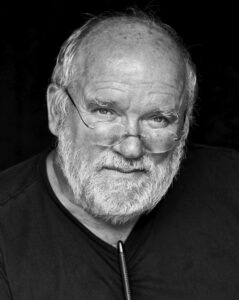
Peter Lindbergh
Shared publisher: Assouline, Taschen
7 photobook(s) in the library

Sebastiao Salgado
Shared publisher: Taschen
21 photobook(s) in the library

Steve McCurry
Shared publisher: Taschen
18 photobook(s) in the library
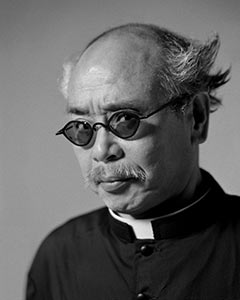
Nobuyoshi Araki
Shared publisher: Taschen
14 photobook(s) in the library
COMMUNITY DISCUSSION
Discuss this entry
Share interpretations, reading notes, and source-aware questions. For catalog corrections, use the feedback form below.
No discussion yet. Start the first focused conversation.
Sign in to join the discussion.
Optionally receive a digest when related photobooks are added to the catalog.
See something incorrect? Sign in to suggest a correction or report an issue.