Photographer
Pierre Fatumbi Verger
Pierre Fatumbi Verger, born Pierre Edouard Leopold Verger in 1902 in Paris, was a French photographer whose life and work blurred the lines between photojournalism, anthropology, and spiritual practice. After a comfortable bourgeois upbringing, he rejected the family business and took up photography in the early 1930s, quickly becoming a successful magazine photographer in France. In 1934 he helped found one of the earliest photo agencies, whose members included Robert Capa and Henri Cartier-Bresson. Yet Verger’s restless curiosity soon carried him far beyond European newsrooms, leading him toward the African continent and the Americas, where he would find his true subject.
His visual style evolved from conventional photojournalism into a more immersive, anthropological observation. Working almost exclusively in black and white, Verger developed a direct, respectful approach to his subjects, avoiding the sensationalism common in colonial-era photography. He was particularly drawn to scenes of everyday life, religious ritual, labor, and portraiture, capturing communities with an intimacy that reflected his deep engagement rather than a quick visit. This method set him apart from his photojournalist peers, who often passed through quickly on assignment. Verger’s images feel unhurried, emphasizing dignity and cultural continuity.
Verger’s major bodies of work emerged from his travels between Brazil, West Africa, and the Caribbean, where he documented the transatlantic connections of Yoruba culture. His two trips across the United States in 1934 and 1937, published in the 2025 Damiani volume “United States of America 1934 & 1937,” stand out as a remarkable record of Black American life during the Depression era, showing communities rarely photographed by a European with such an empathetic lens. More famously, his extensive documentation of Candomblé rituals in Bahia and related traditions in Nigeria and Benin, often compiled in photobooks like “Os Orixás,” became a vital visual archive for scholars of Afro-Atlantic religions.
Verger’s significance extends beyond photography. In the 1940s, he settled permanently in Salvador, Bahia, where he was initiated as a babalawo, a priest of Ifá in the Yoruba tradition, adopting the name Fatumbi. He conducted pioneering research on the circulation of people and religious practices between Africa and Brazil, and his work influenced both photographic history and anthropology. His archive, housed at the Pierre Verger Foundation in Salvador, has been the basis for numerous exhibitions and publications, and his photographs are held in major collections.
For collectors, Verger offers a rare fusion of documentary photography and ethnographic depth. The Damiani publication from 2025 provides a well-sequenced, beautifully printed entry into his American series, while older monographs such as “Os Orixás” remain sought after for their cultural and artistic value. Collectors may appreciate the careful editing and contextual essays in recent editions, which illuminate the image sequencing and Verger’s own photographic philosophy, making his work as intellectually rewarding as it is visually compelling.
〔PBL-BIO/2〕


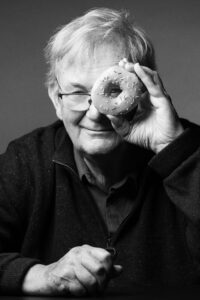
Martin Parr
Shared publisher: Aperture, Damiani
21 photobook(s) in the library

Nick Waplington
Shared publisher: Aperture, Damiani
18 photobook(s) in the library
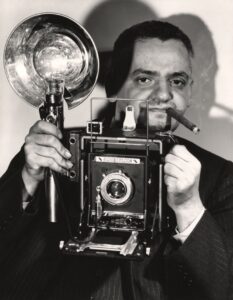
Weegee
Shared publisher: Aperture, Damiani
14 photobook(s) in the library

Joel Meyerowitz
Shared publisher: Aperture, Damiani
9 photobook(s) in the library
COMMUNITY DISCUSSION
Discuss this entry
Share interpretations, reading notes, and source-aware questions. For catalog corrections, use the feedback form below.
No discussion yet. Start the first focused conversation.
Sign in to join the discussion.
Optionally receive a digest when related photobooks are added to the catalog.
See something incorrect? Sign in to suggest a correction or report an issue.