Photographer
Tim Flach
Tim Flach is a London-based British photographer best known for his highly conceptual, stylized portraits of animals. Rather than documenting wildlife in its natural habitat, Flach brings his subjects into a controlled studio environment, using dramatic lighting, deep black backdrops, and a meticulous attention to composition. His work sits at the intersection of fine-art portraiture, commercial photography, and natural-history imagery, asking viewers to see animals not as specimens but as individuals with a presence akin to that of human sitters. This approach has distinguished him from traditional wildlife photographers, whose practice typically emphasizes unobtrusive observation and environmental context.
Flach’s interest lies in the ways humans have shaped animals—both physically and symbolically—and how those forms carry meaning. His images often blur the line between nature and artifice; a horse may be posed like a fashion model, a panda rendered with near-sculptural clarity, a dog given the gravity of a royal portrait. This deliberate staging invites comparisons to classical painting and commercial advertising, making his photographs immediately recognizable. Critics have sometimes argued that his work risks anthropomorphizing animals or catering to popular taste, but Flach’s consistent conceptual framework turns that tendency into a point of provocation: he challenges the viewer to examine the assumptions embedded in looking at animals at all.
Flach has published a series of ambitious photobooks that trace his thematic investigations. Early titles such as Equus and Dogs Gods explored the cultural and aesthetic histories of horses and dogs respectively, while Feline and Endangered broadened the scope to include wild cats and species threatened with extinction. In 2021, his book Birds was released by Abrams, continuing his survey of animal forms with a focus on avian subjects. These volumes are typically structured around extended portfolios of images accompanied by essays and commentary, presenting his work not merely as a collection of pretty pictures but as a sustained inquiry into animal representation.
Flach’s career has unfolded through both gallery exhibitions and international media exposure. His photographs have been featured in venues and publications spanning Paris to Beijing, according to his own professional biography, and his books have been translated into multiple languages, indicating a global readership. He has also engaged with the contexts of digital distribution; for instance, a BBC piece highlighted his stance against algorithmic social-media consumption, suggesting a desire to retain control over how his carefully crafted images are seen and interpreted. His personal channels on Instagram and Facebook attract hundreds of thousands of followers, giving his work a wide popular reach.
For collectors of photobooks, Flach’s titles offer a compelling blend of accessible subject matter and elevated production values. His monographs are carefully edited and designed, often featuring large-format reproductions that replicate the theater-like atmosphere of his originals. Because his photographs function as portraits, they translate well to printed pages, where sequencing can build rhythm between species, gestures, and textures. For those drawn to contemporary animal photography that engages with fine-art traditions, Flach’s books provide an entry point into a body of work that is simultaneously decorative and conceptually layered, though they should not be approached as documentation of wild animals in their ecosystems. Instead, they reward viewers interested in how photography constructs visual narratives about nature and human culture.
〔PBL-BIO/2〕


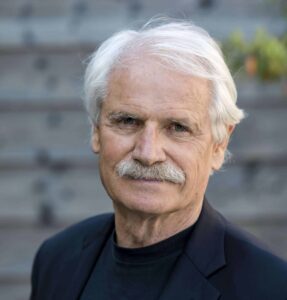
Yann Arthus-Bertrand
Shared publisher: Abrams, Harry N. Abrams
10 photobook(s) in the library
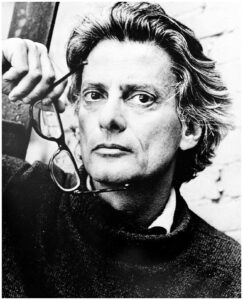
Richard Avedon
Shared publisher: Abrams, Harry N. Abrams
8 photobook(s) in the library
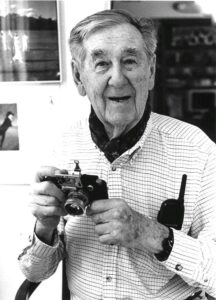
Slim Aarons
Shared publisher: Abrams, Harry N. Abrams
7 photobook(s) in the library
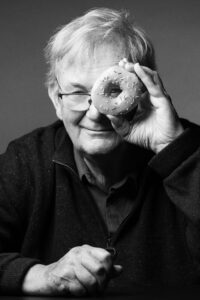
Martin Parr
Shared publisher: Hoxton Mini Press
21 photobook(s) in the library
COMMUNITY DISCUSSION
Discuss this entry
Share interpretations, reading notes, and source-aware questions. For catalog corrections, use the feedback form below.
No discussion yet. Start the first focused conversation.
Sign in to join the discussion.
Optionally receive a digest when related photobooks are added to the catalog.
See something incorrect? Sign in to suggest a correction or report an issue.