Photographer
Martine Franck
Martine Franck (1938–2012) was a British-Belgian photographer born in Antwerp and raised across England and the United States. Trained as an art historian, she came to photography relatively late after assisting photographers in the late 1960s. Her European upbringing and academic background shaped her interest in documenting social realities with empathy. She studied art history at the University of Madrid and the École du Louvre in Paris, and it was only after a trip to China in the 1960s that she picked up a camera seriously.
Franck’s visual language is characterized by black-and-white photography, a gentle and respectful gaze toward her subjects, and a preference for marginalized communities—women, the elderly, children, and people in transition. Unlike more confrontational documentary work of her time, her images are often quiet and observational, balancing intimate detail with formal composition. Her approach was humanist rather than overtly political, foregrounding dignity and small moments of grace.
In the early 1970s she co-founded the Viva photo agency, an alternative to Magnum Photos, and later became a full member of Magnum in 1980. Her assignments took her across the globe, from Hong Kong to the Middle East, yet she remained devoted to personal, long-term projects exploring aging, monastic life, and artistic communities. She also made distinguished portraits of writers and artists, including figures like Samuel Beckett and Henri Michaux, using available light and a sensitive rapport.
Franck was married to Henri Cartier-Bresson, placing her at the center of twentieth-century photography, yet she maintained an independent career and distinct voice. Her archives are managed by the Henri Cartier-Bresson Foundation, which has hosted retrospectives and published monographs of her work. She died in 2012, leaving a substantial body of reportage, portraits, and personal projects that continue to be exhibited internationally.
For collectors, Franck’s books—such as *One Day to the Next*—offer an accessible entry into her oeuvre, with carefully sequenced plates and essays that contextualize her humanist vision. Her prints appear in major museum collections, and her work is shown through galleries that represent her estate. Understanding Franck means engaging with a photographer who championed dignity over drama, making her a key figure in the humanist documentary tradition that followed World War II.
〔PBL-BIO/2〕


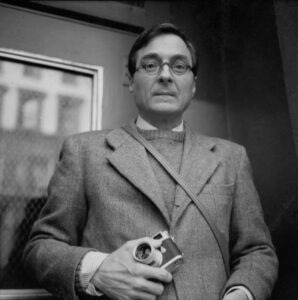
William Eggleston
Shared publisher: Aperture, Steidl
26 photobook(s) in the library
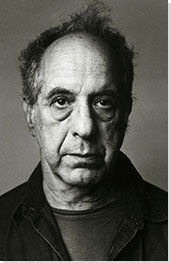
Robert Frank
Shared publisher: Aperture, Steidl
19 photobook(s) in the library
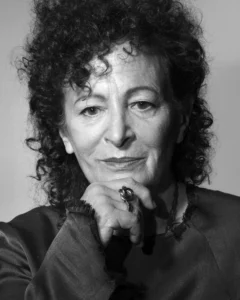
Nan Goldin
Shared publisher: Aperture, Steidl
17 photobook(s) in the library
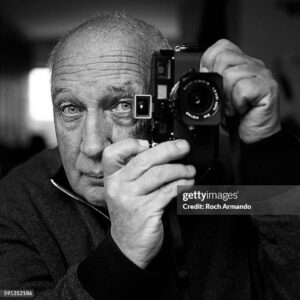
Raymond Depardon
Shared publisher: Aperture, Steidl
16 photobook(s) in the library
COMMUNITY DISCUSSION
Discuss this entry
Share interpretations, reading notes, and source-aware questions. For catalog corrections, use the feedback form below.
No discussion yet. Start the first focused conversation.
Sign in to join the discussion.
Optionally receive a digest when related photobooks are added to the catalog.
See something incorrect? Sign in to suggest a correction or report an issue.