Photographer
Rena Effendi
Rena Effendi was born in Baku, Azerbaijan, in 1977. She initially trained as a linguist and spent a period painting before discovering photography and turning to social documentary work in 2001. Growing up in the post-Soviet Caucasus placed her at the intersection of oil wealth, political upheaval, and everyday resilience. These conditions have remained central to her practice, which examines how large political and economic forces become visible in ordinary lives and altered environments.
Effendi’s visual language is distinguished by a close fusion of environmental and social concern. Rather than pursuing breaking news, she develops long-term narratives that follow the effects of industrial infrastructure—especially pipelines, refineries, and quarries—on communities. Her method combines unhurried, intimate portraiture with expansive views of landscapes, treating terrain not as a passive backdrop but as a witness and an active participant in history. By connecting ecological degradation with human dignity, she avoids both sensationalism and the detached irony that can distance viewers from the people represented.
Her two major monographs exemplify this approach. Pipe Dreams: A Chronicle of Lives along the Pipeline follows communities living along the Baku-Tbilisi-Ceyhan oil pipeline, revealing the tension between promised prosperity and the social and environmental costs of extraction and transport. Liquid Land turns toward the Caspian region, using personal stories and contaminated landscapes to examine the legacy of Soviet-era oil production. Together, the books established Effendi as an important chronicler of post-communist industrial aftermath. In more recent work, she has also expanded into filmmaking, engaging themes of war and displacement, including work related to the Chernobyl exclusion zone.
Effendi is affiliated with the National Geographic community and the VII Foundation, and she is a member of The Photo Society. Her photographs have been exhibited in museums and galleries internationally. Her career reflects a broader movement in documentary photography toward sustained, context-rich storytelling, often in places that receive limited attention from mainstream Western media. Some critics may argue that the polish of her images risks aestheticizing or romanticizing suffering. Yet her long engagements with communities, together with her explicit attention to political and economic structures, give the work credibility and nuance rather than reducing its subjects to symbols.
For collectors, Effendi’s photobooks are especially significant. Pipe Dreams and Liquid Land both demonstrate careful sequencing and integrated design, allowing images, extended captions, and essays to function as parts of a coherent narrative. Liquid Land is particularly accessible as a geographically focused study whose details reward repeated viewing. The two publications stand as strong examples of contemporary environmental and social documentary, and offer valuable ways to consider the relationship between photography, geopolitics, industrial memory, and human resilience.
〔PBL-BIO/2〕



Rania Matar
Shared publisher: White Lion Publishing
6 photobook(s) in the library
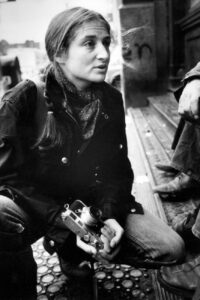
Susan Meiselas
Shared publisher: White Lion Publishing
5 photobook(s) in the library

Sim Chi Yin
Shared publisher: White Lion Publishing
4 photobook(s) in the library

Ami Vitale
Shared publisher: White Lion Publishing
4 photobook(s) in the library
COMMUNITY DISCUSSION
Discuss this entry
Share interpretations, reading notes, and source-aware questions. For catalog corrections, use the feedback form below.
No discussion yet. Start the first focused conversation.
Sign in to join the discussion.
Optionally receive a digest when related photobooks are added to the catalog.
See something incorrect? Sign in to suggest a correction or report an issue.