Photographer
Denis Dailleux
Denis Dailleux is a French photographer born in Angers in 1958. Based in Paris, he has worked extensively in Egypt while also photographing in Ghana and India. He is a member of Agence VU and is represented by Galerie Camera Obscura in Paris. Although his practice belongs broadly to documentary photography, portraiture—especially the sustained encounter between photographer and subject—forms its emotional and formal center.
Dailleux’s visual language is distinguished by quietness rather than the urgency commonly associated with reportage. Faces, gestures, fabrics, interiors, and available light are organized into carefully balanced pictures that retain the presence of lived experience. His portraits are often described in terms of tenderness and respect, but their effect also depends on restraint: the sitter is not reduced to an illustration of poverty, geography, or social type. This measured approach separates his work from faster, event-driven photojournalism. At the same time, its elegance raises a productive critical question about how beauty can shape an outsider’s representation of another culture. His strongest photographs answer through duration and attention rather than spectacle.
Egypt is the defining long-term body of work in his career. Dailleux has photographed the country for roughly three decades, building an archive concerned less with headline events than with ordinary people, domestic spaces, streets, landscapes, and the distinctive social atmosphere of Cairo. A series of books devoted to Egypt and Cairo transformed this extended engagement into more than a travel record: together, they offer a cumulative portrait made across changing historical circumstances. His work in Ghana extends the same patient portrait-based method into West Africa, while photographs made in India show that his interest is not confined to one national setting but centers on how individuals inhabit culturally specific environments.
His career developed within the European tradition of human-centered documentary photography, yet his pictures resist simple classification as either reportage or formal portraiture. Agence VU provided a professional documentary context, while representation by Galerie Camera Obscura situates the work within photographic exhibition and collecting cultures. Institutional recognition through World Press Photo’s photographer archive further reflects the public circulation of his Egypt-centered work. His historical importance rests chiefly on sustained observation: he demonstrates how repeated return to a place can produce a layered visual account rather than a single definitive statement.
Photobook collectors should pay particular attention to the Egypt and Cairo publications, which provide the clearest entry into Dailleux’s practice. The book form allows recurring faces, architectural rhythms, intimate interiors, and wider views to accumulate through sequence, revealing connections that isolated prints cannot. Because the available evidence confirms several related books but does not establish detailed edition, design, or printing histories, comparisons should focus on image selection, sequencing, reproduction, and the changing interpretation of Egypt across volumes. The most useful starting point is therefore an Egypt-focused book viewed alongside his Ghana or India work, where the continuity—and limits—of his empathetic method become easier to assess.
〔PBL-BIO/2〕



Kourtney Roy
Shared publisher: Filigranes Éditions
12 photobook(s) in the library
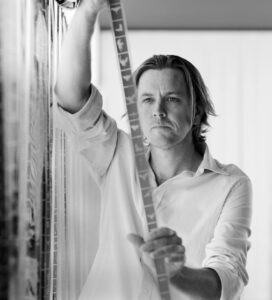
Trent Parke
Shared publisher: Filigranes Éditions
11 photobook(s) in the library
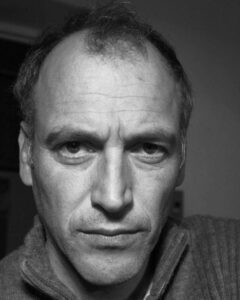
Guy Tillim
Shared publisher: Filigranes Éditions
7 photobook(s) in the library
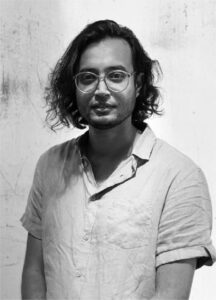
Arko Datto
Shared publisher: Le Bec en l'Air
2 photobook(s) in the library
COMMUNITY DISCUSSION
Discuss this entry
Share interpretations, reading notes, and source-aware questions. For catalog corrections, use the feedback form below.
No discussion yet. Start the first focused conversation.
Sign in to join the discussion.
Optionally receive a digest when related photobooks are added to the catalog.
See something incorrect? Sign in to suggest a correction or report an issue.