Photographer
Walker Evans
Walker Evans (1903–1975) was an American photographer whose documentary work profoundly shaped the development of twentieth‑century photography. Born in St. Louis and later active across the United States, Evans became widely known for his work with the Farm Security Administration (1935–1937), where he created unvarnished images capturing the realities of rural American life during the Great Depression. His collaboration with writer James Agee resulted in the landmark 1941 book Let Us Now Praise Famous Men. Evans’s precise, direct style established a new standard for documentary clarity and influenced generations of artists, from Robert Frank to Diane Arbus. Over his long career he worked for Time and Fortune, exhibited at leading museums including MoMA, and later taught at Yale University.
Walker Evans (1903–1975) was an American photographer known for his precise, documentary-style images of American life during the Great Depression. He is best known for his work for the Farm Security Administration (FSA), photographing rural and small-town communities, and for his collaboration with writer James Agee on the book ‘Let Us Now Praise Famous Men.’ Evans emphasized straight, unposed photography, capturing vernacular architecture and roadside America with an objective eye. His work influenced later documentary and street photographers. This source provides an overview of his life, major projects, and legacy.


Selected Works & Key Projects
A source-backed introduction to individual photographs and significant bodies of work.
Selected photographs
1936 · Hale County, Alabama, United States
Alabama Tenant Farmer Wife
This 1936 gelatin silver print portrays Allie Mae Burroughs, whose family lived in a four-room cabin and leased its home, land, mule, and farm tools. Evans made four related portraits of her against the cabin’s rear wall, each registering a different expression. He selected another negative for American Photographs, but this more guarded portrait was reproduced in Let Us Now Praise Famous Men and was identified by early reviewers as that book’s quintessential image. It merits selection for concentrating the Alabama project’s social history and its difficult, psychologically ambiguous encounter between sitter and camera.
Work source ↗1936 · Hale County, Alabama, United States
Alabama Tenant Farmer
Alabama Tenant Farmer is a 1936 gelatin silver portrait of Floyd Burroughs, a cotton farmer and the patriarch of the Burroughs family. The Metropolitan Museum of Art identifies it as one of the masterpieces of Evans’s collaboration with James Agee on Let Us Now Praise Famous Men. Evans and Agee spent several weeks with three tenant-farmer families, observing their lives and daily activities. This image merits selection because it joins that larger study’s account of the Great Depression with an intimate individual portrait, making the social subject inseparable from a particular person.
Work source ↗1936 · Hale County, Alabama, United States
Floyd and Lucille Burroughs on Porch, Hale County, Alabama
Made in 1936, this portrait shows Floyd Burroughs with his daughter Lucille on the porch. Fortune magazine had commissioned Evans and James Agee to investigate the circumstances of tenant farmers in the South; their unpublished article subsequently became Let Us Now Praise Famous Men in 1941. The Metropolitan Museum of Art calls the picture a superb example of the dignity and austere beauty Evans found in ordinary lives, and notes its balance between family tradition and wider agrarian concerns. It merits selection because it gives the Alabama undertaking a familial, intergenerational form.
Work source ↗1936 · Savannah, Georgia, United States
Penny Picture Display, Savannah
Evans photographed this Savannah studio window in 1936, where a one-cent portrait service displayed its favored examples in a strict grid. MoMA counts 225 portrait spaces in the display, with more than one hundred different men, women, and children represented. The museum connects the photograph to Evans’s interest in the directness of useful vernacular pictures and describes its crisp, planar, self-contained construction. It merits selection because the picture makes a commercial display into a portrait of a community and a precise statement of Evans’s allegiance to everyday photographic culture.
Work source ↗1938 · New York City, United States
Subway Portrait
This gelatin silver print, dated 1938–41, is one example from Evans’s subway work. MoMA records that he brought a concealed camera into the New York subway, with its lens peering through his coat buttons, to photograph fellow passengers. The museum also notes that he made such pictures while riding with Helen Levitt; the subjects are shown reading or absorbed in thought. This photograph merits selection as an accessible single work from the larger series because it preserves the project’s defining condition: an unposed encounter within the compressed public space of a subway car.
Work source ↗-
November 3, 1903
Career milestone
Born in Saint Louis
Walker Evans was born in Saint Louis. His later career would span photography, editorial work, books, and teaching, but this entry records the documented beginning of his life.
Source: Museum of Modern Art, Walker Evans | Object:Photo Verified Sep 5, 2026
-
September 1922–June 1923
Education
Studies at Williams College
Evans studied at Williams College for one year in Williamstown. The period documents his early literary education before photography became his principal medium.
Source: Museum of Modern Art, Walker Evans | Object:Photo Verified Sep 5, 2026
-
1926
Education
Literary study and early snapshots in Paris
In Paris, Evans attended literary lectures at the Sorbonne, took his first snapshots with a Kodak Vest Pocket camera, and worked in Nadar’s former studio. The convergence of literary study and camera use is a significant early step toward his photographic practice.
Source: Museum of Modern Art, Walker Evans | Object:Photo Verified Sep 5, 2026
-
1930
Career milestone
First photographs published; first solo exhibition
Three of Evans’s Brooklyn Bridge photographs illustrated Hart Crane’s epic poem The Bridge. In the same year, he had his first solo exhibition at the Harvard Society of Contemporary Arts. Together, these documented events marked his early public emergence as a photographer.
Source: Museum of Modern Art, Walker Evans | Object:Photo Verified Sep 5, 2026
-
1933
Exhibition
Photographs of 19th Century Houses at MoMA
Evans participated in Walker Evans: Photographs of 19th Century Houses at the Museum of Modern Art in New York. MoMA identifies it as the institution’s first monographic photography exhibition, making it an important institutional recognition early in Evans’s career.
Source: Museum of Modern Art, Walker Evans | Object:Photo Verified Sep 5, 2026
-
1935–1937
Career milestone
Works for the Farm Security Administration
Evans worked for the Farm Security Administration from 1935 to 1937. During this period, he made many photographs later included in the 1938 MoMA exhibition and publication Walker Evans: American Photographs, linking federal documentary work to a defining presentation of his art.
Source: International Center of Photography, Walker Evans Verified Sep 5, 2026
-
July–August 1936
Series
Documents Alabama sharecropper families with James Agee
Evans photographed sharecropper families in Alabama for a collaborative Fortune magazine reportage project with writer James Agee. The work later became the book Let Us Now Praise Famous Men, establishing a major connection between Evans’s photography and Agee’s writing.
Source: Museum of Modern Art, Walker Evans | Object:Photo Verified Sep 5, 2026
-
September 28–November 18, 1938
Exhibition
Walker Evans: American Photographs at MoMA
MoMA presented Walker Evans: American Photographs from September 28 through November 18, 1938. The exhibition was the museum’s first one-person photography show and was accompanied by American Photographs, a book first published that year to accompany the exhibition.
Source: Museum of Modern Art, Walker Evans: American Photographs Verified Sep 5, 2026
-
1941
Photobook
Let Us Now Praise Famous Men is published
The Alabama sharecropper project made with James Agee was published in book form as Let Us Now Praise Famous Men in 1941. The publication paired Agee’s text with Evans’s photographs and preserved their collaborative record of Depression-era living conditions.
Source: Metropolitan Museum of Art, Walker Evans Verified Sep 5, 2026
-
1945–1965
Career milestone
Special Photographic Editor at Fortune
Evans served as Special Photographic Editor at Fortune from 1945 to 1965. He conceived portfolios, made photographs, designed page layouts, and wrote accompanying texts; the Metropolitan Museum of Art records that he contributed more than 400 photographs to 45 Fortune articles between 1934 and 1965.
Source: Metropolitan Museum of Art, Walker Evans (1903–1975) Verified Sep 5, 2026
-
1965
Career milestone
Accepts a professorship at Yale
After his Fortune staff-photographer years, Evans accepted a professorship at Yale in 1965. This marks his documented transition from a long editorial career into university teaching.
Source: Metropolitan Museum of Art, Walker Evans Verified Sep 5, 2026
-
1973
Series
Begins working with the Polaroid SX-70
Evans began working with the Polaroid SX-70 camera in 1973. The Metropolitan Museum of Art describes the resulting unique SX-70 prints as his final photographs and notes his return to recurring subjects including signs, posters, and letter forms.
Source: Metropolitan Museum of Art, Walker Evans (1903–1975) Verified Sep 5, 2026
Archive
Metropolitan Museum of Art
The Walker Evans Archive at the Metropolitan Museum of Art preserves prints, negatives, and personal papers, serving as the primary research repository for the photographer's life and work.
Verified 2026-09-05Wikipedia
Collection
Library of Congress
The Library of Congress holds Evans's Farm Security Administration photographs, including his iconic images of Depression-era rural America, accessible through the FSA/OWI collection.
Verified 2026-09-05Wikipedia
Publishing relationship
Fortune
Evans served as a staff photographer at Fortune magazine from 1945 to 1965, contributing many editorial photo features over two decades.
Verified 2026-09-05Wikipedia
Influence & affinity
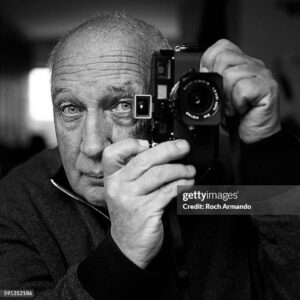
Raymond Depardon
Depardon acknowledged an aesthetic and ethical debt to Walker Evans in relation to his photographic approach.
Verified 2026-08-31La France de Raymond Depardon | Éditions de la Bibliothèque nationale de France
Collaboration
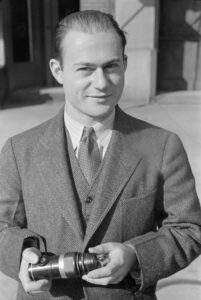
Arthur Rothstein
Walker Evans photographed for the same Farm Security Administration project as Rothstein in the later 1930s, under Roy Stryker's direction. The two men belonged to the same documentary unit, and their FSA files, made in different regions and in markedly different styles, are now read together as the project's central achievement.
Verified 2026-09-16Wikipedia
Influence & affinity
Eugène Atget
Evans was deeply influenced by Atget's objective and documentary approach to Parisian architecture and street life; he collected Atget's prints and praised his vision.
Verified 2026-09-05Wikipedia
Influence & affinity
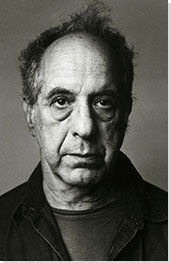
Robert Frank
Evans's documentary realism and direct style influenced Robert Frank, whose landmark book The Americans carries forward Evans's legacy in American photography.
Verified 2026-09-05Wikipedia
Walker Evans: Photographer and Collector (opens a new site)
This SFMOMA article considers collecting as integral to Evans’s practice. Drawing on comments by Clément Chéroux, it describes his interests in postcards, graphic ephemera, signs, tools, and display, and relates those collections to photographs such as roadside stores and garages. It is useful for understanding vernacular material culture as both his subject and research resource.
The Art of the Oxymoron: The Vernacular Style of Walker Evans (opens a new site)
Curator Clément Chéroux’s SFMOMA essay examines Evans through the idea of the American vernacular. It uses a composite subway image to discuss his disruption of photographic time, then argues for a thematic reading across signs, shop windows, and other recurring subjects rather than a strictly chronological account of his work.
Exposition Walker Evans (opens a new site)
A three-minute Centre Pompidou video presented by exhibition curator Clément Chéroux for the institution’s 2017 Evans retrospective. The museum frames the presentation around Evans’s 1930s photographs of America in crisis, his Fortune projects of the 1940s and 1950s, and the influence of his documentary style on later photographers and artists.
COMMUNITY DISCUSSION
Discuss this entry
Share interpretations, reading notes, and source-aware questions. For catalog corrections, use the feedback form below.
No discussion yet. Start the first focused conversation.
Sign in to join the discussion.
Optionally receive a digest when related photobooks are added to the catalog.
See something incorrect? Sign in to suggest a correction or report an issue.