Photographer
Jimmy DeSana
The English Wikipedia entry establishes the core biography: Jimmy DeSana (1949–1990) was an American photographer born in Detroit who worked in New York City from the early 1970s. It describes his staged, deliberately artificial images of bodies — subjects bound, masked, or crossed by light — and ties his practice to the downtown art, music, and queer subcultures of the era, and to the loose grouping later called the Pictures Generation. It also records his self-published 1972 book 101 Nudes and his death from AIDS-related illness in 1990, supplying the basic biographical frame for all further records.
Aperture, the photography publisher, issued the monograph Jimmy DeSana: Submission in 2022 in association with the Brooklyn Museum survey. The publisher’s page documents the book’s scope — reproductions of the artist’s photographs together with scholarly essays — and its role in returning a body of work to print after decades of limited visibility. Because Aperture is a dedicated photography publisher, its catalog page is a reliable record of the publication, its contributors, and the editorial claim that DeSana’s images reshaped how the photographed body could be staged and circulated.
The Brooklyn Museum’s exhibition page documents Jimmy DeSana: Submission (2022–2023), presented as the first museum survey of the artist. The page frames the show around DeSana’s engagement with the body, desire, and constraint, and around the social worlds of downtown New York that he photographed. As a major institutional presentation, it supplies curatorial framing, exhibition history, and the authority of a collecting museum — evidence that DeSana’s practice has been reassessed as central, rather than marginal, to late-twentieth-century American photography.
Salon 94, the New York gallery, lists Jimmy DeSana among the artists it represents, acting for the Estate of Jimmy DeSana. The gallery page is a direct source for representation and for the posthumous management of the work, and it typically links onward to exhibitions and available works. Gallery representation matters here because DeSana’s market and institutional presence were largely built after his death; the page evidences who has stewarded the estate and how the photographs continue to be exhibited and placed.
The Metropolitan Museum of Art’s page for The Pictures Generation, 1974–1984 (2009) documents DeSana’s inclusion in that landmark survey of appropriation-based American art. The exhibition frame is significant evidence because it places DeSana alongside artists who interrogated mass-media imagery, and it locates his staged photographs within a curatorial argument about how pictures constructed identity in the 1970s and 1980s. The Met page therefore supports his art-historical positioning as well as the museum’s own collecting interest in the work.

Selected Works & Key Projects
A source-backed introduction to individual photographs and significant bodies of work.
Key projects
Project · 1972
101 Nudes
DeSana’s first major series, 101 Nudes, originated as an undergraduate project and was issued as a portfolio of photolithographic prints. It comprises images of his friends posed nude in the plain interiors of Atlanta’s postwar houses. The Brooklyn Museum identifies its circulation through mail-art networks and situates it amid the Gay Liberation Movement and local censorship. It merits selection because it establishes the artist’s sustained use of queer domesticity: familiar suburban rooms become a means of looking beneath the social decorum associated with postwar respectability.
View source ↗Selected photographs

1977
Enema
Enema is a 1977–78 gelatin silver print in DeSana’s Submission series. The Whitney Museum record describes a nude person bridging across a bathtub while water from a showerhead falls over the face. The work merits selection because it gives a precise, institutionally documented example of the series’ transformation of a domestic bathroom into a staged bodily situation. Its compressed setup—body, fixture, water, and an awkward pose—shows why Submission is essential to DeSana’s practice: ordinary interiors and objects become active participants in his photographic construction of sexuality and constraint.
Work source ↗1980
Untitled
This 1980 silver dye bleach print depicts a nude model wearing a leather handbag over the head and a shoe as a codpiece. The Metropolitan Museum of Art characterizes it as a humorous commentary on fetish as both sexual totem and commodity. It merits selection because it makes unusually direct the logic behind DeSana’s 1979 turn toward lurid color and dramatic lighting: the body is handled as one prop among others. The photograph condenses his recurring collision of sexuality, consumer objects, theatrical staging, and visual comedy into a single deliberately artificial tableau.
Work source ↗
1982
Marker Cones
Marker Cones presents DeSana crouched on all fours, viewed from behind, with inverted orange traffic cones covering his hands and feet. ICA Boston describes the resulting figure as headless and built from angular forms; the cones simultaneously suggest stilettos and roadside construction debris. Feverish color and artificial grass intensify the staged, unstable scene. This photograph merits selection as a concentrated demonstration of DeSana’s photo-conceptual method: the body becomes both subject and thing, while gender, fetish, and ordinary manufactured objects are made deliberately difficult to separate.
Work source ↗-
1949
Career milestone
Born in Detroit, Michigan
P·P·O·W records Jimmy DeSana as born in Detroit, Michigan, in 1949. This establishes the starting point for an artist whose later practice became closely associated with New York’s downtown art milieu rather than with his birthplace.
Source: P·P·O·W Verified Sep 16, 2026
-
1972
Education
Completes studies at Georgia State University
DeSana received a bachelor’s degree from Georgia State University in Atlanta in 1972, according to P·P·O·W. The same source places his relocation to New York’s East Village in the early 1970s, making graduation the documented transition between his Atlanta education and the New York context central to his subsequent career.
Source: P·P·O·W Verified Sep 16, 2026
-
1972
Series
Creates 101 Nudes as a thesis project
The New Yorker reports that DeSana submitted 101 Nudes as his Georgia State University thesis project in 1972. The project comprises fifty-six small black-and-white photolithographs. Its inclusion at the beginning of the 2022 Brooklyn Museum retrospective marks it as an early, institutionally foregrounded body of work in accounts of his career.
Source: The New Yorker Verified Sep 16, 2026
-
1978
Exhibition
Participates in Punk Art Exhibition
P·P·O·W lists DeSana in Punk Art Exhibition at the Washington Project for the Arts, Washington, DC, in 1978. The appearance documents his public participation in a period exhibition explicitly framed around punk, placing his work within one of the cultural formations that shaped accounts of his downtown-era practice.
Source: P·P·O·W Verified Sep 16, 2026
-
1980
Photobook
Publishes Submission
White Columns identifies Submission as DeSana’s 1980 book, published in New York by Scat Publications. The New York Times describes the book as a publication of photographs of sadomasochistic rituals. Together, these sources document a major early photobook through which DeSana brought sexually explicit staged imagery into a durable published form.
Source: White Columns Verified Sep 16, 2026
-
February 15–April 5, 1981
Exhibition
Included in New York/New Wave at P.S.1
MoMA records New York/New Wave at MoMA PS1 from February 15 through April 5, 1981, and identifies DeSana among its artists. MoMA’s historical account characterizes the exhibition as a presentation of 118 artists, writers, and rock musicians that brought downtown energy to Queens and attracted broad art-world and public attention. DeSana’s inclusion situates him in this consequential survey of Lower East Side-associated cultural production.
Source: The Museum of Modern Art Verified Sep 16, 2026
-
1990
Career milestone
Dies in New York, New York
P·P·O·W records DeSana’s life dates as 1949–1990 and lists New York, New York, as his place of death. This endpoint came after a career associated by the gallery with New York’s downtown scene of the 1970s and 1980s.
Source: P·P·O·W Verified Sep 16, 2026
-
November 11, 2022–April 16, 2023
Exhibition
Jimmy DeSana: Submission at the Brooklyn Museum
Brooklyn Museum Archives records Jimmy DeSana: Submission as open to the public from November 11, 2022, to April 16, 2023. The exhibition’s documentation is preserved in the museum’s Contemporary Art Department records, including press material, didactics, a checklist, and related correspondence. Its museum presentation is a substantial posthumous institutional milestone in the public record of DeSana’s work.
Source: Brooklyn Museum Archives Verified Sep 16, 2026
Representation
P·P·O·W Gallery
New York gallery that represents the Jimmy DeSana estate and has staged solo presentations of his photographs, helping reintroduce his color work to contemporary audiences after his death in 1990.
Verified 2026-09-16P·P·O·W Gallery
Estate
The Jimmy DeSana Trust
The artist's estate, which manages his negatives, prints and archives and authorises posthumous exhibitions, publications and print editions of his work.
Verified 2026-09-16Wikipedia
Collection
Museum of Modern Art
Holds examples of DeSana's photographs in its permanent collection, part of the museum's documented holdings of late twentieth-century American photography.
Verified 2026-09-16Wikipedia
Collection
Whitney Museum of American Art
Collects and has exhibited DeSana's photography, situating his staged colour images within narratives of American art of the 1970s and 1980s.
Verified 2026-09-16Wikipedia
Collection
Brooklyn Museum
Repository of DeSana prints and related material, supporting research and displays that foreground his queer and body-centred imagery.
Verified 2026-09-16Wikipedia
Collection
Solomon R. Guggenheim Museum
Lists DeSana among the photographers represented in its collection, reflecting institutional recognition of his experimental colour practice.
Verified 2026-09-16Wikipedia
Collection
Art Institute of Chicago
Holds DeSana photographs in its collection of modern and contemporary photography, aiding their study outside New York.
Verified 2026-09-16Wikipedia
Gallery relationship
Pat Hearn Gallery
East Village gallery where DeSana exhibited during the 1980s, a venue central to the period's experimental downtown art scene.
Verified 2026-09-16Wikipedia

Arnold Newman
Shared publisher: DelMonico Books
4 photobook(s) in the library
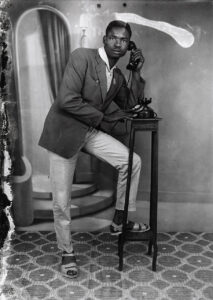
Seydou Keïta
Shared publisher: DelMonico Books
3 photobook(s) in the library
Dawoud Bay & Carrie Mae Weems
Shared publisher: DelMonico Books
1 photobook(s) in the library
Fadeley Collection
Shared publisher: DelMonico Books
1 photobook(s) in the library
COMMUNITY DISCUSSION
Discuss this entry
Share interpretations, reading notes, and source-aware questions. For catalog corrections, use the feedback form below.
No discussion yet. Start the first focused conversation.
Sign in to join the discussion.
Optionally receive a digest when related photobooks are added to the catalog.
See something incorrect? Sign in to suggest a correction or report an issue.