Photographer
Diane Arbus
Diane Arbus (1923–1971) was an American photographer whose unsettling, psychologically charged portraits transformed postwar photography. Born Diane Nemerov in New York City, she grew up in a privileged family that owned the Russek’s department store, and at age eighteen married Allan Arbus, with whom she spent nearly two decades producing commercial fashion photography for magazines such as Harper’s Bazaar and Glamour.
After studying with Berenice Abbott and later with Lisette Model between 1955 and 1957, Arbus broke away from commercial work to pursue a personal documentary vision. Beginning in 1960 with her first photo‑essay for Esquire, she developed a signature style centered on direct, frontal portraits made in streets, parks, homes, and marginal environments. Her subjects included nudists, carnival performers, people with dwarfism, suburban families, female impersonators, and other individuals living at the edges of conventional society.
Arbus was awarded Guggenheim Fellowships in 1963 and 1966 for her project “American Rites, Manners, and Customs,” during which she adopted the square‑format Rolleiflex and on‑camera flash that became central to her visual language. Her photographs, marked by their intensity, clarity, and closeness, challenged prevailing norms of beauty and representation and redefined what documentary portraiture could be. She participated in MoMA’s influential 1967 exhibition “New Documents,” curated by John Szarkowski, which established her as a leading voice of a new photographic generation.
Though she struggled with mental health in her final years, Arbus’s legacy grew rapidly after her death in 1971. In 1972, she became the first photographer included in the Venice Biennale, and MoMA mounted a landmark retrospective that helped cement her status as one of the most influential photographers of the twentieth century. Her images continue to shape contemporary understandings of portraiture, identity, and the ethics of representation.
Diane Arbus (1923–1971) was an American photographer known for black-and-white portraits of individuals on the margins of society, including dwarfs, giants, circus performers, and people with unconventional appearances. Born into a wealthy New York family, she initially worked in commercial fashion photography with her husband Allan Arbus before studying under Lisette Model in the late 1950s. Her work gained prominence through magazine publications and exhibitions, notably at the Museum of Modern Art in 1972. Arbus struggled with depression and died by suicide in 1971. Her photographic style, characterized by direct frontal compositions and sharp detail, reshaped documentary and portrait conventions.

Fragile beauté

Diane Arbus: Sanctum Sanctorum

The Extended Moment

Diane Arbus: A Box of Ten Photographs

Diane Arbus: An Aperture Monograph

Diane Arbus: An Aperture Monograph

Diane Arbus: Untitled

Diane Arbus: An Aperture Monograph

Diane Arbus: An Aperture Monograph

Diane Arbus: An Aperture Monograph
Selected Works & Key Projects
A source-backed introduction to individual photographs and significant bodies of work.
Key projects
Project · 1963
American Rites, Manners and Customs
In April 1963, Arbus received a Guggenheim Fellowship for the comprehensive project “American Rites, Manners and Customs.” The Metropolitan Museum identifies her first significant fellowship outing as a weekend at Sunshine Park, a family nudist camp near Atlantic City, where she photographed a twelve-year-old waitress. The stated project matters because it gave institutional support to an ambitious inquiry into contemporary ceremonies and social types—work the Museum describes as extending photographic activity she had begun five years earlier. It is a crucial framework for the penetrating, matter-of-fact portraits that reshaped expectations of photographic portraiture.
View source ↗Project · 1969
A box of ten photographs
Arbus began this portfolio in late 1969 and gave it the title A box of ten photographs. The Smithsonian American Art Museum traces the work through an eleven-print set made for Harper’s Bazaar art director Bea Feitler; acquired by SAAM in 1986, it is the only completed and sold Arbus portfolio in a public collection. The portfolio merits selection not simply as a group of individual images, but as rare evidence of Arbus deliberately organizing a finite photographic statement. Its 1972 presentation at the Venice Biennale—where Arbus became the first photographer included—also places it centrally in her posthumous international reception.
View source ↗
Project · 1969–1971
Untitled
Untitled comprises photographs made from 1969 to 1971, during Arbus’s final years, at residences for people with developmental disabilities. Fraenkel Gallery records that she repeatedly returned to these sites for picnics, dances, and Halloween. This sustained late body of work merits separate treatment because its setting and repeated visits distinguish it from a single portrait or assignment: it is a focused sequence made through return and encounter. Its reception has remained consequential; Hilton Als described the photographs as resisting critical categorization and as pictures Arbus had been waiting all her life to make.
View source ↗Selected photographs

1966 · Roselle, New Jersey, United States
Identical twins, Roselle, N.J.
This gelatin silver print records identical twins in Roselle, New Jersey, in 1966. MoMA holds the work in its Photography Department and lists it among its online Arbus holdings. Its selection is supported by its continuing institutional prominence: The Met included it among the favored photographs in Diane Arbus Revelations, a retrospective of approximately 180 significant works that also examined Arbus’s contact sheets, cameras, letters, notebooks, and library. The photograph therefore serves as a concise entry point to Arbus’s mature portraiture and to the sustained museum attention given to her working process and reception.
Work source ↗
1962 · Central Park, New York City, United States
Child with a toy hand grenade in Central Park, N.Y.C.
Made in 1962, this gelatin silver print depicts a child in Central Park holding a plastic toy grenade. The Met frames the encounter between photographer and child as a charged face-to-face moment, reading the photograph as an image about children’s games, war, and the photographer’s role in society. That explicit curatorial interpretation explains why this photograph merits selection: it concentrates Arbus’s portrait practice into an uneasy exchange rather than a detached street scene. The Met’s broader account calls Arbus one of the most influential artists of the last fifty years and says her work permanently altered perceptions of portraiture.
Work source ↗
1966 · West 20th Street, New York City, United States
A young man in curlers at home on West 20th Street, N.Y.C.
MoMA identifies this 1966 work as a gelatin silver print and holds it in its Photography Department. It is also one of thirteen rare vintage Arbus prints selected for a promised gift to the Metropolitan Museum, where it appears in a group the Museum describes as including signature images. The photograph merits selection because it makes a domestic address and a young sitter the basis for a major collection work, rather than treating public spectacle as the only site of Arbus’s portraiture. Its presence in both MoMA’s collection and the Met’s notable Arbus acquisition documents lasting institutional recognition.
Work source ↗1963 · New Jersey, United States
A young waitress at a nudist camp, N.J.
This 1963 photograph was made during Arbus’s first significant trip under her Guggenheim Fellowship for “American Rites, Manners and Customs.” The Met identifies its subject as a twelve-year-old waitress at Sunshine Park, a family nudist camp near Atlantic City, and describes the image as a poignant study of someone at the threshold of puberty. The work merits selection because it connects one specifically located portrait to the fellowship project’s wider attention to contemporary social customs. It was also chosen among thirteen rare vintage prints for a major promised gift to the Met, where the Museum listed it as a signature example of Arbus’s work.
Work source ↗
1970 · Bronx, New York City, United States
A Jewish giant at home with his parents in the Bronx, N.Y.
This 1970 gelatin silver print portrays Eddie Carmel at home with his parents in the Bronx. MoMA and the Met both hold versions of the work; the Met identifies Carmel by name and records the work as a photograph. Its selection is directly supported by institutional reception: the Met called it one of the favored works in Diane Arbus Revelations and elsewhere described it as a masterpiece of late twentieth-century American art. The domestic setting and family grouping make the photograph especially consequential within Arbus’s portraiture, while its repeated inclusion in major museum presentations establishes its exceptional standing in her oeuvre.
Work source ↗-
1956
Career milestone
Leaves family fashion studio
In 1956 Diane Arbus ended her commercial partnership with her husband, Allan Arbus, to pursue her own photographic vision. She turned to street photography, documenting people on the margins of society, and developed the direct, confrontational style that would define her career. This shift marked the beginning of her personal artistic inquiry into identity, appearance, and the unconventional.
Source: Wikipedia Verified Sep 5, 2026
-
1958
Education
Studies with Lisette Model
Diane Arbus studied with Lisette Model in 1958, an influential photographer who encouraged her to pursue her own instincts and to explore unconventional subjects. Model's emphasis on psychological observation and a direct, unposed approach helped Arbus refine her technique and gave her confidence to photograph strangers and fringe communities.
Source: Wikipedia Verified Sep 5, 2026
-
1963
Award
First Guggenheim Fellowship
In 1963 Diane Arbus was awarded her first Guggenheim Fellowship, enabling her to pursue a major project documenting 'American rites, manners, and customs.' Over two years she photographed numerous subjects including nudists, dwarfs, and couples, aiming to capture the rituals and social behaviors that reveal the underlying tensions of American life.
Source: Wikipedia Verified Sep 5, 2026
-
1965
Award
Second Guggenheim Fellowship
For a second Guggenheim Fellowship in 1965, Arbus expanded her exploration of American society. She continued to photograph people at societal fringes, often penetrating private events and communities to uncover unusual rituals. This fellowship supported her signature style of intimate, psychological portraiture and candid documentation of difference.
Source: Wikipedia Verified Sep 5, 2026
-
1967
Exhibition
Exhibition: 'New Documents' at MoMA
In 1967, Diane Arbus was included in the landmark exhibition 'New Documents' at the Museum of Modern Art, curated by John Szarkowski. Alongside Lee Friedlander and Garry Winogrand, Arbus's work highlighted a shift from traditional photojournalism towards a more subjective, documentary style. This show posited that photographers now documented personal perspectives rather than objective reality, securing Arbus's critical recognition.
Source: Wikipedia Verified Sep 5, 2026
-
1970
Photobook
Publication of 'A Box of Ten Photographs'
In 1970, Diane Arbus published 'A Box of Ten Photographs,' a portfolio of ten signed prints, each depicting dramatic portraits such as the Jewish Giant, the Twins, and a young couple. This self-published edition was her first major attempt to present her work as a whole, and it reflected her meticulous selection and sequencing. The portfolio is now a rare collectible and underlines her importance in the history of photographic portraiture.
Source: Wikipedia Verified Sep 5, 2026
-
1972
Exhibition
Posthumous retrospective at MoMA
A year after her death, the Museum of Modern Art presented a major retrospective of Diane Arbus's work in 1972, organized by John Szarkowski. The exhibition traveled worldwide and included over 100 photograph prints, many previously unseen. It introduced her arresting images to a global audience and initiated critical reassessment of her contributions, solidifying her reputation as a singular voice in modern photography.
Source: Wikipedia Verified Sep 5, 2026
-
1972
Photobook
Publication of 'Diane Arbus' monograph
In 1972, Aperture published a monograph titled 'Diane Arbus', edited by Marvin Israel and designed by Arbus's friend. The book contained 108 photographs and accompanied the MoMA retrospective, documenting her life's work. It became a seminal photography volume, shaping public perception of Arbus and influencing generations of photographers.
Source: Wikipedia Verified Sep 5, 2026
Museum relationship
Museum of Modern Art
The Museum of Modern Art in New York holds and exhibits photographs by Diane Arbus in its permanent collection, including prints from her major series. Arbus's work has been featured in MoMA exhibitions, such as the 2003 retrospective 'Diane Arbus: Revelations,' which traveled widely and cemented her legacy in the history of photography. MoMA's acquisition and display of her images demonstrate institutional recognition of her contributions to the medium.
Verified 2026-09-05Wikipedia – Diane Arbus
Estate
Estate of Diane Arbus
The Estate of Diane Arbus manages the photographer's copyrights, prints, archives, and legacy after her death in 1971. It oversees authorized exhibitions, publications, and reproductions, ensuring accurate representation of her work. The estate has collaborated with institutions like the Metropolitan Museum of Art and the Smithsonian, and it holds the artist's original negatives and papers.
Verified 2026-09-05Wikipedia – Diane Arbus
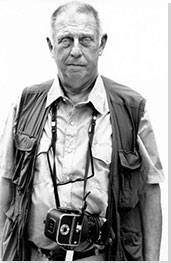
Shared exhibition
Lee Friedlander
Friedlander and Arbus were both included in MoMA’s 1967 exhibition New Documents.
Verified 2026-09-03The Museum of Modern Art
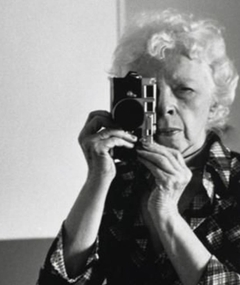
Influence & affinity
Lisette Model
Lisette Model was a prominent American photographer and teacher who taught Diane Arbus in the late 1950s. Model encouraged Arbus to pursue her own subjects with directness and psychological depth, significantly influencing Arbus's mature style. Arbus later acknowledged Model's impact on her approach to portraiture and street photography.
Verified 2026-09-05Wikipedia – Diane Arbus
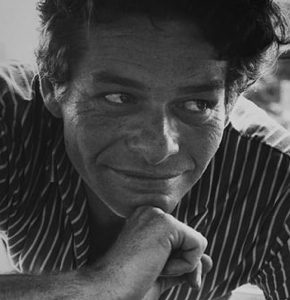
Shared exhibition
Garry Winogrand
Arbus and Winogrand were showcased together in the 1967 'New Documents' exhibition at the Museum of Modern Art, representing a new generation of photographers focused on social observation and existential moments.
Verified 2026-09-05Wikipedia
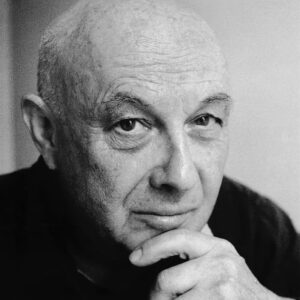
Shared exhibition
Bruce Davidson
Bruce Davidson and Diane Arbus both featured in the 1967 'New Documents' exhibition at the Museum of Modern Art, curated by John Szarkowski, which celebrated a new approach to documentary photography.
Verified 2026-09-05Wikipedia
Diane Arbus – Fraenkel Gallery (opens a new site)
Fraenkel Gallery, which represents the Diane Arbus estate, presents a biography and list of exhibitions. It details Arbus's association with the gallery, her major series, and provides access to her archival prints. This source is valuable for understanding her market presence and curatorial connections.
Diane Arbus – Artworks, Biography, and Legacy (opens a new site)
The Art Story provides an analytical profile of Diane Arbus, discussing her artistic development, key photographs, and critical significance. It situates her within the context of postwar American photography and examines her impact on portraiture and social documentary.
Diane Arbus (opens a new site)
This Wikipedia entry offers a detailed biographical overview of Diane Arbus, covering her early life, career as a fashion photographer, transition to documentary portraiture, her distinctive approach to photographing marginalized subjects, her major exhibitions, and her lasting influence on photography.
COMMUNITY DISCUSSION
Discuss this entry
Share interpretations, reading notes, and source-aware questions. For catalog corrections, use the feedback form below.
No discussion yet. Start the first focused conversation.
Sign in to join the discussion.
Optionally receive a digest when related photobooks are added to the catalog.
See something incorrect? Sign in to suggest a correction or report an issue.