Photographer
Paul Caponigro
Paul Caponigro (1932–2024) was an American photographer, writer, and pianist whose lyrical landscape photographs helped define the poetic strain of twentieth-century American nature photography. Born in Boston in 1932, he initially studied piano at Boston University before discovering photography in 1952, a shift that would shape his entire career. He is often grouped with West Coast masters such as Ansel Adams, yet his work stands apart for its meditative, almost spiritual quality and its emphasis on quiet, intimate moments rather than monumental vistas.
Caponigro’s visual language is characterized by a precise control of tone and light, a sensitivity to texture, and a tendency to distill landscapes into nearly abstract, contemplative compositions. Unlike Adams’s dramatic high-contrast imagery, Caponigro often worked in softer, more diffuse light, seeking what he called the “invisible” essence of a place. His subjects range from stone walls and apple trees to the famous “Running White Deer” (1967) and “Dead Sunflower” (1968), images that evoke a sense of transience and stillness.
His major bodies of work include his early landscapes of New England, his studies of Stonehenge and other megalithic sites, and his broader exploration of sacred spaces in nature. “Running White Deer” became iconic after being reproduced widely, and his photobook “The Seasons” (1988) and “Landscape: The World of Paul Caponigro” (1986) are considered landmarks of fine-art landscape photography. His prints are known for their luminous, silvery tonal range, often printed in gelatin silver with an almost platinum-like delicacy.
Caponigro’s career spanned more than six decades, with exhibitions in major institutions and representation by galleries such as Peter Fetterman Gallery and Etherton Gallery. In 2025, he was posthumously named the Visionary Award recipient by Maine Media College, recognizing his lasting impact. His work influenced younger generations of landscape photographers interested in the emotional and metaphysical dimensions of place.
For photobook collectors, Caponigro’s monographs are essential for understanding the transition from the heroic Western landscape tradition to a more introspective, East-coast sensibility. His books, typically produced with high-quality tritone or duotone plates, reward careful study of sequencing and tonal reproduction. A good entry point is “The Seasons,” which gathers his color and black-and-white work, or the monograph “Landscape” for its comprehensive overview. Because his editions are relatively modest, collectors value his early prints and signed books, though any of his publications offers deep insight into his meditative vision.
〔PBL-BIO/2〕



Michael Kenna
Shared publisher: Nazraeli Press
22 photobook(s) in the library

Todd Hido
Shared publisher: Nazraeli Press
21 photobook(s) in the library

Richard Misrach
Shared publisher: Nazraeli Press
18 photobook(s) in the library
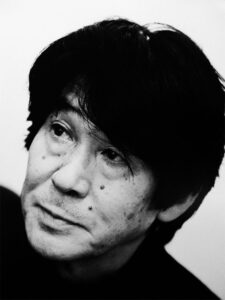
Daido Moriyama
Shared publisher: Nazraeli Press
15 photobook(s) in the library
COMMUNITY DISCUSSION
Discuss this entry
Share interpretations, reading notes, and source-aware questions. For catalog corrections, use the feedback form below.
No discussion yet. Start the first focused conversation.
Sign in to join the discussion.
Optionally receive a digest when related photobooks are added to the catalog.
See something incorrect? Sign in to suggest a correction or report an issue.