Photographer
Philippe Chancel
Philippe Chancel (born 1959 in Issy-les-Moulineaux, France) is a French photographer whose work operates at the crossroads of art, documentary, and journalism. Active for more than three decades, Chancel has developed a unique visual language that interrogates how images function and circulate in the contemporary world. Beginning his career as a young reporter in the former Eastern Bloc, he gradually moved toward long‑term, conceptual documentary projects that reveal the political, social, and environmental tensions shaping global society. Trained in economics at the University of Paris-Nanterre and journalism at the CFPJ in Paris, he brings a methodical, observational rigor to his practice.
Chancel first gained major international attention with **DPRK**, a multi‑year photographic exploration of North Korea, exhibited at the Rencontres d’Arles in 2006 and published by Thames & Hudson. The work challenged conventional depictions of the country by blending formal precision with subtle political critique. He later produced major bodies of work on the United Arab Emirates, including **Emirates**, **Desert Spirit**, and **Workers Emirates**, examining the contradictions of rapid modernization. His ambitious global project **Datazone**, created over fifteen years, documents sensitive, often unstable territories around the world—from Fukushima and Kabul to the Niger Delta, Greenland, Jordan, and Antarctica—offering a portrait of places where political, ecological, and social crises converge.
A finalist for the Prix Pictet (2012) and Prix Elysée (2015), Chancel has exhibited internationally in institutions such as the Centre Pompidou, the Barbican Centre, C/O Berlin, the Venice Biennale, and the Rencontres d’Arles (including a major retrospective in 2019). His work has been widely published and is held in numerous public and private collections. Chancel continues to produce artist books and institutional commissions, expanding his investigation into the role of images within global systems and contemporary crises.


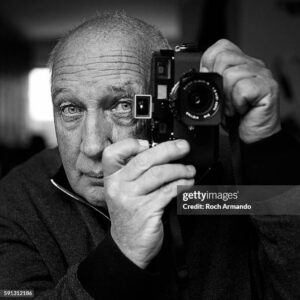
Raymond Depardon
Shared publisher: Éditions Xavier Barral, Thames & Hudson
16 photobook(s) in the library

Weegee
Shared publisher: 5 Continents Editions, Thames & Hudson
14 photobook(s) in the library
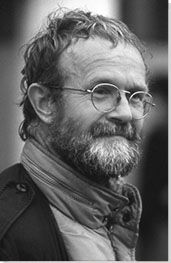
Josef Koudelka
Shared publisher: Éditions Xavier Barral, Thames & Hudson
13 photobook(s) in the library

Luigi Spina
Shared publisher: 5 Continents Editions, Thames & Hudson
12 photobook(s) in the library
COMMUNITY DISCUSSION
Discuss this entry
Share interpretations, reading notes, and source-aware questions. For catalog corrections, use the feedback form below.
No discussion yet. Start the first focused conversation.
Sign in to join the discussion.
Optionally receive a digest when related photobooks are added to the catalog.
See something incorrect? Sign in to suggest a correction or report an issue.