Photographer
Mikel Bastida
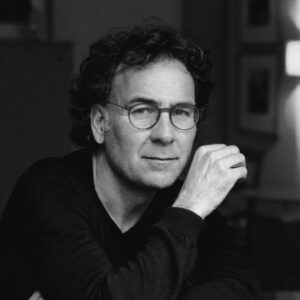
Mikel Bastida (born 1982, Bilbao, Spain) is a photographer whose work investigates the intersections of history, memory, and landscape. He studied Audiovisual Communication, later completing a master’s degree in New Documentary Practices at the Fuga photography centre in Madrid, where he has also taught and lectured. Early in his career he traveled to China in 2010, producing a series that earned one of the prestigious awards in a Spanish photography competition, signalling an early interest in cross-cultural observation and the slow-burning documentary approach that would define his mature projects.
Bastida’s visual language is shaped by an education in cinema and a fascination with how places accumulate meaning over time. Rather than pursuing fast-breaking news stories, he works on long-form projects spanning years, often in remote regions. His images favour muted colour, restrained composition, and an almost cinematic stillness, inviting the viewer to consider what is missing as much as what is present. This distinguishes him from peers who rely on dramatic immediacy; his is a patient, contemplative mode of seeing that treats the road, the border, and the abandoned structure as psychological as well as physical spaces.
His most significant work to date is Anarene, a photobook published after an eight-year photographic project made in the United States. The title itself refers to the fictional town in the classic film The Last Picture Show, a cinematic ghost that captures Bastida’s central concern with memory, loss, and the lingering presence of the past in American landscapes. The project emerged from repeated travels across the country, documenting towns and spaces that seem suspended between documentary fact and cinematic atmosphere. The resulting monograph, released in early 2024, was presented at venues such as Tipi Photo Bookshop in Madrid, where the book’s careful sequencing and design were noted as crucial to its impact.
Bastida’s work has circulated through independent photography platforms and festivals. He participated in the 2014 edition of Getxophoto, an international photography festival in the Basque Country, under the theme ‘Struggles’, which aligned with his interest in social and geographical tensions. His exhibition history also includes appearances at galleries and festivals in Spain, often through the representation of EXIT Media, a Madrid-based agency listing him in its artist index. His biography is frequently included in Spanish photography directories, reflecting steady institutional recognition at home rather than broad international celebrity.
For photobook collectors, Anarene stands as a strong entry point into Bastida’s practice because it encapsulates his method: long gestation, rigorous editing, and a seamless dialogue between image and printed object. The book’s narrative architecture, with its echoes of film and literature, rewards the kind of attentive engagement that collectors of visual storytelling value. While his printed output is still limited, the seriousness of his research into American mythologies and his deliberate pacing position him as an artist worth watching among the generation of European photographers who travel abroad to question received narratives. A balanced critical view acknowledges that his work risks romanticising emptiness, but the best of his images hold a quiet tension between documentary honesty and cinematic allusion that separates them from mere pastiche.
〔PBL-BIO/2〕

COMMUNITY DISCUSSION
Discuss this entry
Share interpretations, reading notes, and source-aware questions. For catalog corrections, use the feedback form below.
No discussion yet. Start the first focused conversation.
Sign in to join the discussion.
Optionally receive a digest when related photobooks are added to the catalog.
See something incorrect? Sign in to suggest a correction or report an issue.