Photographer
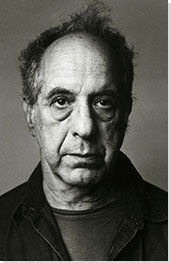
Robert Bergman
Robert Bergman is an American photographer, born in 1944 in New Orleans, Louisiana, who currently divides his time between Minneapolis and New York. He gained wide recognition in the late 1990s and 2000s for his large-format color portraits of strangers encountered on streets across the United States. Although he worked quietly for decades, Bergman remained outside the commercial gallery circuit for much of his career, emerging publicly late in life. Documented primarily through The Robert Bergman Archive, his biography offers limited detail regarding early formal training, leaving much of his artistic formation enigmatic.
Bergman’s visual language is deeply rooted in classical portraiture and observational documentary practice. Between 1985 and 1993, he traveled extensively across American cities, creating intimate encounters that functioned as collaborative portraits with passerby subjects. His images are renowned for their saturated color palette, reliance on available natural light, and ability to balance vulnerability with profound dignity. While many contemporary documentary photographers pursued social irony or overt narrative, Bergman prioritized psychological presence, displaying a painterly sensitivity toward skin tones, texture, and emotional gravity that recalls August Sander and William Eggleston.
His primary body of work is preserved in the landmark monograph A Kind of Rapture, published in 1998, which gathered these street portraits into a focused sequence. Though initially met with quiet reception, the work steadily gained critical acclaim from leading curators, artists, and scholars. In 2009, the Minneapolis Institute of Art organized the major survey exhibition Robert Bergman: Portraits, 1986–1995, which showcased thirty large-scale color portraits and subsequently toured American museums, cementing his standing across institutional spaces.
Bergman’s significance lies in his steadfast commitment to humanistic realism during an era predominantly characterized by postmodern irony and conceptual staged photography. His deliberate refusal to exhibit for decades, paired with an exacting standard for photographic printing and sequencing, aligns him with a contemplative tradition of slow art. Major national broadcasts, including NPR and the PBS NewsHour, celebrated his 2009 retrospective tour as an extraordinary debut decades in the making, confirming his vital place within the history of American color portraiture.
For photobook collectors, A Kind of Rapture remains the essential cornerstone of Bergman’s oeuvre. Conceived with an artist statement and executed with luminous color reproduction, the volume serves as the definitive manifestation of his street portraits. While later gallery catalogues provide contextual documentation, the original 1998 publication offers an immersive, unmediated meditation on American identity, human empathy, and the quiet power of photographic gaze.
〔PBL-BIO/2〕


COMMUNITY DISCUSSION
Discuss this entry
Share interpretations, reading notes, and source-aware questions. For catalog corrections, use the feedback form below.
No discussion yet. Start the first focused conversation.
Sign in to join the discussion.
Optionally receive a digest when related photobooks are added to the catalog.
See something incorrect? Sign in to suggest a correction or report an issue.