Photographer
Dawoud Bey
Dawoud Bey (born David Edward Smikle, 1953) is an American photographer, artist, and educator whose work centers on the lives and histories of Black Americans. Born in Queens, New York, he adopted the name Dawoud Bey in the 1970s, signaling a personal and artistic redefinition that aligned with his engagement with Black identity and community. Over a career spanning nearly five decades, Bey has become known for large-scale portraits and street photography that treat his subjects with dignity and psychological depth, challenging the ways African American lives have historically been represented in photography.
Bey’s visual language evolved from the intimate street portraiture of his early years to a more conceptually grounded practice that addresses historical memory and erasure. His early series “Harlem, USA” (1975) captured the everyday life of the neighborhood with a direct, empathetic eye, establishing his commitment to photographing communities often marginalized by mainstream media. Unlike documentary photographers who sought objectivity, Bey’s approach is relational: he often works with a large-format camera, engages with his subjects in extended dialogue, and produces majestic, sometimes mural-sized prints that demand closer inspection. This emphasis on scale and psychological presence distinguishes his work from the more detached or ironic modes of contemporary street photography.
Three major bodies of work anchor his career. “Harlem, USA” remains a foundational text, celebrating the resilience and complexity of a historically Black neighborhood. “The Birmingham Project” (2013) commemorates the 1963 bombing of the 16th Street Baptist Church, pairing portraits of contemporary residents with figures who would have been the same ages as the victims. “Night Coming Tenderly, Black” (2017) is a series of large-scale photographs evoking the experience of fugitive enslaved people traveling through Ohio to freedom, using abstraction and shadow to create a sensory, atmospheric interpretation of history. These projects extend Bey’s portrait practice into a broader meditation on memory, violence, and survival.
Bey’s significance extends beyond his images. He has been an influential educator, teaching at institutions such as Yale University and Columbia College Chicago, and his work has been honored with a 2017 MacArthur Fellowship, one of the highest recognitions in American culture. Major exhibitions include “Dawoud Bey: An American Project” at the Whitney Museum of American Art (2020) and presentations at the Art Institute of Chicago, which acquired his work. His participation in these institutional contexts has helped solidify photography’s role in dialogues about race and history in the contemporary art world.
For photobook collectors, Bey’s publications offer a compelling entry into his practice. Books such as “Harlem, USA” and “The Birmingham Project” are designed with a careful attention to sequencing and printing that echoes the artist’s attention to materiality. The collaboration with galleries like Sean Kelly ensures a curated presentation of his vast oeuvre. While the market for Bey’s work has grown, the real value lies in the books’ ability to transmit his nuanced vision of Black life—at once personal, historical, and universal.
〔PBL-BIO/2〕


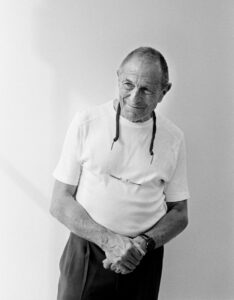
David Goldblatt
Shared publisher: MACK, Yale University Press
9 photobook(s) in the library
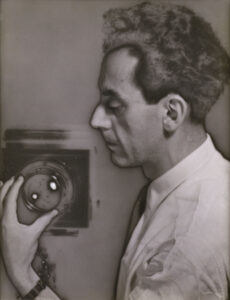
Man Ray
Shared publisher: MACK, Yale University Press
8 photobook(s) in the library

Dorothea Lange
Shared publisher: MACK, Yale University Press
8 photobook(s) in the library
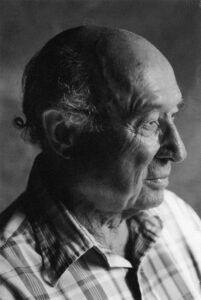
Harry Callahan
Shared publisher: MACK, Yale University Press
6 photobook(s) in the library
COMMUNITY DISCUSSION
Discuss this entry
Share interpretations, reading notes, and source-aware questions. For catalog corrections, use the feedback form below.
No discussion yet. Start the first focused conversation.
Sign in to join the discussion.
Optionally receive a digest when related photobooks are added to the catalog.
See something incorrect? Sign in to suggest a correction or report an issue.