Photographer
Edouard Boubat
Édouard Boubat (1923–1999) was a French photographer whose gentle, lyrical black-and-white images made him a central figure in the postwar humanist photography movement. Born in Paris’s Montmartre district, he studied photoengraving at the École Estienne before serving in World War II. After the war, he turned to photography and initially worked as a photojournalist for magazines including Réalités, a position that carried him across Europe and beyond. His pictures are devoted to ordinary moments: children at play, lovers embracing, street scenes, and quiet landscapes. Through remarkable tenderness and formal balance, he transformed these apparently modest subjects into images of lasting emotional resonance.
Boubat’s visual language favors intimacy and grace over drama or confrontation. While many contemporaries documented conflict and social hardship, he searched for beauty and humanity in fleeting instants. His method was quiet and observant, but never merely casual. He had a rare ability to discover structure within spontaneity, making photographs that feel candid while remaining carefully framed. Sensitivity to light, surface, and texture works together with a profound empathy for his subjects. The resulting images often seem simple at first encounter, yet their measured compositions and attentive looking reveal a highly considered practice.
Among his best-known works is “La petite fille aux feuilles mortes” (The Little Girl with Dead Leaves, 1952), an enduring image of childhood innocence that became an icon of humanist photography. Boubat also produced influential photobooks, including “Boubat” (1971), a retrospective that demonstrated the range of his work, and “Le Soleil des grands” (1987), which gathered images from his varied travels. His later collections continued to explore nature and the human form, showing that his interests extended beyond street reportage. Across these bodies of work, the same lyric attention links intimate encounters, travel, landscape, and the human figure.
Boubat’s historical significance rests on his contribution to the humanist school that flourished in France after 1945, alongside photographers such as Robert Doisneau and Willy Ronis. Although they shared an interest in Parisian life, Boubat’s work developed toward a more personal, almost intimate meditation on existence. He received the Grand Prix National de la Photographie in 1984, confirming his recognition in France, and his prints are held in major collections worldwide. Exhibitions spanning several decades have further established his reputation as a master of gentle observation, whose pictures locate dignity and wonder in the everyday without resorting to spectacle.
For collectors, Boubat’s photobooks are essential points of entry into his practice. Publications such as “Édouard Boubat: La vie est belle” (2002), together with earlier monographs, demonstrate careful sequencing and a print quality that recalls his silver-gelatin originals. In these volumes, the relationship between image placement, pacing, and paper texture extends the quiet lyricism of the photographs themselves. Newcomers may begin with widely available retrospective catalogues or with the concise introduction “Boubat.” Such books reveal how consistently his work joins empathy with visual eloquence, and why his world of gentle observation continues to reward close, sustained looking.
〔PBL-BIO/2〕


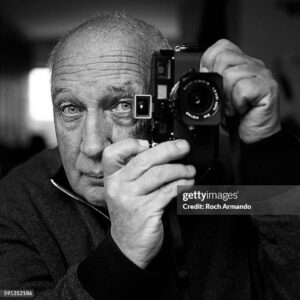
Raymond Depardon
Shared publisher: Thames & Hudson
16 photobook(s) in the library

Alex Webb
Shared publisher: Thames & Hudson
16 photobook(s) in the library
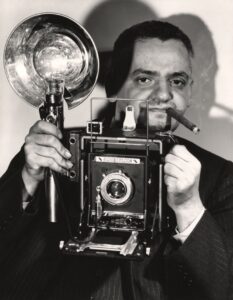
Weegee
Shared publisher: Thames & Hudson
14 photobook(s) in the library
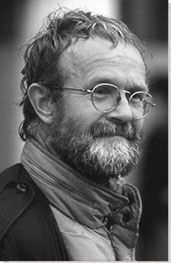
Josef Koudelka
Shared publisher: Thames & Hudson
13 photobook(s) in the library
COMMUNITY DISCUSSION
Discuss this entry
Share interpretations, reading notes, and source-aware questions. For catalog corrections, use the feedback form below.
No discussion yet. Start the first focused conversation.
Sign in to join the discussion.
Optionally receive a digest when related photobooks are added to the catalog.
See something incorrect? Sign in to suggest a correction or report an issue.