Photographer
Jeff Bridges
Jeff Bridges, born December 4, 1949, is an Academy Award-winning American actor whose parallel career as a photographer has gained recognition over several decades. While he is globally known for films such as The Big Lebowski and Crazy Heart, his photographic practice is not a hobbyist sideline but a sustained, intimate visual diary of life on and off film sets. Since the 1960s, Bridges has photographed his surroundings, and in the 1970s he adopted the Widelux F8, a panoramic 35mm camera that produces sweeping, black-and-white images. This distinctive tool shapes his signature style: wide-angle, often slightly skewed views that capture candid moments with a sense of spontaneity and cinematic breadth.
Bridges’ photography is defined by its insider’s perspective. Unlike press photographers documenting Hollywood from afar, he works from within the cast and crew, capturing actors, directors, and technicians in unguarded moments. His images avoid the polished glamour of studio publicity; instead, they reveal the textures, pauses, and human interactions that occur between takes. This approach sets him apart from celebrity photographers who maintain critical distance, giving his work an authenticity that resonates with viewers interested in behind-the-scenes narratives.
His production spans several bodies of work, most notably his ongoing documentation of film sets, which he has compiled into exhibitions and published collections. A well-known example is his series of photographs from the set of The Big Lebowski, which offer a playful, affectionate look at the Coen brothers’ production. Additionally, his work has appeared on his official website, jeffbridges.com, where he curates selections of his photographs, reflecting his continued engagement with the medium. Bridges has also occasionally exhibited in galleries, though he remains primarily known as an actor whose photography enriches his public persona.
The historical significance of Bridges’ photography lies in its unpretentious chronicle of Hollywood labor and leisure. It bridges the gap between amateur snapshot and professional photojournalism, offering a participatory record that has influenced how film-set documentation is perceived. His use of the Widelux camera, a niche panoramic tool, links him to a tradition of experimental panoramic photography, though his subject matter—people, sets, and casual scenes—gives it a distinctively personal character. Bridges’ work has been discussed in photography publications and appreciated by fans, yet it is often viewed through the lens of celebrity rather than artistic merit, a fair critical consideration given its intimate, informal nature.
For photobook collectors, Bridges’ photography presents an accessible entry point into documentary and snapshot aesthetics within a cinematic context. His published collections, often designed as artist books, blend sequencing that mirrors the rhythm of film production—quiet moments interspersed with action. The enduring appeal lies in the combination of his recognizable name and the genuine warmth of the images, making them valuable documents of film history. Collectors interested in actor-photographers or behind-the-scenes visual culture will find his work both historically engaging and aesthetically rewarding.
〔PBL-BIO/2〕



Richard Misrach
Shared publisher: PowerHouse Books
18 photobook(s) in the library
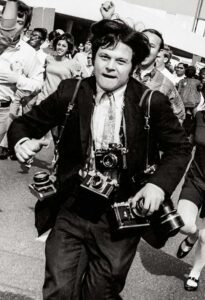
Steve Schapiro
Shared publisher: PowerHouse Books
8 photobook(s) in the library
Brian Finke
Shared publisher: PowerHouse Books
7 photobook(s) in the library

Aaron Siskind
Shared publisher: PowerHouse Books
5 photobook(s) in the library
COMMUNITY DISCUSSION
Discuss this entry
Share interpretations, reading notes, and source-aware questions. For catalog corrections, use the feedback form below.
No discussion yet. Start the first focused conversation.
Sign in to join the discussion.
Optionally receive a digest when related photobooks are added to the catalog.
See something incorrect? Sign in to suggest a correction or report an issue.