Photographer
Michael Brodie
Michael Brodie (born 1985), known both as Mike Brodie and by the moniker ‘The Polaroid Kidd,’ is an American photographer from Mesa, Arizona. Entirely self-taught, he began making images in his teens after being given a Polaroid camera around 2004. Between 2004 and 2008 he crisscrossed the United States by hopping freight trains, photographing the itinerant subculture of train riders, runaways, and young people living on the fringes of mainstream society.
Brodie’s visual language is intimate and direct, relying on Polaroid and 35mm film. Rather than observing from a distance, he was a participant in the scene he documented, often sharing prints with his subjects and building trust through his presence. This participatory method gives his photographs a quality of cohabitation and warmth that sets them apart from more detached documentary or journalistic approaches. The resulting images have a raw, tactile feel—saturated colors, informal framing, and a sense of fleeting bonds formed on the road.
During those years Brodie amassed a substantial body of work that has since been shown in galleries and reproduced in editorial features. Representatives such as Casemore Gallery and M+B Photographs have exhibited his prints, and his story has been told through interviews and profiles. Yet he did not publish a widely circulated monograph during his active phase; his reputation rests almost entirely on this dense period of train-hopping imagery.
Historically, Brodie’s photographs are a rare first-person account of the early-2000s American freight-train culture, a movement intertwined with punk, DIY ethics, and youth homelessness. In the broader lineage of road photography, his insider gaze revises the tradition of the outside observer—echoing photographers like Robert Frank but shifting the perspective to someone who belongs to the world he documents. After roughly seven years, he stepped back from photography and later worked as a diesel mechanic, as reported in interviews. This withdrawal lends his archive an unusual closure, a time capsule of a subculture that has since drastically changed.
For photobook collectors, Brodie’s output is significant because of its brief, concentrated gestation. His Polaroid and 35mm images were often made casually, distributed in informal ways, and reflect the handmade culture of early 21st-century subcultures. Without an official website or established monograph, the most reliable way to encounter his work remains through the galleries that have represented him, such as Casemore Gallery and M+B Photographs. These venues offer provenance documentation and a broader sense of his position within contemporary documentary photography.
〔PBL-BIO/2〕

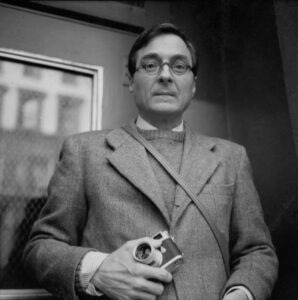
William Eggleston
Shared publisher: Twin Palms Publishers
26 photobook(s) in the library
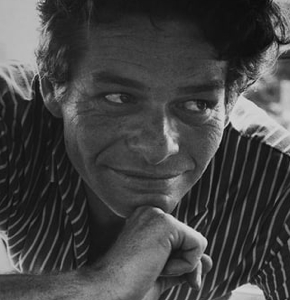
Garry Winogrand
Shared publisher: Twin Palms Publishers
11 photobook(s) in the library

Peter Hujar
Shared publisher: Twin Palms Publishers
8 photobook(s) in the library

Ellen von Unwerth
Shared publisher: Twin Palms Publishers
7 photobook(s) in the library
COMMUNITY DISCUSSION
Discuss this entry
Share interpretations, reading notes, and source-aware questions. For catalog corrections, use the feedback form below.
No discussion yet. Start the first focused conversation.
Sign in to join the discussion.
Optionally receive a digest when related photobooks are added to the catalog.
See something incorrect? Sign in to suggest a correction or report an issue.