Photographer
Karlheinz Weinberger
Swiss photographer known for portraits of youth subcultures.
Karlheinz Weinberger (1921–2006) was an autodidact Swiss photographer who worked as a warehouse employee in Zurich throughout his life. He is recognized for his sensitive portraits of the city’s rebellious post-war youth—leather-coated rockers and bikers—who formed a distinct subculture influenced by American rock-and-roll. His best-known pictures, taken between the 1950s and 1980s, celebrate a defiant masculinity and hint at homoerotic desire. Long overlooked, Weinberger’s archive was rediscovered in the late 1990s, bringing him international acclaim. The article outlines his biography, artistic practice, and the critical reappraisal of his work.

Selected Works & Key Projects
A source-backed introduction to individual photographs and significant bodies of work.
Key projects
Project · 1952–1967
Der Kreis photographs
Working under the name Jim, Weinberger became the principal in-house photographer for Der Kreis. The source records roughly 80 of his pictures in the magazine, beginning in issue 9/1952 and continuing through issue 11/1967. It describes his preference for workers and other conventionally masculine men, photographed in natural work or leisure settings, while identifying the particular erotic charge the images held for gay viewers. This sustained published body is selected because it documents the photographer’s formative public outlet and the pseudonymous practice from which his later recognition emerged.
View source ↗
Project · 1958
Halbstarke
Weinberger began photographing a group of teenagers after meeting its members in 1958, making pictures at his home as well as in parks and fairgrounds. The Swiss Institute identifies these working-class youths as “Halbstark” and describes their American-influenced self-styling: customized jeans, motorcycle jackets, and enlarged belt buckles. The project merits selection as the central social world through which Weinberger made his best-known portraits. Its later reception is explicit: the 2000 exhibition Die Halbstarken at Zurich’s Museum für Gestaltung brought him before a broad public and helped make these pictures the basis of his public breakthrough.
View source ↗Selected photographs

1960
Untitled
Dated circa 1960 by the Swiss Institute, this untitled photograph was included in Intimate Stranger, identified by the institution as its first exhibition of Weinberger’s vintage prints. The image is significant within the catalog not because the source assigns it a separate narrative, but because it provides a named, dated example from the period in which Weinberger’s work moved between private desire, portraiture, and subcultural observation. The exhibition text calls his photographs a contribution to portraiture beyond their documentary value. This work is therefore selected as a concise early example from that institutional framing.
Work source ↗1961
Siesta
The Swiss queer-history archive page records Siesta as a photograph by Karlheinz Weinberger / Jim, published in Der Kreis 9/1961, and identifies the Swiss Gay Archive in Zurich as owner of the cited estate material. Its selection is grounded in that unusually specific publication and collection documentation. Siesta is not included here as an inferred emblem of an entire career; rather, it is a securely named work demonstrating how Weinberger’s pseudonymous photographs circulated in Der Kreis. In the source’s wider account, Jim’s images made natural-looking men in work or leisure settings into erotic events for gay readers, which explains this photograph’s importance within that body of published work.
Work source ↗-
1958–1964
Series
Halbstark
Weinberger's signature series, he photographed the Halbstarke (youth subculture) in Zurich, capturing rebellious teenagers with leather jackets, slicked hair, and defiant poses. His candid, intimate portraits during rock 'n' roll concerts and public fairs became documentations of a generation's shift toward Western mass culture, later recognized as key works in visual sociology of postwar Europe.
Source: Wikipedia Verified Sep 4, 2026
-
1995
Career milestone
Rediscovery by curator Daniel Büchler
After decades of obscurity, curator Daniel Büchler came across Weinberger's work, leading to its first serious appreciation. This recognition prompted exhibitions and publications that brought the self-taught photographer to international attention. Büchler's research positioned Weinberger within art and documentary traditions, revitalizing what had been a dormant archive of Swiss amateur photography.
Source: Wikipedia Verified Sep 4, 2026
-
2005
Photobook
Monograph: 'Karlheinz Weinberger'
The first comprehensive monograph of Weinberger's work, published by Steidl. It compiled images from his youth-culture series, portraits, and later colour work, offering substantial scholarly context. This book became a crucial reference, establishing Weinberger's legacy in the photography canon and making his underappreciated body accessible to collectors and academics worldwide.
Source: Wikipedia Verified Sep 4, 2026
-
2006–2007
Exhibition
'Karlheinz Weinberger' at Fotomuseum Winterthur
A retrospective exhibition at the Fotomuseum Winterthur, the leading Swiss photography institution. This show validated Weinberger's significance within Swiss and international photography history, presenting his youth subculture images alongside personal amateur work. The museum also acquired his estate, cementing its role in preserving his photographic legacy.
Source: Wikipedia Verified Sep 4, 2026
-
2006
Archive
Estate acquired by Fotomuseum Winterthur
Following his death in the same year, Weinberger's entire photographic archive, including negatives, prints, and personal documents, was transferred to the Fotomuseum Winterthur. This institutional acquisition ensures the preservation and scholarly access to his work, turning a once-overlooked amateur practice into a national cultural asset for study and exhibition.
Source: Wikipedia Verified Sep 4, 2026
Archive
Fotostiftung Schweiz (Swiss Foundation for Photography)
The Fotostiftung Schweiz in Winterthur preserves and manages the photographic estate and personal archive of Karlheinz Weinberger. This institution holds his original negatives, contact sheets, prints, and documentary materials, serving as the key scholarly and curatorial resource for his work. Through exhibitions and publications, the foundation has played a vital role in re-establishing Weinberger's significance, particularly his documentation of Swiss youth subcultures and queer life in the mid-20th century. This archival connection is essential for verifying his oeuvre and for enabling continued study and dissemination of his images.
Verified 2026-09-04Wikipedia (English)
Karlheinz Weinberger: Intimate Stranger (opens a new site)
Swiss Institute’s exhibition page for Intimate Stranger, held from February 11 to March 26, 2011. It frames Weinberger’s vintage prints through his photographs of Zurich’s postwar Halbstarke youth, his earlier work for Der Kreis under the name “Jim,” and the exhibition’s concern with portraiture beyond straightforward documentary evidence.
Karlheinz Weinberger “Rebel Youth” (opens a new site)
A Vimeo video titled Karlheinz Weinberger “Rebel Youth,” presented on the Landscape Stories account. The source identifies the work by title and host but does not provide further production, authorship, date, or duration details.
Photographer Weinberger (opens a new site)
A Swiss Radio and Television segment from the programme 10 vor 10. Its description contrasts public anxiety about jeans-wearing youth in the 1950s and 1960s with Weinberger’s fascination with the Halbstarke, and notes that his work was then on view at the Museum of Design Zurich.
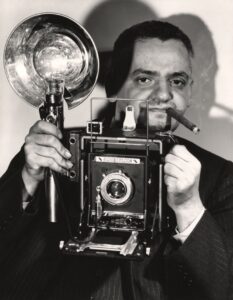
Weegee
Shared publisher: Presentation House Gallery
14 photobook(s) in the library
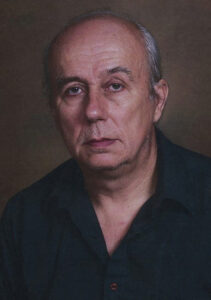
Mark Ruwedel
Shared publisher: Presentation House Gallery
9 photobook(s) in the library

Roy Arden
Shared publisher: Presentation House Gallery
5 photobook(s) in the library
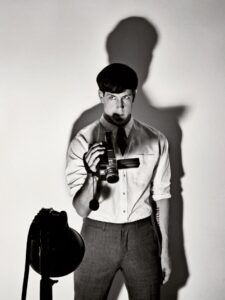
Jeremy Shaw
Shared publisher: Presentation House Gallery
2 photobook(s) in the library
COMMUNITY DISCUSSION
Discuss this entry
Share interpretations, reading notes, and source-aware questions. For catalog corrections, use the feedback form below.
No discussion yet. Start the first focused conversation.
Sign in to join the discussion.
Optionally receive a digest when related photobooks are added to the catalog.
See something incorrect? Sign in to suggest a correction or report an issue.