Photographer
Seydou Keïta
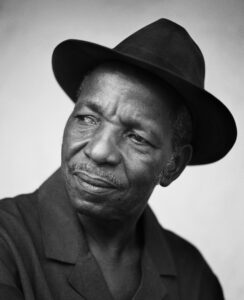
Seydou Keïta (born 1921 in Bamako, French Sudan; died November 22, 2001, in Paris, France) was a monumental figure in twentieth-century African photography, a visionary portraitist, and a foundational master universally recognized as the father of modern African studio photography. A completely self-taught artist, Keïta initially trained as a carpenter before his uncle presented him with his first camera, a Kodak Brownie, in 1935. In 1948, he established his permanent commercial portrait studio in the bustling district of Bamako-Coura, situated near a major train station. This geographic position allowed him to capture the urban elite, transient workers, and political vanguard of a society navigating the profound transition toward national independence. He approached lens-based media with an innate, razor-sharp mastery of composition, treating the studio space as a highly stylized stage to document changing identities and cosmopolitan dreams.
Keïta achieved immortal critical and institutional acclaim with his vast archive of over ten thousand large-format black-and-white portraits captured between 1948 and 1962. Utilizing a large 5×7-inch view camera with a sharp film setup, his methodology completely rejected the rigid, clinical, and degrading ethnographic paradigms favored by colonial-era photographers. Instead, Keïta introduced an elegant, collaborative framework that granted his sitters absolute narrative agency. He curated a spectacular collection of studio props—including radio sets, European scooters, tailored suits, and a rotating array of high-contrast, hyper-patterned wax-print textile backdrops. By meticulously matching the geometric motifs of his backdrops with the traditional flowing robes and intricate boubous of his clients, he pioneered a visually dazzling, layered chiaroscuro aesthetic. Universally recognized as one of the ultimate visual records of the post-colonial African renaissance, his portraits beautifully balanced formal sculptural composure with an uncompromised sense of local pride and human dignity.
His immense visual and material legacy has been preserved and promoted across generations by the Seydou Keïta Estate, which actively collaborates with elite museums to curate historical retrospectives and distribute standard-setting monograph anthologies. Following his retirement as the official government photographer for newly independent Mali in 1977, his archives were systematically discovered internationally in the early 1990s by contemporary curators, triggering a complete rewriting of global photographic history. Keïta’s master prints, original gelatin-silver contact sheets, and extensive negatives are permanently curated in the core collections of the world’s premier museums, including the Museum of Modern Art (MoMA) in New York, the Metropolitan Museum of Art, the Tate Modern in London, the San Francisco Museum of Modern Art, and the National Museum of Mali, establishing his placement as one of the definitive visual chroniclers of human history.


COMMUNITY DISCUSSION
Discuss this entry
Share interpretations, reading notes, and source-aware questions. For catalog corrections, use the feedback form below.
No discussion yet. Start the first focused conversation.
Sign in to join the discussion.
Optionally receive a digest when related photobooks are added to the catalog.
See something incorrect? Sign in to suggest a correction or report an issue.