Photographer
Cecil Beaton
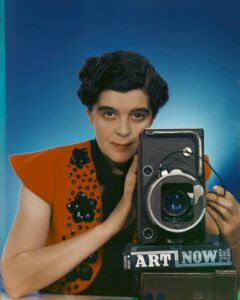
Sir Cecil Beaton (born January 14, 1904, in Hampstead, London; died January 18, 1980, in Broad Chalke, Wiltshire) was a colossal pillar of twentieth-century visual culture, a legendary fashion photographer, portraitist, and Academy Award-winning stage and costume designer who stands as one of the most influential cultural figures in British history. Raised in a wealthy merchant family, Beaton developed a passionate obsession with theater and photography as a child, taught darkroom techniques by his nanny and using his sisters as models. He pursued an erratic academic track at Harrow School and St John’s College, Cambridge, where he actively neglected his studies in history and architecture to focus entirely on set design and amateur dramatics before leaving without a degree. Launching his professional photographic career in the mid-1920s, Beaton rejected the dark, heavy, and literal studio setups common to Edwardian portraiture, adopting instead a light-infused, theatrical, and unashamedly artificial aesthetic that synthesized elements of Surrealism, Baroque opulence, and modern high-fashion design.
Beaton achieved profound international critical and commercial acclaim through his long-standing collaboration with Condé Nast, working as a chief photographer for Vogue and Vanity Fair from 1927 onward. His visual style defined the iconography of the “Bright Young Things” in 1920s London, replacing submissive studio poses with highly stylized, calculated arrangements featuring cellophane backdrops, silver foils, and elaborate floral settings. In 1937, he made art history by being appointed the official photographer to the British Royal Family, capturing the defining, historic coronation portraits of Queen Elizabeth II in 1953 that beautifully balanced sovereign majesty with vulnerable human intimacy. During World War II, his practice shifted dramatically when he joined the Ministry of Information, traveling extensively across the Middle East, India, and China to document front-line realities. His striking 1940 photograph of three-year-old blitz victim Eileen Dunne sitting in a hospital bed holding a rag doll was published on the cover of Life magazine, profoundly accelerating American public support for the war effort.
Beyond his immense photographic outputs, Beaton shattered creative barriers as a world-class production designer for Hollywood and the West End stage. His brilliant visual blueprints for cinema earned him four Academy Awards, including Best Costume Design and Best Art Direction for My Fair Lady (1964) and Best Costume Design for Gigi (1958). His immense material legacy has been preserved and promoted across generations, heavily supported by the National Portrait Gallery in London, which acquired his personal archive of over ten thousand vintage prints and negatives. Beaton was the recipient of photography’s highest international honors, being knighted by Queen Elizabeth II as a Knight Commander of the Order of the British Empire (KBE) in 1972 and winning France’s Commandeur de l’Ordre des Arts et des Lettres. His definitive vintage master prints, set drawings, and extensive diaries are permanently curated in the core collections of the world’s premier museums, including the Victoria and Albert Museum (V&A) in London, the Museum of Modern Art (MoMA) in New York, and the Metropolitan Museum of Art.


COMMUNITY DISCUSSION
Discuss this entry
Share interpretations, reading notes, and source-aware questions. For catalog corrections, use the feedback form below.
No discussion yet. Start the first focused conversation.
Sign in to join the discussion.
Optionally receive a digest when related photobooks are added to the catalog.
See something incorrect? Sign in to suggest a correction or report an issue.