Photographer
Brassaï
Brassai (born September 9, 1899, in Brasso, Transylvania, Austria-Hungary; died July 8, 1984, in Nice, France) was a colossal pillar of twentieth-century photography, a visionary artist, sculptor, and writer universally recognized as the definitive chronicler of Paris between the world wars. Born Gyula Halasz, he took the pseudonym Brassai, meaning from Brasso, to protect his family identity as he entered bohemian artistic circles. Initially studying painting and sculpture at the Academy of Fine Arts in Budapest and later Berlin, he relocated to Paris in 1924, becoming deeply embedded within the avant-garde surrealist community. While working as a journalist, he resisted the camera until his close friend, the legendary Andre Kertesz, demonstrated its unique ability to capture the nocturnal city under low ambient light. This sparked a lifelong documentary mission. Brassai revolutionized the young medium by utterly rejecting the soft-focus pictorialism of the era, adopting instead a sharp, empirical approach that synthesized surrealist psychology with visceral street-level humanism.
He achieved immortal international critical and institutional acclaim with his groundbreaking 1932 photobook masterpiece, Paris de nuit (Paris by Night). Armed with a large-format Voigtlander Bergheil plate camera and an unyielding tripod, Brassai spent years navigating the shadowed cobblestones, dark alleyways, and subterranean veins of the capital after midnight. His stark, high-contrast images utilized streetlamps, headlights, and burning matches to capture the city’s forbidden subterranean soul, mapping taxi drivers, nightlife revelers, prostitutes, and opium dens alongside grand architectures shrouded in dense river fog. Hailed globally as one of the supreme achievements in the history of the photobook, the work stood as a poignant, glowing elegy to a nocturnal subculture on the cusp of modernization. Beyond night landscapes, Brassai served as the trusted visual archivist for the twentieth century’s elite cultural titans, producing definitive environmental portraits of Pablo Picasso, Henri Matisse, Salvador Dali, and Alberto Giacometti. He simultaneously broke conceptual barriers with his decade-long series Graffiti (1933-1960), systematically photographing eroded markings on Parisian walls as primal, modern art historical specimens.
His immense visual, sculptural, and literary legacy has been preserved and celebrated across generations, supported continuously by global national repositories and international estates. His creative blueprints heavily informed the evolution of modern street photography, and his award-winning 1956 avant-garde film, Tant qu’il y aura des betes, won the Most Original Film award at the Cannes Film Festival. Brassai was a recipient of France’s highest institutional honors, including being named a Chevalier de la Legion d’honneur in 1976 and winning the inaugural Grand Prix National de la Photographie in 1978. His definitive vintage master prints, glass negatives, and multi-disciplinary artifacts are permanently curated in the core collections of the world’s premier museums, including the National Museum of Modern Art at the Centre Pompidou in Paris, the Museum of Modern Art in New York, the J. Paul Getty Museum in Los Angeles, the Tate Modern in London, and the Art Institute of Chicago.


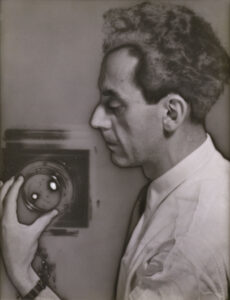
Man Ray
Shared publisher: 5 Continents Editions, Taschen
8 photobook(s) in the library
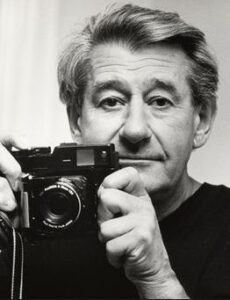
Helmut Newton
Shared publisher: 5 Continents Editions, Taschen
7 photobook(s) in the library
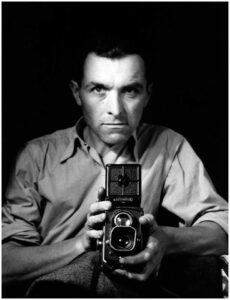
Robert Doisneau
Shared publisher: Flammarion, Taschen
6 photobook(s) in the library

David LaChapelle
Shared publisher: 5 Continents Editions, Taschen
5 photobook(s) in the library
COMMUNITY DISCUSSION
Discuss this entry
Share interpretations, reading notes, and source-aware questions. For catalog corrections, use the feedback form below.
No discussion yet. Start the first focused conversation.
Sign in to join the discussion.
Optionally receive a digest when related photobooks are added to the catalog.
See something incorrect? Sign in to suggest a correction or report an issue.