Photographer
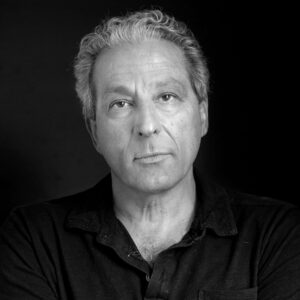
Matthew Naythons
Matthew Naythons (born February 8, 1946) is a monumental American master photojournalist, medical doctor, and pioneering digital publisher whose extraordinary career uniquely bridged the worlds of combat medicine and front-line visual archiving. Trained as a physician, Naythons operated as a self-taught photographer who entered the volatile arena of international reportage during the 1970s. Over two decades of rigorous field assignments, he covered over a dozen wars, humanitarian disasters, and political upheavals across the Middle East, Central America, Southeast Asia, and Africa. He famously balanced his dual identities by explicitly declaring that he was first and foremost a physician, stating that he would never take a photograph if he could instead step in to save a human life. His visceral images of conflict and displacement were syndicated globally by Time magazine, Gamma Liaison, and Black Star, cementing his status as a premier visual chronicler of global human suffering.
Naythons achieved widespread historical and critical acclaim by embedding his lens inside major twentieth-century historical inflection points. He captured the horrific aftermath of the Jonestown massacre in Guyana in 1978, documented the Fall of Somoza in Nicaragua in 1979 alongside photographer Susan Meiselas, and tracked the tragic exodus of Cambodian refugees fleeing the Khmer Rouge. Shifting from behind the lens to humanitarian leadership, he founded Epicenter, a non-governmental organization that provided critical medical relief during international emergencies, including the 1980 Cambodian refugee crisis. Naythons made the deliberate decision to cease frontline conflict photography in 1988 upon becoming a parent, having witnessed too many colleagues leave children behind. He pivoted his creative energy toward multimedia and electronic publishing, founding Epicenter Communications in the early 1990s, where he conceptualized and published standard-setting photographic anthologies including The Face of Mercy: A Photographic History of Medicine at War and A Day in the Life of the United States Armed Forces.
His immense visual and historical legacy has been honored with major retrospective milestones in the mid-2020s. In late 2025 and early 2026, Naythons officially donated his entire life’s archive—including thousands of vintage prints, contact sheets, personal diaries, and field medical logs—to the Briscoe Center for American History at the University of Texas at Austin. This monumental donation coincided with the launch of his definitive retrospective monograph, Light in Dark Places, which was celebrated with high-profile lectures at UC Berkeley Journalism and major metropolitan galleries. Naythons remains a vital voice in modern visual anthropology and humanistic journalism, ensuring that the wounds inflicted by violence, fanaticism, and systemic poverty are permanently archived to prompt global social consciousness.

COMMUNITY DISCUSSION
Discuss this entry
Share interpretations, reading notes, and source-aware questions. For catalog corrections, use the feedback form below.
No discussion yet. Start the first focused conversation.
Sign in to join the discussion.
Optionally receive a digest when related photobooks are added to the catalog.
See something incorrect? Sign in to suggest a correction or report an issue.