Photographer
John Divola
John Divola (born June 6, 1949, in Los Angeles, California) is an internationally celebrated American contemporary visual artist, conceptual photographer, and university professor whose multi-decade practice completely revolutionized the boundaries between performance, sculpture, painting, and lens-based documentation. Divola pursued formal creative training at the University of California, Los Angeles (UCLA), studying under the legendary alternative multimedia icon Robert Heinecken and graduating with a Bachelor of Arts in 1971 followed by a Master of Fine Arts (MFA) in 1974. Rather than using his camera to neutrally capture pre-existing reality, Divola approached photography as a medium of active intervention, blending the traditions of West Coast conceptualism with visceral gestural painting to systematically dismantle institutional myths surrounding photographic truth and documentary neutrality.
Divola achieved immortal critical and institutional acclaim during the mid-to-late 1970s with his breakthrough early series, Vandalism (1973–1975) and Zuma (1977–1978). In Vandalism, he gained forced entry into abandoned, dilapidated houses across Los Angeles, introducing spray-painted geometric shapes, silver lines, and textured markings onto the crumbling walls before capturing them on high-contrast monochromatic black-and-white film. He expanded this theatrical methodology into Zuma, documenting a ruined beachfront property in Malibu over a two-year period using color film. As local firefighters repeatedly used the structure for practice burns, Divola layered the charcoal surfaces with vibrant spray paint, framing the awesome nature of the Pacific Ocean through the tattered, burning interior. Operating long before digital tools like Photoshop, his distinct aesthetic treated the unmanipulated photographic print as a conceptual index of theatrical site engagement and existential transience.
His prolific artistic practice has extended fluidly into the mid-2020s through successive landmark series that investigate landscape discourse and architectural abandonment. Notable projects include Isolated Houses, mapping remote domestic structures stranded across the Mojave Desert; Dogs Chasing My Car in the Desert, capturing blurry, hyper-kinetic animals pursuing his moving vehicle; and George Air Force Base (2015–2020), which documented crumbling rooms at a decommissioned military housing zone. His continuous prestige was celebrated through major 2025 and 2026 museum group retrospectives, including the prominent installation of Zuma at the Museum of Contemporary Art Los Angeles and his solo feature show The Ghost in the Machine at Yancey Richardson Gallery. Divola has served as Professor of Art at the University of California, Riverside since 1988, and is a recipient of multiple fellowships from the National Endowment for the Arts and a John Simon Guggenheim Memorial Fellowship. His master prints are permanently preserved in the premier core collections of world institutions, including the Museum of Modern Art, the Metropolitan Museum of Art, the Whitney Museum of American Art, the J. Paul Getty Museum, the San Francisco Museum of Modern Art, and the Centre Pompidou.


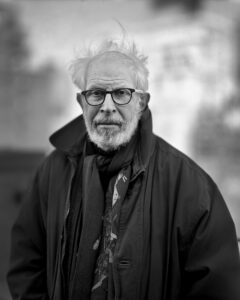
Stephen Shore
Shared publisher: Aperture, MACK
14 photobook(s) in the library
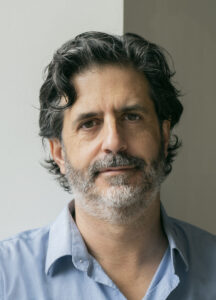
Alec Soth
Shared publisher: Aperture, MACK
13 photobook(s) in the library
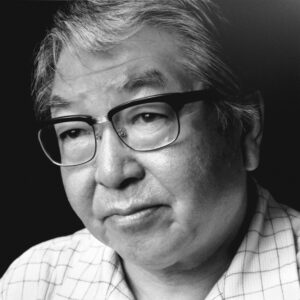
Eikoh Hosoe
Shared publisher: Aperture, MACK
8 photobook(s) in the library
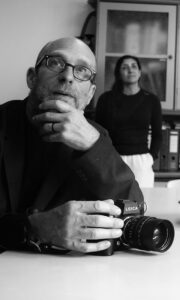
Todd Hido
Shared publisher: Aperture, Nazraeli Press
21 photobook(s) in the library
COMMUNITY DISCUSSION
Discuss this entry
Share interpretations, reading notes, and source-aware questions. For catalog corrections, use the feedback form below.
No discussion yet. Start the first focused conversation.
Sign in to join the discussion.
Optionally receive a digest when related photobooks are added to the catalog.
See something incorrect? Sign in to suggest a correction or report an issue.