Photographer
Sage Sohier
Sage Sohier (born February 23, 1954, in Washington, D.C.) is an internationally acclaimed American master photographer and educator celebrated for her multi-decade environmental portraits and long-form documentary projects that capture the quiet intimacy and complexity of ordinary lives. She pursued a rigorous liberal arts education at Harvard University, receiving her Bachelor of Arts in 1976 while concurrently training in photography at the Carpenter Center for the Visual Arts under influential mentors like Todd Papageorge. Deeply inspired by the street-level humanism of photographers such as Helen Levitt, Diane Arbus, and Lee Friedlander, Sohier established an empathetic visual style. Rather than shooting from a distant, detached perspective, her methodology relies on building immediate rapport and asking for explicit collaboration, allowing her to step close enough to her subjects to dismantle their self-consciousness inside private domestic environments.
Sohier achieved profound critical and institutional acclaim during the 1980s by conducting intensive environmental portrait series across various neighborhoods within an hour of Boston. Her breakthrough project, At Home With Themselves: Same-Sex Couples in 1980s America, offered an unprecedented, deeply humanizing glimpse into gay and lesbian domestic partnerships at the height of the devastating AIDS crisis, deliberately emphasizing affection and normalcy over commercial clichés. Her technical methodology centered around utilizing a Fujica 6×9 cm medium-format film camera equipped with an on-camera fill-in flash. This specific framework forced a slower, highly deliberate tempo and allowed her to preserve incredible background details without blowing out natural lighting elements. She expanded her documentary mapping through several iconic series, including About Face (2012), documenting individuals navigating facial paralysis, and Witness to Beauty (2016), a poignant visual examination tracking the aging process of her mother, a former fashion model.
Sohier’s continuous artistic practice extended into the mid-2020s by systematically revisiting her massive pre-digital archives, culminating in a defining historical trilogy published by Nazraeli Press. This trilogy includes Americans Seen, Passing Time, and her highly acclaimed 20Monograph Easy Days, which documented the quiet tempo, summer boredom, and subtle interpersonal interactions of neighborhoods in the 1970s and 80s. In late 2025 and early 2026, the Center for Photographic Art in Carmel honored her long-term contributions with her retrospective solo exhibition, Easy Days. Alongside her active studio output, Sohier has served as a significant institutional pillar of photographic education, teaching for years at Harvard University, Wellesley College, and the Massachusetts College of Art. She is a recipient of fellowships from the John Simon Guggenheim Memorial Foundation, the National Endowment for the Arts, and the No Strings Foundation. Her master vintage prints are permanently preserved in the core collections of world institutions, including the Museum of Modern Art, the San Francisco Museum of Modern Art, the Museum of Fine Arts, Houston, the Brooklyn Museum, and the Museum of Fine Arts, Boston.
Sage Sohier is an American photographer and educator born in Washington, D.C. She studied at Harvard University and has taught at several institutions, including Harvard University, where she lectured in Visual and Environmental Studies from 1991 to 2003; Wellesley College, where she was an assistant professor of art from 1997 to 1999; and the Massachusetts College of Art, where she served as an assistant professor. She also taught at the Rhode Island School of Design and the School of the Museum of Fine Arts, Boston.
Sohier’s photographs are held in public collections including the Museum of Modern Art, the San Francisco Museum of Modern Art, the Museum of Fine Arts, Boston, the Brooklyn Museum, the Cleveland Museum of Art, and the Addison Gallery of American Art. Beginning in 1980, she photographed same-sex couples in domestic settings during the AIDS crisis. Her listed fellowships and grants include awards from the Massachusetts Artists Foundation, the National Endowment for the Arts, the John Simon Guggenheim Memorial Foundation, the Massachusetts Council on the Arts and Humanities, and the No Strings Foundation. Her exhibitions have included solo presentations of “At Home with Themselves,” “Peaceable Kingdom,” “Perfectible Worlds,” “About Face,” “Witness to Beauty,” and “Immersed and Submerged,” as well as group exhibitions at institutions including the Museum of Modern Art and the International Center of Photography.


Passing Time 2023 (opens a new site)
Sohier describes how pandemic isolation prompted her to revisit unpublished negatives and contact sheets from 1979–1985. The resulting project portrays outdoor social life, spontaneous play, and a slower pre-digital atmosphere, and was published by Nazraeli Press.
Easy Days 2025 (opens a new site)
In this project statement, Sohier explains how revisiting 1980s contact sheets four decades later led to the book Easy Days. She describes the distance of time as both an aid to editing and a source of historical perspective, while situating the volume as the third book in a trilogy published by Nazraeli Press.
Peaceable Kingdom • Sage Sohier (opens a new site)
This Vogue presentation introduces Peaceable Kingdom, a book focused on relationships between people and animals. Its selection spans exotic-animal refuges, wildlife rehabilitation centers, and domestic and farm-animal sanctuaries, emphasizing the sustained work of people who care for rescued animals.
Gordon and Jim after coming out to Gordon’s mum: Sage Sohier’s best photograph (opens a new site)
Sage Sohier recounts the making of a 1987 portrait of Gordon, Jim, and Gordon’s mother, connecting the scene to At Home with Themselves and the climate surrounding LGBTQ visibility during the AIDS crisis. Her account also considers family, personal identification, and the ethical significance of portraying long-term same-sex relationships with dignity.
Sage Sohier (opens a new site)
In this first-person interview, Sage Sohier discusses the origins of Passing Time, the persistence required to photograph people in public and private spaces, and the uncertainty involved in approaching strangers. She also reflects on photographic influences and offers practical advice to emerging photographers.
“(un)expected families” Explores Definition of American Family through Photographs Ranging from Victorian Era to Today (opens a new site)
The Museum of Fine Arts, Boston describes an exhibition examining how photography represents biological, chosen, romantic, and multigenerational families. The announcement identifies Sohier’s Mum in her bathtub, D.C. (2002) as part of the exhibition’s exploration of familial relationships and intimate portraiture.
Off the Radar: Mark Steinmetz on Nine Women Photographers of the Northeast (opens a new site)
Mark Steinmetz places Sohier within a group of women photographers working in Massachusetts in the late 1970s and early 1980s. He highlights her handheld 6 × 9 cm camera, photographs of Boston neighborhoods and domestic interiors, road trips across America, and interest in daylight flash and observational realism.
Sage Sohier – Witness to Beauty (opens a new site)
An official Kehrer Verlag video presentation of Witness to Beauty, Sohier’s photobook centered on aging, beauty, and the relationship between a mother and daughter. The publisher’s presentation offers a concise introduction to the monograph.

Lucas Foglia
Shared publisher: Nazraeli Press, Stanley/Barker
6 photobook(s) in the library

Mimi Plumb
Shared publisher: Nazraeli Press, Stanley/Barker
5 photobook(s) in the library
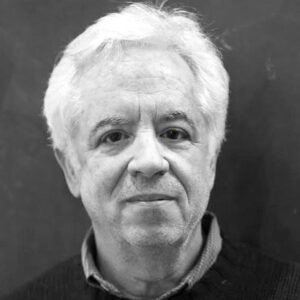
Henry Horenstein
Shared publisher: Kehrer Verlag, Stanley/Barker
5 photobook(s) in the library

Elaine Ling
Shared publisher: Kehrer Verlag, Nazraeli Press
4 photobook(s) in the library
COMMUNITY DISCUSSION
Discuss this entry
Share interpretations, reading notes, and source-aware questions. For catalog corrections, use the feedback form below.
No discussion yet. Start the first focused conversation.
Sign in to join the discussion.
Optionally receive a digest when related photobooks are added to the catalog.
See something incorrect? Sign in to suggest a correction or report an issue.