Photographer
Yoshie Itasaka
Yoshie Itasaka (born 1984 in Osaka) is an acclaimed contemporary Japanese nomadic documentary photographer, visual archivist, and independent researcher whose work explores the intricate connections between geopolitics, national myths, and cultural clashes. Raised in Japan during the economic stagnation following the asset price bubble collapse, Itasaka developed a keen sensitivity to what she terms the “dark shadows of war”—the lingering psychological and spatial scars left on populations navigating post-collapse societies. In 2010, she embarked on a lifelong nomadic journey, starting with extensive travel across North America from 2010 to 2013. This field-based practice evolved into an enduring commitment to mapping volatile cultural borders, focusing deeply on the unresolved territorial conflicts of Israel and the West Bank for over nine years, which she compiled into the conceptual fanzine exhibition “One Person’s Utopia is Another’s Dystopia”. Rather than seeking sudden, explosive media-driven events, her photography values stillness, patience, and pure presence, observing daily life inside spaces defined by chronic geopolitical emergencies.
Itasaka achieved profound international critical acclaim with her monumental long-term visual project tracking the post-Soviet identity crisis of Ukraine, culminating in her landmark monograph, Infinity Complex Landscape (published by Kehrer Verlag). Prompted by the 2014 Ukrainian crisis, she spent over five years traveling across the “Land in Between,” embedding her lens within local communities across Odessa, Kyiv, Kharkiv, Dnipro, Zaporizhzhia, Mariupol, and Crimea. Her quiet, deeply empathetic landscapes and street scenes look past binary mass-media stereotypes to document how decades of post-Soviet industrial stagnation and economic decline left lasting vulnerabilities in the region. A critical focus of the project investigates the peninsula of Crimea under the lens of “Tauridism”—analyzing the layers of forced social adaptation and geopolitical resignation following the events of 2014. Her work stands as an invaluable ethnographic record, contributing to the healing of collective cultural wounds and offering a unique East Asian perspective on Eastern European history.
Operating at the intersection of photographic fanzines, photobook performance, and anthropological archiving, Itasaka has consistently brought her nomadic findings to global art audiences. Her theoretical frameworks structurally align with historical semiotics, framing contemporary landscapes through the writings of philosophers like Nikolai Trubetzkoy to show how different nations struggle with cultural assimilation and external mergers. Her visual publications have been showcased at elite international art gatherings, including prominent presentations and launches at the Tokyo Art Book Fair, Flotsam Books, and the House of Books in Zurich. Itasaka’s master prints and monograph spreads are routinely exhibited across premier independent galleries, such as POL Gallery and Books and Prints, cementing her role as a vital, independent humanistic voice cataloging the physical erosion and shifting borders of modern territory.

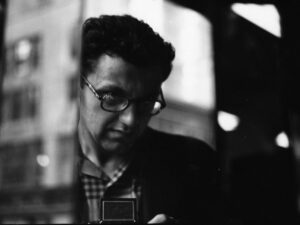
Saul Leiter
Shared publisher: Kehrer Verlag
9 photobook(s) in the library

Sage Sohier
Shared publisher: Kehrer Verlag
9 photobook(s) in the library
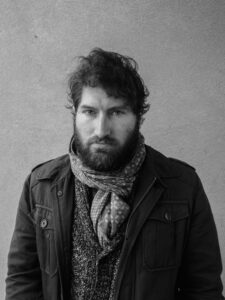
Peter van Agtmael
Shared publisher: Kehrer Verlag
7 photobook(s) in the library
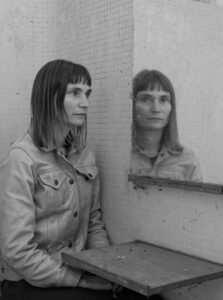
Elina Brotherus
Shared publisher: Kehrer Verlag
6 photobook(s) in the library
COMMUNITY DISCUSSION
Discuss this entry
Share interpretations, reading notes, and source-aware questions. For catalog corrections, use the feedback form below.
No discussion yet. Start the first focused conversation.
Sign in to join the discussion.
Optionally receive a digest when related photobooks are added to the catalog.
See something incorrect? Sign in to suggest a correction or report an issue.