Photographer
Mike Brodie
Mike Brodie, born in 1985 and originally from Mesa, Arizona, is an American photographer known for documenting young people moving through the United States by freight train and hitchhiking. He began photographing around 2003–04 after encountering a Polaroid camera and became known by the moniker “The Polaroid Kidd.” Between 2004 and 2008, he traveled extensively while building an unusually intimate archive of a mobile subculture rarely represented from within.
Brodie photographed fellow rail riders and drifters as a participant rather than a detached observer. His pictures combine documentary immediacy with saturated color, physical closeness, and an evident responsiveness to changing light and landscape. Trains, tracks, industrial margins, temporary camps, weathered bodies, and improvised forms of companionship recur throughout the work. What distinguishes these photographs from conventional travel reportage is their proximity: Brodie shared the movement, risks, fatigue, and social world of the people he pictured. That access gives the images emotional directness, although their lyrical treatment can also make a precarious existence appear romantic. The tension between freedom and vulnerability is central to their continuing interest.
The defining publication is his first monograph, “A Period of Juvenile Prosperity,” issued by Daylight Books in 2013. Drawn from the archive created during his itinerant years, it brings the freight-hopping photographs into a sustained narrative about youth, friendship, mobility, and the American landscape. Its importance lies not only in individual images but in the conversion of lived experience into a book-length sequence: portraits, passing terrain, gestures, and moments of rest collectively describe a community whose visibility was otherwise limited. The broader archive from 2004–08 remains the foundation of Brodie’s reputation and provides the context for later presentations of both familiar and previously less visible photographs.
Brodie’s career developed outside a conventional long-term documentary practice. The compressed period in which the original archive was made has contributed to its historical specificity: it records a pre-smartphone moment when an underground rail-riding network could still remain comparatively unseen. Gallery and institutional presentations have subsequently returned to this material. The solo exhibition “Mike Brodie: New and Selected Works” at Minnesota Street Project revisited his itinerant youth through a mixture of established and newer selections, demonstrating that the archive can support readings beyond its best-known photographs.
For photobook collectors, “A Period of Juvenile Prosperity” is the clearest entry point because it shows how Brodie’s photographs function through accumulation and sequence rather than as isolated emblems of rebellion. The Daylight Books publication gives coherent form to color, movement, intimacy, and geographical transition. Readers should attend to the ethical and emotional complexity beneath its adventurous surface: the book is at once a record made by an insider, a retrospective construction of youth, and a visually seductive account of lives shaped by instability.
〔PBL-BIO/2〕
Mike Brodie is an American photographer born in 1985. He is best known for his documentary photographs of young people riding freight trains across the United States, a subculture he encountered while hitchhiking. Beginning in 2003, he used a Polaroid camera then a 35mm to capture these encounters, resulting in a deeply personal, candid portrait of a transient community. His series ‘A Period of Juvenile Prosperity’ was published as a book in 2013 by Twin Palms Publishers. Brodie received attention for his raw, unmediated style, yet he left the art world in 2010 to become a mechanic, making his body of work a finite, historically compelling record.


Selected Works & Key Projects
A source-backed introduction to individual photographs and significant bodies of work.
Selected photographs

2006
#1027
#1027 is a chromogenic print from A Period of Juvenile Prosperity, dated 2006–2009. It merits individual selection because the Maison Européenne de la Photographie used it as the lead image for Brodie’s first solo exhibition in France, an exhibition drawn from the project, and supplied its medium, date, copyright, and gallery credit. The photograph therefore serves as a documented public-facing representative of the series in a major Paris photography institution. Its significance is not separable from the larger project: it stands for Brodie’s sustained inside account of freight-hopping youth, rather than constituting a separately documented narrative or subject on the available source.
Work source ↗2006
#5186
#5186 is identified as a chromogenic photograph from A Period of Juvenile Prosperity, dated 2006–2009, in Fondation EDF’s exhibition catalogue. It was presented there alongside #1027, #3044, and #5220 in a section on travel as a way of life, with the group credited to the Galerie Les filles du calvaire–Stéphane Magnan collection. This documented curatorial selection gives the photograph a clear reason for inclusion: it is one of the works chosen to articulate the project’s account of train-hopping, mobility, and youthful wandering. The catalogue does not supply an individual subject description, so none is assigned here.
Work source ↗
2006
#5288
#5288 is a 2006–2009 work from A Period of Juvenile Prosperity listed by M+B Photo and included in BOMB’s 2013 selection from the series, where the images were identified as C-prints and credited to Brodie and Yossi Milo Gallery. It merits selection because it was also reproduced in Revista de la Universidad de México, whose caption identifies the image as “APOJP #5288.” That publication describes the visible scene as a freight train, curving rails, and a person beside the train carrying a bag. The picture directly concentrates the railway setting central to Brodie’s broader record of freight-hopping life.
Work source ↗-
2004
Career milestone
Begins photographing train hoppers
While living in Florida, Mike Brodie received a Polaroid camera from a friend and started documenting the itinerant community of freight train riders and fellow travelers he encountered. This marks the beginning of his photographic practice, which would later evolve into his primary artistic voice and produce his most famous series.
Source: Wikipedia Verified Sep 4, 2026
-
2004–2009
Series
A Period of Juvenile Prosperity
This series comprises Brodie's intimate, raw photographs of fellow train hoppers, travelers, and young outcasts across the United States. Initially shot with a Polaroid and later with a 35mm Canon AE-1, the work presents a first-person, unglamorized view of a transient subculture. The series stands as a significant document of early 21st-century American youth and itinerancy, often compared to Nan Goldin's confessional style, and elevated Brodie from a hobbyist to a recognized photographer.
Source: Wikipedia Verified Sep 4, 2026
-
2008
Exhibition
First solo exhibition at Yossi Milo Gallery, New York
Brodie's first solo show, organized at Yossi Milo Gallery, brought his train-hopping photographs into the contemporary art world. Curating a selection from 'A Period of Juvenile Prosperity', the exhibition demonstrated the series' significance beyond subculture documentation, positioning his intimate snapshots within a larger dialogue on documentary photography and American identity. It was a pivotal moment in building his reputation among critics and collectors.
Source: Wikipedia Verified Sep 4, 2026
-
2010
Career milestone
Stops photographing to pursue career as a diesel mechanic
After several years of traveling and building an acclaimed body of work, Brodie made a deliberate choice to step away from photography. He settled in Colorado and became a diesel mechanic, effectively ending his artistic output. This decision, while abrupt, deepened the mystique around his existing images, framing them as a self-contained period of creative purity rather than the start of a lifelong career.
Source: Wikipedia Verified Sep 4, 2026
-
2011
Photobook
PowerHouse Books publishes monograph 'A Period of Juvenile Prosperity'
This monograph, published by PowerHouse Books, collected approximately 80 full-color photographs from Brodie's train-hopping years. Its release helped solidify his contribution to photography, coinciding with growing academic and public interest in marginalized youth cultures. The book has since become a celebrated artifact of contemporary American documentary photography, valued for its authentic perspective and lasting historical role in depicting an often invisible underbelly of society.
Source: Wikipedia Verified Sep 4, 2026
Publishing relationship
Twin Palms Publishers
Twin Palms Publishers released Mike Brodie's monograph 'A Period of Juvenile Prosperity' in 2013, a collection of over 60 color photographs documenting his travels with train-riding youth across America. The book, widely reviewed, solidified his reputation as a key documentarian of contemporary youth subcultures and expanded access to his otherwise rarely exhibited work.
Verified 2026-09-04Wikipedia
Collection
San Francisco Museum of Modern Art (SFMOMA)
The San Francisco Museum of Modern Art holds works by Mike Brodie in its permanent collection, signifying institutional recognition of his contribution to contemporary American photography. His presence there places his train-hopping imagery within a broader dialogue of documentary and artistic practice.
Verified 2026-09-04Wikipedia
Mike Brodie – Wikipedia (opens a new site)
This Wikipedia entry provides a comprehensive biography of American photographer Mike Brodie (b. 1985), known for documenting train-hopping subculture through Polaroid and 35mm photographs. It covers his early life, rise to prominence, his acclaimed monograph 'A Period of Juvenile Prosperity' (2013), and his later retirement from photography to work as a diesel mechanic. The article contextualizes his work within contemporary American documentary photography and notes his Guggenheim Fellowship in 2010. It serves as a foundational reference for his career and the significance of his railway images, which are praised for their intimate authenticity and historical resonance with earlier hobo photography.
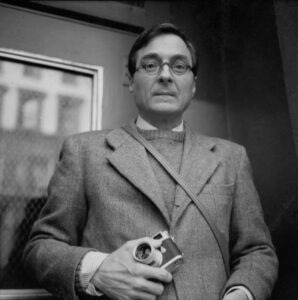
William Eggleston
Shared publisher: Twin Palms Publishers
26 photobook(s) in the library
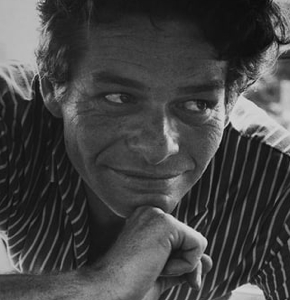
Garry Winogrand
Shared publisher: Twin Palms Publishers
11 photobook(s) in the library

Trent Parke
Shared publisher: Stanley/Barker
11 photobook(s) in the library

Sage Sohier
Shared publisher: Stanley/Barker
9 photobook(s) in the library
COMMUNITY DISCUSSION
Discuss this entry
Share interpretations, reading notes, and source-aware questions. For catalog corrections, use the feedback form below.
No discussion yet. Start the first focused conversation.
Sign in to join the discussion.
Optionally receive a digest when related photobooks are added to the catalog.
See something incorrect? Sign in to suggest a correction or report an issue.