Photographer
Ishiuchi Miyako
Ishiuchi Miyako, born in 1947 in the port city of Yokosuka, Japan, is one of the country’s most significant contemporary photographers. Her formative years coincided with the heavy postwar American military presence in Yokosuka, a context that would deeply shape her artistic concerns. She initially trained in textile design before turning to photography in the mid-1970s, a transition that marked the beginning of a career defined by an unflinching examination of memory, personal history, and the physical traces left by time and trauma.
Ishiuchi’s visual language is intimate and tactile, often focusing on close-up views of surfaces, skin, clothing, and landscapes that carry emotional weight. Rather than adopting the aggressive, performative styles of some male contemporaries, her work is notably quiet and restrained, yet piercing in its psychological depth. She frequently employs a straightforward documentary gaze, allowing objects and bodies to speak through their scars, wrinkles, and faded textures. Her approach distinguishes her from peers by prioritizing a deeply feminine and corporeal perspective in a field long dominated by men.
Among her landmark bodies of work is the series she began in 1976 (often associated with her hometown) that confronts the legacy of the American naval base in Yokosuka, capturing the landscape and its inhabitants with a sense of loss. Later, she turned her lens on her own aging mother, photographing her body and personal belongings after death, exploring how material objects hold memory. In subsequent projects, she photographed clothing and personal items of victims of the Hiroshima bombing, transforming contaminated relics into meditations on mortality and collective grief. These series are celebrated for their ability to make absence palpable.
Ishiuchi gained international recognition when she represented Japan at the Venice Biennale in 2005. In March 2014, according to Google Arts & Culture summaries, she became only the third Japanese photographer to receive a major international photography honor, a testament to her stature. Her work is held in prominent collections including SFMOMA and has been the subject of exhibitions worldwide, frequently at institutions such as The Japan Society in New York, which presented her project “Traces.” Her career has also been documented through interviews by outlets like Louisiana Channel, where she discusses the formation of a photographer’s cultural knowledge.
For photobook collectors, Ishiuchi’s publications are particularly compelling because they extend her concern with materiality into the book format. Editions accompanying exhibitions, like the recent “Ishiuchi Miyako: Traces” (published in connection with the Japan Society show), demonstrate careful design, sequencing, and printing that mirror her aesthetic. Early self-published or limited-edition works from her Yokosuka period are also sought after—not only for their scarcity but for their raw, direct reproductions that preserve her original vision. Collectors approaching her work should start with these key catalogs, which combine critical essays with high-quality plates, offering an entry point into her deeply personal universe. The interplay between photograph, object, and page makes her books essential documents of contemporary Japanese photography.
〔PBL-BIO/2〕


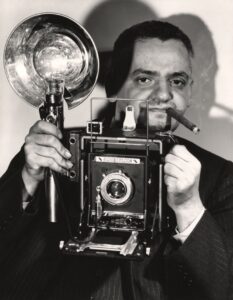
Weegee
Shared publisher: Aperture, Getty Publications
14 photobook(s) in the library

Mary Ellen Mark
Shared publisher: Aperture, Getty Publications
10 photobook(s) in the library
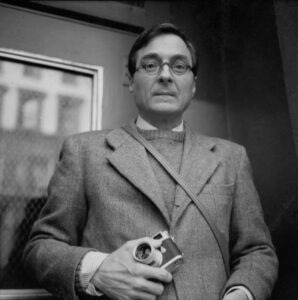
William Eggleston
Shared publisher: Aperture
26 photobook(s) in the library
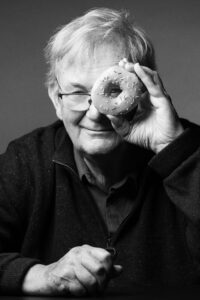
Martin Parr
Shared publisher: Aperture
21 photobook(s) in the library
COMMUNITY DISCUSSION
Discuss this entry
Share interpretations, reading notes, and source-aware questions. For catalog corrections, use the feedback form below.
No discussion yet. Start the first focused conversation.
Sign in to join the discussion.
Optionally receive a digest when related photobooks are added to the catalog.
See something incorrect? Sign in to suggest a correction or report an issue.