Photographer
John Gossage
John Gossage is an American photographer and photobook maker, born in Staten Island, New York, in 1946 and based in Washington, D.C. His career belongs to the generation that established the photobook as an autonomous artistic form rather than merely a container for exhibition photographs. Although he works within the broad tradition of American landscape photography, his attention falls less on celebrated scenery than on overlooked margins: scrubland, fences, discarded objects, damaged ground, and the ambiguous spaces where settlement gives way to neglect.
Gossage commonly works by walking and responding to what he encounters. His restrained black-and-white photographs isolate fragments rather than supply comprehensive descriptions, finding visual tension in shadows, obstructions, rough surfaces, and apparently incidental details. The pictures can seem casual, but their placement within a sequence makes them intellectually exacting. Unlike documentary photographers who organize such terrain around a declared social argument, Gossage often leaves cause and meaning unresolved. This withholding is important: mundane places become evidence without being reduced to illustration, allowing environmental, political, and psychological readings to coexist.
The Pond is the central point of entry into his work. Its photographs trace an unremarkable, compromised landscape through vegetation, debris, water, paths, and barriers. The book matters because it constructs a sustained encounter from subjects that conventional landscape photography might dismiss, turning ecological unease into a problem of looking rather than a simple message. Berlin in the Time of the Wall extends this indirect method to a historically charged city. Instead of treating the Wall only as a monumental symbol, Gossage attends to peripheral structures and the ordinary spaces shaped by division. Looking Up Ben James—A Fable, made from photographs produced in England and Wales, demonstrates how his oblique visual grammar could be carried into a different cultural landscape.
His historical significance rests equally on photography and editorial construction. Gossage has produced or co-authored dozens of photobooks, and critical, museum, and specialist platforms—including the Smithsonian American Art Museum, the Houston Center for Photography, and major photobook publications—have examined his practice. His work helped sustain a strand of postwar photography in which modest subject matter, conceptual ambiguity, and the physical book reinforce one another. Its politics are rarely announced; they emerge from what the photographer notices and how one image alters the memory of another.
Collectors should therefore approach Gossage through complete books rather than isolated signature images. The Pond offers the clearest introduction, while the Berlin and Ben James volumes reveal the geographic range of his method. Page rhythm, scale, blank space, reproduction, and transitions between seemingly unrelated views are integral to the work. His collaborations with specialist publishers, notably Steidl, also underscore how printing and binding function as artistic decisions. The reward lies not in immediate spectacle but in rereading: sequences gradually disclose connections that no single photograph resolves.
〔PBL-BIO/2〕


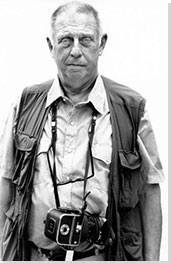
Lee Friedlander
Shared publisher: Aperture, Radius Books
13 photobook(s) in the library
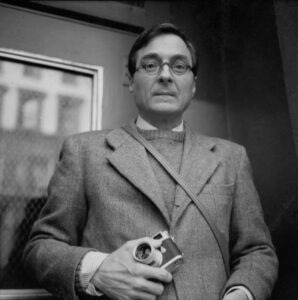
William Eggleston
Shared publisher: Aperture, Steidl
26 photobook(s) in the library
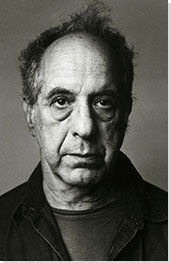
Robert Frank
Shared publisher: Aperture, Steidl
19 photobook(s) in the library
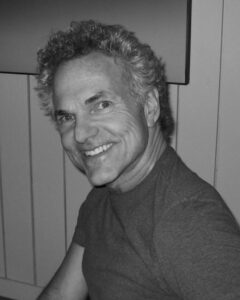
Richard Misrach
Shared publisher: Aperture, Radius Books
18 photobook(s) in the library
COMMUNITY DISCUSSION
Discuss this entry
Share interpretations, reading notes, and source-aware questions. For catalog corrections, use the feedback form below.
No discussion yet. Start the first focused conversation.
Sign in to join the discussion.
Optionally receive a digest when related photobooks are added to the catalog.
See something incorrect? Sign in to suggest a correction or report an issue.