Photographer
Lee Friedlander
Lee Friedlander (born 1934 in Aberdeen, Washington) is one of the most influential American photographers of the twentieth century, renowned for his black‑and‑white images of the urban “social landscape.” His photographic interest began at age fourteen, and after briefly studying at the Art Center College of Design in Los Angeles, he moved to New York in 1956 to pursue professional photography.
Early in his career, Friedlander photographed jazz musicians for Atlantic Records, including Duke Ellington, John Coltrane, and Charles Mingus, while also freelancing for major magazines such as Esquire and Sports Illustrated. His distinctive style—built on reflections, shadows, architectural framing, and complex spatial layering—emerged in the 1960s.
In 1967 he was featured in the Museum of Modern Art’s landmark “New Documents” exhibition alongside Garry Winogrand and Diane Arbus, a pivotal moment that established him as a leading voice in contemporary American photography. Working primarily with a Leica 35mm camera, Friedlander produced iconic series such as The Little Screens, Self Portrait, and The American Monument, which explored themes of identity, consumer culture, and the American landscape.
Throughout his long career he has received numerous honors, including multiple Guggenheim Fellowships, the MacDowell Medal (1986), and the MacArthur Fellowship (1990). His photographs have been exhibited internationally and remain foundational to the evolution of street and documentary photography.

Lee Friedlander: Life Still

Lee Friedlander: Christmas

Lee Friedlander: Framed by Joel Coen

Lee Friedlander

The Extended Moment

Lee Friedlander: Chain Link

Lee Friedlander: The Nudes: A Second Look

Lee Friedlander: America by Car

Friedlander

self PORTRAIT

Flowers and Trees

The American Monument

New Mexico
Selected Works & Key Projects
A source-backed introduction to individual photographs and significant bodies of work.
Selected photographs
1981 · Glenwood Springs, Colorado, United States
Glenwood Springs, Colorado
This gelatin silver print from 1981 shows a shop window in Glenwood Springs, Colorado, in which the town's streets and hillsides are merged with the interior reflections of blinds and the photographer's own silhouette. Friedlander reconciles landscape, street photography, and self-portraiture into an overlapping image that forces the viewer to look through and at the glass simultaneously. The Museum of Modern Art in New York, which holds the work, has singled it out as an exemplar of his complex spatial vision. It merits attention for displaying his mastery of exposure and composition when layering reflected and transparent planes.
Work source ↗
1961 · Stanzel, Iowa, United States
Stanzel, Iowa
Made in the early years of his career, this 1961 photo of Stanzel, Iowa, focuses on the signs and modest structures of a small American town. Friedlander treats signage as a visual language, often cropping or juxtaposing letters and forms to make the everyday vernacular look strange and revealing. The image belongs to his long-running engagement with the American social landscape, preceding his inclusion in the influential 1967 "New Documents" exhibition at The Museum of Modern Art. This early work is chosen because it shows him already refining a critical, witty eye for the ordinary clutter that would define his photographic manner.
Work source ↗1966 · New York City, United States
New York City
This photograph of New York City, made in 1966, is plate 25 in Friedlander's landmark 1970 photobook Self Portrait. In that book, he used mirrors, shadows, window reflections, and his own body to call into question the idea of a truthful self-image. The picture exemplifies the project's strategy: he appears as an elusive, fragmented presence within a busy urban scene rather than as a direct portrait subject. Self Portrait is considered a pivotal contribution to photographic self-examination, profoundly influencing how artists use the medium to explore identity. This image is important for showing that approach within the context of his street photography.
Work source ↗2011 · Cleveland, Ohio, United States
Cleveland Clinic, Intensive Care Unit
In 2011, Friedlander photographed the intensive care unit of the Cleveland Clinic, creating this gelatin silver print from that series. He applies his signature documentary style—complex framing, attention to edges and light—to a medical environment of tubes, monitors, and intensive-care equipment. The picture emphasizes the austere geometry of the machinery and the ordered space of care rather than explicit drama. Its acquisition by the National Gallery of Art attests to the seriousness with which his later hospital project is regarded, and it merits attention as Friedlander's proof that his long-standing investigation of the social landscape could be turned to institutional interiors.
Work source ↗-
1934
Career milestone
Born in Aberdeen, Washington
Friedlander was born in Aberdeen, Washington.
Source: The Museum of Modern Art Verified Sep 3, 2026
-
1967
Exhibition
New Documents
Friedlander was included with Diane Arbus and Garry Winogrand in MoMA’s landmark exhibition New Documents.
Source: The Museum of Modern Art Verified Sep 3, 2026
-
1970
Photobook
Self Portrait
MoMA identifies Self Portrait as Friedlander’s first book.
Source: The Museum of Modern Art Verified Sep 3, 2026
-
1989–1991
Exhibition
Like a One-Eyed Cat
The Seattle Art Museum’s retrospective Like a One-Eyed Cat: Photographs by Lee Friedlander 1956–1987 toured to multiple venues.
Source: Fraenkel Gallery Verified Sep 3, 2026
-
June 5–August 29, 2005
Exhibition
Friedlander
MoMA presented a major retrospective organized by Peter Galassi.
Source: The Museum of Modern Art Verified Sep 3, 2026
-
September 4–November 28, 2010
Exhibition
Lee Friedlander: America By Car
The Whitney Museum presented America By Car, organized by Elisabeth Sussman.
Source: Whitney Museum of American Art Verified Sep 3, 2026
-
Date unspecified
Education
Studied at Art Center School
He studied photography at the Art Center School in Los Angeles.
Source: The Museum of Modern Art Verified Sep 3, 2026
Collection
The Museum of Modern Art
MoMA began collecting and exhibiting Friedlander’s work in 1964. Its collection had more than 200 of his prints in 2000, according to the museum’s 2005 press material.
Verified 2026-09-03The Museum of Modern Art
Collection
National Gallery of Art
The National Gallery of Art’s artist page lists 595 works by Friedlander in its online holdings.
Verified 2026-09-03National Gallery of Art
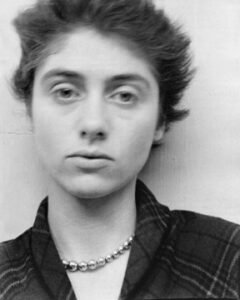
Shared exhibition
Diane Arbus
Friedlander and Arbus were both included in MoMA’s 1967 exhibition New Documents.
Verified 2026-09-03The Museum of Modern Art
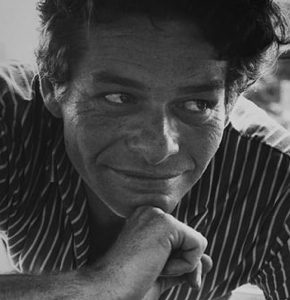
Shared exhibition
Garry Winogrand
Friedlander and Winogrand were both included in MoMA’s 1967 exhibition New Documents.
Verified 2026-09-03The Museum of Modern Art
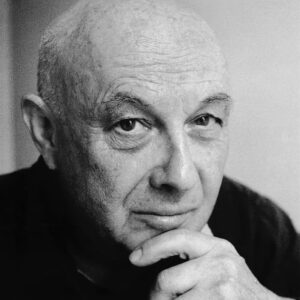
Shared exhibition
Bruce Davidson
Bruce Davidson and Lee Friedlander were both included in the 1967 'New Documents' show at MoMA, which presented their contrasting styles of social observation.
Verified 2026-09-05Wikipedia
Friedlander (opens a new site)
MoMA’s 2005 retrospective page outlines the range of Friedlander’s series and the accompanying exhibition publication.
Lee Friedlander: Life Still (opens a new site)
An Aperture editorial by James Bellomy focused on Lee Friedlander.
Lee Friedlander’s ‘Signs’ of the Times at Fraenkel Gallery (opens a new site)
A KQED article on the 2019 SIGNS exhibition and its accompanying book, discussing Friedlander’s photographs of storefronts, billboards, and other signs.
A preview of the exhibition (opens a new site)
The Whitney’s America By Car exhibition page lists a video preview by WNET Sunday Arts.
Friedlander (opens a new site)
MoMA Archives lists an exhibition documentary associated with the 2005 Friedlander exhibition, with Lee Friedlander and photography curator Peter Galassi as participants. The archive record states that DVD copies are available in the MoMA Archives.
COMMUNITY DISCUSSION
Discuss this entry
Share interpretations, reading notes, and source-aware questions. For catalog corrections, use the feedback form below.
No discussion yet. Start the first focused conversation.
Sign in to join the discussion.
Optionally receive a digest when related photobooks are added to the catalog.
See something incorrect? Sign in to suggest a correction or report an issue.