Photographer
Steven McCurry
Steve McCurry (born April 23, 1950) is an American photographer and photojournalist known for his vivid color images of conflict zones, ancient traditions, and everyday human life across South Asia, the Middle East, and beyond. His career spans more than four decades, during which he has produced work for major international magazines and published over twenty books. McCurry first gained international attention while documenting the Soviet–Afghan War in the early 1980s, and his 1984 photograph of an Afghan refugee girl with piercing green eyes became one of the most reproduced images in the history of photography, often simply titled Afghan Girl. That image, published on the cover of National Geographic in 1985, turned McCurry into a household name and established him as a master of humanist photojournalism.
McCurry’s visual language is distinct: he works almost exclusively in color, using natural light and saturated palettes to bring textures, fabrics, faces, and landscapes into a near-painterly vibrancy. His portraits are intimate yet respectful, often capturing subjects in moments of quiet introspection or intense presence. Unlike many war photographers who worked in monochrome during the twentieth century, McCurry’s color approach allowed him to convey both the chaos and the beauty of his settings. He has a particular affinity for India and Southeast Asia, where he returned repeatedly over his career, documenting monsoon seasons, religious festivals, street life, and the aftermath of disasters such as the 2001 Gujarat earthquake.
Among his significant bodies of work are the Afghanistan series, which chronicles the human dimension of conflict and displacement, and his long-term documentation of the Indian subcontinent, including the acclaimed book Monsoon (2005), which examines the annual rainy season’s impact on culture and survival in Asia. His 1985 and later revisits to locate the Afghan Girl added a narrative of humanitarian connection that deepened public engagement. McCurry also published The Path to Buddha (2003), on Buddhist communities in Asia, and South Southeast (2000), a compilation of his work across Southeast Asia. These photobooks—often produced in collaboration with publishers like Phaidon—present sequenced images that combine reportage with an aesthetic that collectors value for their rich color plates and cohesive storytelling.
McCurry’s work has been exhibited in museums and festivals worldwide, and he has received numerous awards, though he has also faced critical discussions regarding staged or manipulated elements in some photographs, prompting debates about documentary ethics in the digital age. His influence extends through workshops and teaching, including annual photography workshops in Kathmandu. For collectors, McCurry’s books offer a gateway into photographic humanism—Monsoon and South Southeast in particular showcase his sequencing and printing, with large-format reproductions that preserve his saturated colors. A useful entry point is his retrospective compilation, framed by his own introductions, which places his oeuvre in the context of global reportage and the evolution of color photography.
〔PBL-BIO/2〕


Steve McCurry
Shared publisher: Laurence King Publishing
18 photobook(s) in the library
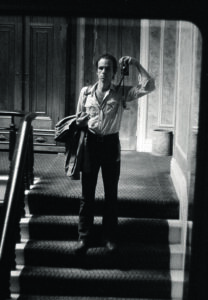
Joel Meyerowitz
Shared publisher: Laurence King Publishing
9 photobook(s) in the library

Albert Watson
Shared publisher: Laurence King Publishing
7 photobook(s) in the library

Henry Carroll
Shared publisher: Laurence King Publishing
3 photobook(s) in the library
COMMUNITY DISCUSSION
Discuss this entry
Share interpretations, reading notes, and source-aware questions. For catalog corrections, use the feedback form below.
No discussion yet. Start the first focused conversation.
Sign in to join the discussion.
Optionally receive a digest when related photobooks are added to the catalog.
See something incorrect? Sign in to suggest a correction or report an issue.