Photographer
Tim Lee
Tim Lee (b. 1975, Canada) is a Canadian artist known for his conceptually driven photographic and video works that explore the intersections of art history, performance, and personal identity. His practice often involves reenactments and staged scenarios referencing cultural and artistic moments.
Lee frequently places himself within historical or imagined contexts, using photography as a medium to question authorship, originality, and the construction of meaning. His work bridges photography, performance, and conceptual art.
His projects have been exhibited internationally and are held in major public collections. For collectors, Lee’s work is valued for its intellectual depth, its engagement with art history, and its distinctive approach to photographic authorship.

Selected Works & Key Projects
A source-backed introduction to individual photographs and significant bodies of work.
Key projects
Project · 2008
Passengers: 1.5 Tim Lee
Passengers: 1.5 Tim Lee brought together works developed through Lee’s research into an unusual San Francisco coincidence: Steve Martin and Neil Young each made consequential live recordings there in the late 1970s. Rather than present biography as fact, the exhibition used photographs, video, sound, vinyl, and the elevator as a setting to create an invented third history between comedy, rock, and bluegrass. Martin’s performance persona and Young’s shifting musical identities became material for Lee’s flips, loops, shadows, and reenactments. The project merits selection because it expands his photographic concerns into an exhibition-scale system, showing how place, genre, and media shape the public life of a name.
View source ↗Project · 2007
Remakes, Variations (1741–2049)
Remakes, Variations (1741–2049) was a 2007 exhibition of new work that organized Lee’s practice around remaking works that are themselves remakes. Its paired bodies of photography, video, and sculpture moved between classical music and slapstick comedy, with references ranging from J. S. Bach and Glenn Gould to Peter Sellers and Steve Martin. By inserting himself into loose reconstructions rather than producing exact replicas, Lee turned cultural inheritance into a chain of revisions extending from the historical past toward an imagined future. The project merits selection because it clearly states the larger structure of his practice: formal repetition and variation used to bring art history, popular culture, humour, and social context into contact.
View source ↗Project · 2013
Tim Lee: In Focus
For Asia Society’s 2013 In Focus commission, Lee created Blowin’ in the Wind, Bob Dylan, 1963 as an interactive multimedia installation functioning as a karaoke room. Visitors were invited to sing Dylan’s folk song to Lee’s guitar cover, shifting the work from solitary reenactment to a situation completed by other bodies and voices. The project extends Lee’s long-standing interest in how a celebrated performer’s public identity is repeatedly reproduced, while making participation central to the work’s meaning. It merits selection because it translates his strategies of cover, role-play, and mediation beyond the photograph into a social encounter, where each participant tests the song’s meaning against personal experience.
View source ↗Selected photographs
2005
Untitled (Steve Martin, 1972)
In this life-size photographic self-portrait, Tim Lee rehearses Steve Martin’s early banjo-playing, arrow-through-the-head persona before a mirror. The image deliberately defeats the mirror’s expected correction: although Lee is right-handed, the banjo remains reversed through successive reflections and photographic flipping. That small perceptual error turns comic impersonation into a study of how a public identity is manufactured, remembered, and misread. Selected from Lee’s many pop-cultural reenactments, it is an especially concise example of his use of his own body, formal reversal, humour, and racialized questions of performance to unsettle a familiar celebrity image.
Work source ↗
2006
It Takes a Nation of Millions to Hold Us Back, Public Enemy
This photograph records Lee’s attempt to lie completely still on his studio floor for the running time of Public Enemy’s 1988 album It Takes a Nation of Millions to Hold Us Back. The apparently spare image is the residue of an endurance performance: Lee adapts the floor-and-body configurations of Bruce Nauman’s late-1960s actions while using a politically charged hip-hop record as its temporal score. Its significance lies in making two distinct histories—conceptual performance and sampled rap—meet through the artist’s body. It merits selection because it makes Lee’s characteristic appropriation physical rather than merely referential, linking duration, listening, race, and photographic documentation.
Work source ↗2004
The Jerk, The Opti-Grab, 1979
The Jerk, The Opti-Grab, 1979 draws on the defective eyeglass device in Carl Reiner’s 1979 film The Jerk, starring Steve Martin. In Lee’s chromogenic print, his glasses are subjected to the film’s absurd optical invention, extending a related group of works in which he assumes Martin-derived roles and poses. The photographic achievement is not faithful reconstruction but the conversion of a screen gag into a tangible visual disturbance: comic props become tools for testing vision and recognition. It merits selection as an early, sharply focused instance of Lee’s method of using slapstick to connect popular cinema with the unstable mechanics of photographic looking.
Work source ↗2002
Untitled (No. 4)
Untitled (No. 4) is a two-part work made from two large chromogenic color prints. Its paired image of a body flying through space brings together a sports memory—Bobby Orr’s celebrated airborne hockey goal—and Bruce Nauman’s 1966 studio action Failing to Levitate in the Studio. Rather than simply quote either source, Lee uses the diptych to hold athletic spectacle and staged artistic action in productive tension. The work is a key early example of his photographic reenactments, in which a recognizable cultural image is redirected through his own body. Its selection is further substantiated by MoMA’s acquisition and inclusion in its 2005 New Work/New Acquisitions exhibition.
Work source ↗-
1999
Education
BA Design, University of Alberta
Lee completed a BA in Design at the University of Alberta in Edmonton.
Source: Lisson Gallery Verified Sep 3, 2026
-
2002
Education
MFA, University of British Columbia
Lee completed an MFA at the University of British Columbia in Vancouver.
Source: Lisson Gallery Verified Sep 3, 2026
-
2007
Exhibition
Remakes, Variations (1741–2049)
Solo exhibition at Presentation House Gallery in North Vancouver and Illingworth Kerr Gallery in Calgary.
Source: Lisson Gallery Verified Sep 3, 2026
-
January 8–February 2, 2008
Exhibition
Passengers: 1.5 Tim Lee
Lee presented a solo exhibition at the CCA Wattis Institute for Contemporary Arts in San Francisco.
Source: CCA Wattis Institute for Contemporary Arts Archive Verified Sep 3, 2026
-
2008
Award
Sobey Art Prize
Lee received the Sobey Art Prize at the Art Gallery of Nova Scotia in Halifax.
Source: Lisson Gallery Verified Sep 3, 2026
-
2009
Award
DAAD Berlin Artists-in-Residence Programme
Lee was a Canada, Visual Arts award fellow in the Berliner Künstlerprogramm.
Source: Berliner Künstlerprogramm / DAAD Verified Sep 3, 2026
-
July 2015
Photobook
Tim Lee: One Hundred and Sixty Two People
Lee’s 162-page publication was issued by Bywater Bros. Editions and Presentation House Gallery.
Source: University of Toronto Press Distribution Verified Sep 3, 2026
Representation
Lisson Gallery, Los Angeles
Western Front’s artist archive states that Lee is represented by Lisson Gallery, Los Angeles.
Verified 2026-09-03Western Front
Collection
Museum of Modern Art
MoMA lists Untitled (No. 4) as an online work by Lee and identifies one work online in his record.
Verified 2026-09-03Museum of Modern Art
Collection
KADIST
KADIST lists Untitled (Stanley Kubrick, 1945) under Lee’s collection artworks.
Verified 2026-09-03KADIST
Collection
Zabludowicz Collection
The Zabludowicz Collection’s artist record presents Lee’s works It Takes a Nation of Millions to Hold Us Back, Public Enemy and Fear of a Black Planet, Public Enemy.
Verified 2026-09-03Zabludowicz Collection
Collection
National Gallery of Canada
Lee’s CV lists the National Gallery of Canada among collections holding his work.
Verified 2026-09-03Lisson Gallery
Collection
Tate Modern
Lee’s CV lists Tate Modern among collections holding his work.
Verified 2026-09-03Lisson Gallery
Archive
Western Front
Western Front maintains an artist archive record for Lee and lists the 2001 event The Move among related events.
Verified 2026-09-03Western Front
Tim Lee: One Hundred and Sixty Two People (opens a new site)
A 162-page 2015 publication by Tim Lee, issued by Bywater Bros. Editions and Presentation House Gallery, using photographs of public figures from the previous century.
Tim Lee (opens a new site)
Library record for the 2008 Contemporary Arts Museum Houston Perspectives 161 catalogue, credited to Toby Kamps and Tim Lee; the 12-page publication includes a work list, biography, and bibliography.
It's Better to Burn Out Than Fade Away (opens a new site)
Claire Fitzsimmons’s exhibition text examines Lee’s Capp Street Project and its connections among Steve Martin, Neil Young, music, comedy, and public personae.
Stand-Up Art: A Conversation Between Tim Lee and Jens Hoffmann (opens a new site)
A conversation published with Lee’s 2008 Wattis exhibition. Lee discusses performance, photography, role-playing, and the use of public figures and cultural histories in his work.
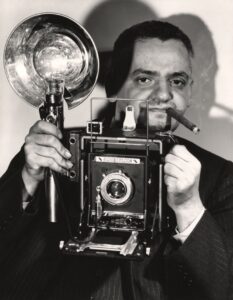
Weegee
Shared publisher: Presentation House Gallery
14 photobook(s) in the library
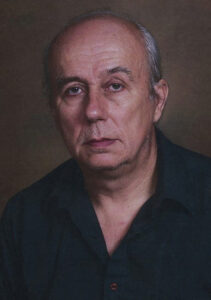
Mark Ruwedel
Shared publisher: Presentation House Gallery
9 photobook(s) in the library

Roy Arden
Shared publisher: Presentation House Gallery
5 photobook(s) in the library
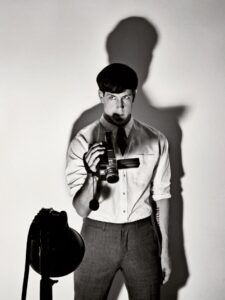
Jeremy Shaw
Shared publisher: Presentation House Gallery
2 photobook(s) in the library
COMMUNITY DISCUSSION
Discuss this entry
Share interpretations, reading notes, and source-aware questions. For catalog corrections, use the feedback form below.
No discussion yet. Start the first focused conversation.
Sign in to join the discussion.
Optionally receive a digest when related photobooks are added to the catalog.
See something incorrect? Sign in to suggest a correction or report an issue.