Photographer
Philip-Lorca diCorcia
Philip-Lorca diCorcia (born 1951, Connecticut) is an American photographer whose practice blurs the boundaries between documentary and staged imagery. He studied at the School of the Museum of Fine Arts in Boston and later at Yale University, where he eventually became a professor. Living and working in New York City since the 1970s, he emerged in the 1980s amid a generation of artists who questioned the inherited codes of straight photography. His large-scale color prints, produced with an 8×10 view camera, often employ cinematic lighting and carefully chosen locations, yet they retain an uncanny air of candidness.
DiCorcia’s visual language is distinctive for its fusion of the spontaneous and the constructed. He frequently photographs strangers in public spaces, but his use of strobe lights, pre-arranged compositions, and narrative suggestion transforms everyday scenes into something theatrical. Unlike street photographers who seek to disappear, diCorcia makes his presence felt through artificial illumination and a deliberate, often voyeuristic framing. This approach forces viewers to question what is real and what is performed, a tension that has become a hallmark of his work.
Among his major bodies of work, the series “Hustlers” (1990–1992) stands out. It depicts male sex workers in Los Angeles, each photographed in motel rooms or on the street with staged props and controlled lighting. The project revisits a tradition of documentary portraiture while injecting a psychological intimacy that resists easy victimhood. Another landmark, “Streetwork” (1993–1998), was shot on the streets of New York, where diCorcia set up a lighting rig and photographed passersby without their knowledge, using a telephoto lens. The resulting images—ordinary people caught in isolated moments—raising questions about surveillance and consent. Later, “Heads” (2000–2002) employed hidden strobes to capture pedestrians in Times Square, resulting in portraits that feel both random and hauntingly deliberate. These series have been published in influential photobooks such as “Hustlers” (1995), “Streetwork” (1999), and “A Storybook Life” (2003), often in collaboration with publishers like Scalo and Steidl.
DiCorcia’s historical significance lies in his ability to challenge the supposed neutrality of documentary photography. He is frequently grouped with artists like Jeff Wall and Cindy Sherman who question photographic truth, yet his work is rooted in the specific textures of American urban life. His images have been exhibited at major institutions including the Museum of Modern Art, New York, and the David Zwirner gallery, which represents him. He has also received grants and fellowships, and his teaching at Yale has influenced a younger generation of photographers. Critics have noted that his work oscillates between empathy and critique, sometimes troubling in its voyeuristic dimensions, but always formally rigorous.
For photobook collectors, diCorcia’s publications are compelling not only for their content but for their production quality. Books like “Streetwork” feature meticulously sequenced images that mirror his cinematic pacing, and the printing of his luminous color photographs is a test of any press. His collaboration with Steidl on later editions demonstrates a commitment to the photobook as an art object. A useful entry point is the retrospective monograph “Philip-Lorca diCorcia: Photographs 1975–2012,” which surveys his career and highlights the evolution of his synthetic style. While market values are not discussed here, the collector’s interest lies in the enduring conceptual relevance and visual sophistication of his editions.
〔PBL-BIO/2〕


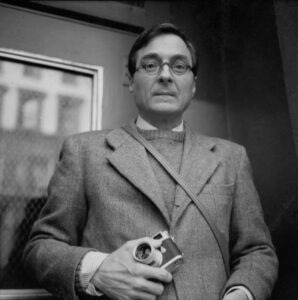
William Eggleston
Shared publisher: Steidl, Twin Palms Publishers
26 photobook(s) in the library
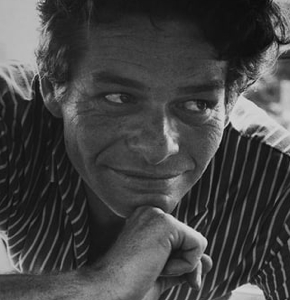
Garry Winogrand
Shared publisher: Steidl, Twin Palms Publishers
11 photobook(s) in the library

Peter Hujar
Shared publisher: Steidl, Twin Palms Publishers
8 photobook(s) in the library
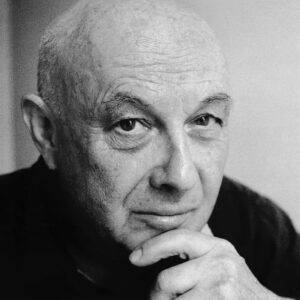
Bruce Davidson
Shared publisher: Steidl, Twin Palms Publishers
5 photobook(s) in the library
COMMUNITY DISCUSSION
Discuss this entry
Share interpretations, reading notes, and source-aware questions. For catalog corrections, use the feedback form below.
No discussion yet. Start the first focused conversation.
Sign in to join the discussion.
Optionally receive a digest when related photobooks are added to the catalog.
See something incorrect? Sign in to suggest a correction or report an issue.