Photographer
Gerry Badger
Gerry Badger (born 1946 in Northampton, England) is a British photographer, critic, curator, and one of the most influential writers on the history and theory of photography. Trained originally as an architect at the Duncan of Jordanstone College of Art in Dundee, he shifted toward photography and criticism in the 1970s, emerging as one of the central voices interpreting the medium’s evolution through the twentieth and twenty‑first centuries. His writing is widely admired for its clarity, critical rigor, and deep knowledge of photographic history.
Badger is internationally known for co‑authoring, with Martin Parr, the landmark multi‑volume series *The Photobook: A History* — a foundational reference that reshaped the study of photobooks and won major awards, including the Kraszna‑Krausz Prize and the Deutscher Fotobuchpreis. His own book *The Pleasures of Good Photographs* (2010) won the Infinity Award for Writing from the International Center of Photography. Over the decades, Badger has written extensively on figures such as Eugène Atget, Chris Killip, and numerous contemporary practitioners, producing a body of criticism that has become essential reading within the field.
Alongside his writing, Badger has maintained a long career as a photographer, working primarily with landscapes and what he describes as “accretions of history.” His photographs have been exhibited in leading institutions, including The Photographers’ Gallery (London), Victoria and Albert Museum, Tate Britain, and the Hayward Gallery. As a curator, he has organized significant exhibitions such as *The Photographer as Printmaker* and *Through the Looking Glass: Photographic Art in Britain 1945–1989*.
In recognition of his contributions to photographic scholarship, Badger received the Royal Photographic Society’s J. Dudley Johnston Award in 2018. His more recent publications—including *Best Face Forward* (2024), a meditation on portrait photography—continue to demonstrate his critical acuity and deep engagement with the visual possibilities of the medium. His work remains pivotal in shaping contemporary understanding of photography’s history, aesthetics, and cultural meaning.

Selected Works & Key Projects
A source-backed introduction to individual photographs and significant bodies of work.
Key projects

Project · 2007–2011
It Was a Grey Day: Photographs of Berlin
Between 2007 and 2011 Gerry Badger photographed the abandoned and unremarkable recesses of Berlin – derelict facades, empty parks, vacant lots, and scattered refuse. By working only on overcast, grey days and rigorously excluding people, he turns these marginal sites into a poetic, almost painterly sequence of quiet urban specimens. The project is an articulate demonstration of his belief that photobooks are far more than an aggregation of pictures; it is their editing and sequencing that makes meaning. While Badger is best known as a critic and historian, this sustained body of work reveals his own practice and his ability to find order within the visually disregarded.
View source ↗Project · 2004–2014
The Photobook: A History, Volumes 1–3
With Martin Parr, Gerry Badger produced the seminal three-volume historical survey that established the photobook as a subject of serious scholarship. Published between 2004 and 2014, the series traces the medium from its nineteenth-century origins to modernist and propaganda publications of the 1930s and 1940s, concluding with a close look at Japanese photobooks from the 1960s and 1970s. Each volume pairs extensive reproductions with authoritative criticism, mapping the diverse ways photographers have used the book form to create sequential narratives. Its selection here is merited because it fundamentally shaped the field, providing a shared vocabulary and an essential reference for curators, collectors, and historians worldwide.
View source ↗
Project · 2022
Another Country: British Documentary Photography Since 1945
Published in 2022, Another Country is Gerry Badger's incisive reassessment of British documentary photography since 1945. Rather than a simple catalogue of celebrated names, it interweaves photographers, institutions, publications, and shifting social-cultural forces in a chronologically structured account. Badger draws on decades of experience as a photobook historian and his own nuanced view of documentary conventions to examine how photographers have balanced testimony with artistic expression. The book is a crucial contribution to the genre's historiography, especially because it brings long-ignored practitioners and publication networks into focus. It merits inclusion here as a major synthesis by a leading authority, consolidating and re-energizing debates about British documentary practice.
View source ↗-
2004
Photobook
The Photobook: A History, Volume 1
The first volume of the three-volume photobook-history collaboration with Martin Parr was published.
Source: Martin Parr Foundation Verified Sep 3, 2026
-
2010
Photobook
The Pleasures of Good Photographs
The book was published in 2010 and is identified by Gagosian as the winner of the ICP Infinity Writer’s Award.
Source: Gagosian Quarterly Verified Sep 3, 2026
-
2015
Photobook
It Was a Grey Day: Photographs of Berlin
Badger’s book of Berlin photographs was published by Peperoni Books.
Source: Anzenberger Gallery Bookshop Verified Sep 3, 2026
-
2018
Award
RPS J Dudley Johnston Medal
Badger received the Royal Photographic Society’s J Dudley Johnston Medal, an award for major achievement in photographic criticism or the history of photography.
Source: Royal Photographic Society Verified Sep 3, 2026
-
2022
Photobook
Another Country: British Documentary Photography Since 1945
Another Country was published as Badger’s history of British documentary photography since 1945.
Source: Thames & Hudson USA Verified Sep 3, 2026
-
2024
Photobook
Best Face Forward: Some Thoughts on the Portrait Photograph
The RPS Journal published an extract from Badger’s book Best Face Forward.
Source: Royal Photographic Society Verified Sep 3, 2026
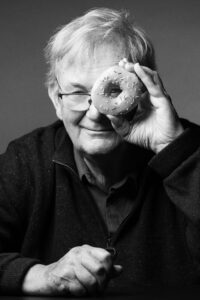
Collaboration
Martin Parr
Badger collaborated with Martin Parr on all three volumes of The Photobook: A History.
Verified 2026-09-03Martin Parr Foundation
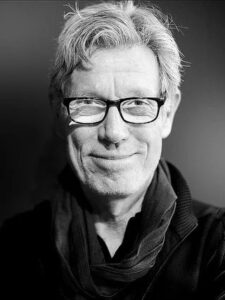
Collaboration
Harvey Benge
Gerry Badger, the British photographer, critic and photobook historian, contributed accompanying texts to Harvey Benge's books, and the two are linked in photobook writing of the 1990s and 2000s. The association is significant because Badger's critical framing helped position Benge's serial, diaristic sequences within wider arguments about the photobook as a form of authorship.
Verified 2026-10-10Wikipedia
Other relationship
Lewis Baltz
British Journal of Photography described Badger as Baltz’s close friend in its publication of Badger’s tribute following Baltz’s death.
Verified 2026-09-031854 Photography / British Journal of Photography
Street & Studio: An Urban History of Photography (opens a new site)
Badger’s Aperture review considers Tate Modern’s Street & Studio exhibition and its connections among forms of urban photographic portraiture.
Gerry Badger explores the power of the portrait (opens a new site)
An RPS Journal extract from Best Face Forward in which Badger addresses how photographic portraits relate to representation, interpretation, and claims of truth.
Paul Graham and Gerry Badger – in conversation (opens a new site)
A British Journal of Photography conversation in which Badger interviews Paul Graham about photography, photobooks, exhibitions, and publishing.
Gerry Badger’s tribute to Lewis Baltz (opens a new site)
Badger’s remembrance of photographer Lewis Baltz discusses Baltz’s work, including his place in New Topographics and his engagement with the built environment.
Martin Parr Gerry Badger – The Photobook: A History volume 3 (opens a new site)
A Vimeo-hosted video identified as featuring Martin Parr and Gerry Badger in relation to The Photobook: A History, Volume 3.
2/3 – Gerry Badger: The Photobook A History, Vol. 3 (opens a new site)
A LE BAL video in which Badger discusses the third volume of The Photobook: A History at the fifth Kassel International Photobook Festival.
COMMUNITY DISCUSSION
Discuss this entry
Share interpretations, reading notes, and source-aware questions. For catalog corrections, use the feedback form below.
No discussion yet. Start the first focused conversation.
Sign in to join the discussion.
Optionally receive a digest when related photobooks are added to the catalog.
See something incorrect? Sign in to suggest a correction or report an issue.